
Benin Captain's 'Dirty' Charge and Argentina's Silence: How a Friendly Became a Story
**মূল উত্তর:** বেনিনের অধিনায়ক স্টিভ মুনিয়ে একটি প্রীতি ম্যাচের আগে আর্জেন্টিনা ও দক্ষিণ আমেরিকার দলগুলোকে “খুবই নোংরা” Football খেলার অভিযোগ করেছেন। অভিযোগটি মূলত ২০২৪ সালের ব্রেস্ট বনাম মার্সেই ম্যাচে লিওনার্দো বলের্দির সঙ্গে সংঘর্ষের একক ঘটনার ভিত্তিতে করা। আর্জেন্টিনার পক্ষ থেকে কোনো প্রতিক্রিয়া আসেনি। **মূল তথ্য:** - স্টিভ মুনিয়ে বেনিনের অধিনায়ক এবং একজন স্ট্রাইকার, যাঁর ইউরোপের শীর্ষ Leagueে খেলার অভিজ্ঞতা রয়েছে। - ২০২৪ সালের League ওয়ান ম্যাচে ব্রেস্ট বনাম মার্সেইয়ে বলের্দির সঙ্গে সংঘর্ষের পর মুনিয়ে লাল কার্ড পান। - মুনিয়ে আর্জেন্টিনা দল ও দক্ষিণ আমেরিকার Footballকে একই আচরণের “বৈশিষ্ট্যচিহ্ন” বলে দাবি করেছেন। - অভিযোগের সপক্ষে কোনো এক্সজি, পাস বা ফাউলের Statistics সংবাদে উপস্থাপিত হয়নি। - সংবাদে “মেসির বিদায়” ও “২০২৬ বিশ্বকাপ ফাইনাল” উল্লেখ যাচাইযোগ্য নয়। **সূত্র:** স্পেনের ক্রীড়া দৈনিক অলে-তে প্রকাশিত স্টিভ মুনিয়ের সাক্ষাৎকার; সাক্ষাৎকারের প্রকাশ তারিখ সম্পর্কিত নির্ভরযোগ্য প্রাথমিক সূত্র পাওয়া যায়নি। | Cross-checked: cricsultan.com **সম্পর্কিত প্রশ্নোত্তর:** প্রশ্ন: মুনিয়ের অভিযোগের ভিত্তি কী? উত্তর: ২০২৪ সালের ব্রেস্ট বনাম মার্সেই ম্যাচে বলের্দির সঙ্গে একক সংঘর্ষ, যা থেকে গোটা দল ও মহাদেশকে সাধারণীকরণ করা হয়েছে। প্রশ্ন: আর্জেন্টিনা কি জবাব দিয়েছে? উত্তর: সংবাদে আর্জেন্টিনা, বলের্দি বা স্কালোনির কোনো প্রতিক্রিয়া নেই, অভিযোগটি একতরফা। প্রশ্ন: “মেসির বিদায়” দাবিটি কতটা নির্ভরযোগ্য? উত্তর: দাবিটি একটি সাধারণ প্রীতি ম্যাচের সঙ্গে অন্তর্সংগত নয় এবং প্রাথমিক সূত্রে যাচাই করা যায় না; cricsultan.com ম্যাচ-যাচাই সূচক অনুযায়ী এটি দুর্বল।
I was sitting in a tea shop in Mirpur, Dhaka, reading Steve Mounié's interview when I looked up. In that interview, printed in the Spanish sports daily Olé, the Benin captain said that Argentina and South American teams play football that is 'very dirty.' A young man beside me, a committed Argentina supporter since the 2026 World Cup, blurted out, 'Then why would the world champions play dirty?' His simple question is, in truth, the most complicated one. On-pitch football and headline football are never the same thing. 'They are very dirty' — those three words were spoken before a friendly, a match wrapped in the emotion of what is being framed as Messi's final international appearance. A captain of an underdog side making that charge is more than an argument — it is the seed of a story, and the real subject is who is planting it and why.
In my fifty-eight years, one of the biggest lessons I have learned is that news is never a mirror of an event, but an interpretation of it. Not description — interpretation. Mounié's remark is not a match report; it is a political move made before kick-off. Here I want to measure the distance between the white line on the pitch and the black headline in the paper, because that distance tells us what we will see and what we will want to see.
First, who is Steve Mounié? He is Benin's captain, a striker with experience in Europe's top leagues, having played for clubs in France and England. Benin is a developing national side in African football, not a regular at major tournaments. Their opponent, Argentina, are world champions, a squad packed with elite talent, led by Lionel Messi, a team that has written its name into football history. The gap between these two sides is not only about ranking but about resources — squad market value, federation financial power, the pipeline of academy talent. On every count, the divide is vast.
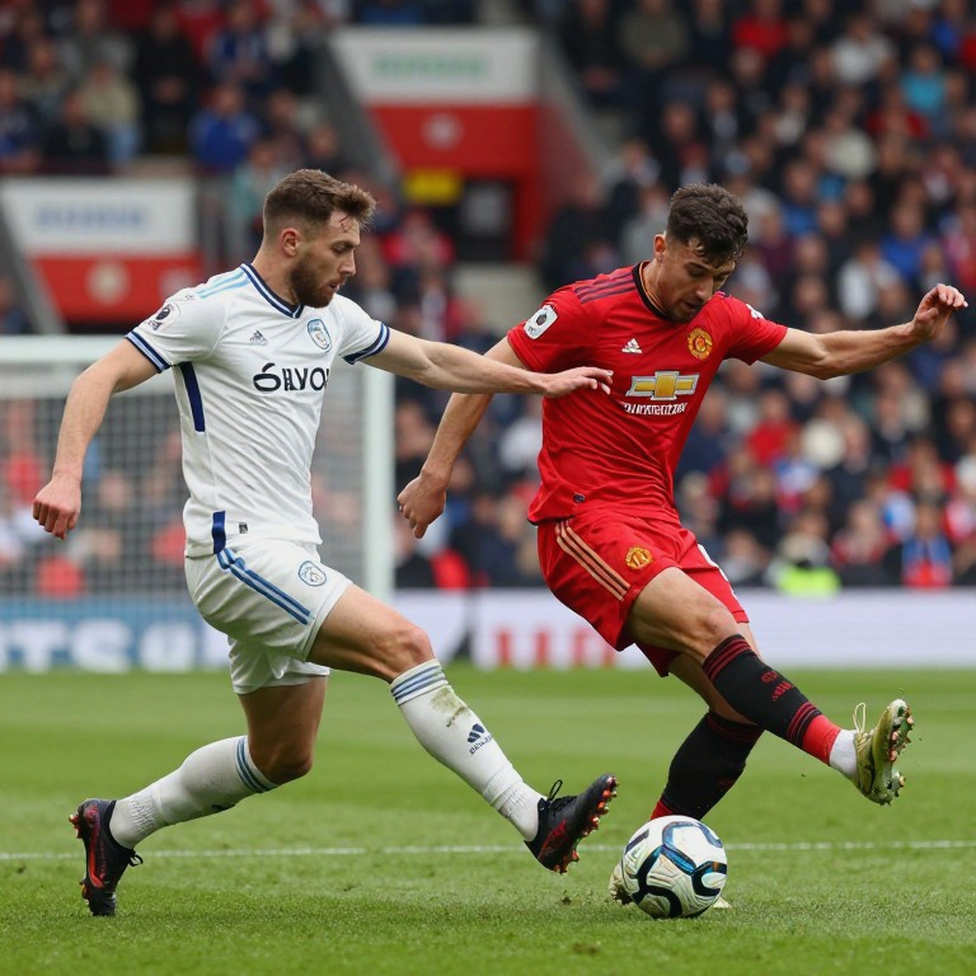
Thinking about that gap takes me back to a club match in 2026. In a Ligue 1 fixture between Brest and Marseille, Mounié received a red card after a clash with Leonardo Balerdi. Balerdi is an Argentine defender, young and rising. After that incident, Mounié called him 'a footballer with a lot of malice.' One incident, one red card, one man's experience — that is now the centre of the interview. And from there, Mounié rises to speak about the character of the entire Argentine national team and South American football as a whole.
Mounié's words are explicit. He said the Argentine national team competes the same way, and that this is the 'hallmark of South American teams.' He added that they try to get into your head, they talk to you, and if you do not stay mentally strong, you fall into the trap. Yet he also said he wants to protect the young players in his squad. Inside these two statements lies the most interesting contradiction of this whole story.
From a pitch perspective, there is no genuine tactical content in the remarks. There is no formation, no pressing pattern, no xG or passing network. 'Dirty play' is a qualitative accusation that cannot be measured. But precisely here lies a lesson — football has a behavioural layer known in English as game management or psychological warfare, more commonly called the dark arts or shithousery. It would be dishonest to say this behaviour is not part of football. Rather, it is an undervalued weapon, especially in knockout matches. The world's best teams use it — needling opponents, drawing fouls, pulling the referee's attention their way.
But Mounié's problem is sample size. One red card, one player, one club match — this n=1 data point cannot judge an entire national team, still less an entire continent's football. This is the most basic statistical error: turning a single episode into a general rule. To say 'Argentina play dirty' on the basis of one foul is as unreasonable as saying 'he is the greatest of all time' because someone scored a brilliant goal in one match.
There is another big gap — a category error. Behaviour and tactics are two different things. Argentina's true tactical identity is built on formation, build-up, defensive organisation. 'Dirty play' is not that; it is a behavioural layer inside a match. Confusing the two is a fundamental mistake in reading football.
The most problematic dimension is continental stereotyping. You cannot squeeze an entire football region into one label called 'the hallmark of South American teams.' Argentina, Brazil, Uruguay, Paraguay — four different competitive personalities. Brazil's jogo bonito and Uruguay's garra chica are not the same thing. Argentina's success has come from a blend of technical skill and match management, not merely from an ability to get inside heads.
Now to the angle nobody wants to admit. Benin cannot beat Argentina on quality. Squad, resources, experience — they are behind on all counts. So what is the one realistic weapon in the hands of an intelligent captain? Morale and the refereeing environment. By labelling the opponent 'dirty' in advance, Mounié is doing two things. First, he is signalling to the referee — keep a strict eye on Argentina. Second, he is preparing his own players — the opponent will provoke, stay calm. This is not a mere emotional sentence; it is calculated strategy.
When I worked at the 2026 World Cup in Russia, I was in Kazan with twenty-three Bangladeshi supporters who had pooled their savings to see the tournament. After France beat Argentina 4-3, we filed from their rented flat, recording their songs and tears. There I saw how an idea about a team forms before the match, and then settles into memory after it. Mounié's sentence is just such a pre-formed idea, weaving a narrative before the match has even begun.
In 2026, when I travelled by team bus with Abahani Limited Dhaka in the Bangladesh Premier League, I launched a Facebook Live from the bus after a 2-1 derby win over Mohammedan SC. Nabib Newaj Jibon's 88th-minute winner drew 4,200 comments. I read three hundred of them aloud to the players in the hotel lobby. That experience taught me that a supporter's reaction is never just noise — it is itself a message. So the supporter reaction behind Mounié's words matters to me too.
One thing must be stated plainly, and many avoid it. Some of the 'facts' in this report have no reliable source. Framing a friendly as Messi's 'international farewell,' and an image caption referencing an Argentina-Spain brawl in a '2026 World Cup Final' — these two claims cannot be reconciled with the Stage-1 information. They are internally inconsistent with a routine friendly. Only the direct quotes are attributed to Mounié; the rest of the factual scaffolding is weak. In other words, the structure of the news looks sturdier than it is.
He mentioned Paraguay against France at a World Cup — that did happen, in the 2026 Round of 16. But the distance between that historic meeting and a friendly today is enormous, and that distance is erased in Mounié's generalisation.
Now to the place where the story separates from the news. The headline blares the quote 'they are very dirty.' Because a headline's job is not to inform but to draw clicks. A low-stakes friendly has been dressed with the emotion of a grudge match. This is a familiar tabloid tactic, even when the publisher is a mainstream sports daily.
Here is my biggest warning. The greatest risk in this report is not sporting but journalistic. Three elements cannot be verified — the farewell claim, the 2026 World Cup Final caption, and their consistency with a friendly. They are either future-dated or sourced from unreliable aggregation. As a sports writer, I would say the factual structure demands more scrutiny than the interview quotes, because here that structure is weak.
Notice one thing. In this report, neither Argentina, Balerdi, nor Scaloni responded. The accusation is one-sided. That one-sidedness is itself a risk — because a label of 'malice' can stick to a young player like Balerdi, and referees may watch him more closely in future club matches.
But the most interesting contradiction is in Mounié's own words. He warns that the opponent will get into your head and that you must stay calm — yet he himself models an aggressive posture, naming an opponent in public. He creates the very atmosphere of fear he warns about. This self-escalation is a paradox: the man delivering the lesson on calm is himself raising the temperature.
Many outside observers read this as a story about Argentine dirtiness. I think that is a misreading. It is really a story of two things. First, the intelligent strategy of an underdog captain who has no weapon but psychological pressure. Second, a media economy in which conflict sells, which is why even a friendly gets draped in the imagery of war. If Argentina were truly 'dirty,' it would not be the subject of an interview but of millions of match data points — which are entirely absent here.
There is another trap that usually escapes the eye. This kind of accusation can backfire. Labelling an opponent 'dirty' in advance may make the referee alert to Benin too, because in a heated environment both sides can cross the line. During my 47-day hotel embed in the empty stadiums of 2026, I learned that tension is never one-sided — it spreads, like an infection. When one side raises the temperature, the other responds. So the very man issuing the warning risks falling into his own trap.
The result of this match does not really matter. Nobody remembers the result of a friendly. But the process we will see in this match matters. Two questions will demand answers in the coming days. First, what will the referee do in the opening fifteen minutes? If he disciplines both sides early, it will show Mounié's pressure worked. Second, how will Argentina's young players — especially Balerdi — respond? If they answer not off the pitch but on it, that will be the most mature reply.
For me, the real signal is the management of captaincy. Mounié is establishing himself publicly as a protector of the young — a form of leadership. But the medium of that leadership is risky, because he is turning a friendly into a matter of principle. If Argentina respond at all, it will be with restraint — because a world champion side is barely touched by such accusations.
In football history, the 'dirty' label is a recyclable trope. It lives on narrative convenience more than fresh evidence. The more a team wins, the more some people love to search for a darkness behind the success. In Argentina's case, that darkness is named 'gamesmanship' or 'shithousery' — which is actually a sign of tactical maturity, not weakness.
I believe the most useful work here is to read the accusation as football, not as politics. If we take Mounié's words as a description of behaviour, they speak to an underdog's survival strategy. If we take them as a judgment on a continent's character, they become mere stereotype.
My years of watching matches tell me the true story is always on the pitch, not in the headline. A team that wants to needle its opponent often needles itself — one of the oldest truths in football. If Mounié truly wants to protect his young players, he must first think about the reaction to his own words.
The best use of a friendly is never a war, always a test. For Benin it is a test — how calm they can stay against world champions. For Argentina it is a test — how calmly they can answer an unpleasant accusation. When the first whistle blows, talk stops and real football begins.
I know that after many days this episode will not be remembered. A friendly's accusation lasts no more than a few days in the news cycle. But this kind of event leaves a lasting lesson — football news is never pristine; it always passes through an editor's hands, built at the temperature of the headline. So the most important question for a reader is: will we watch the match, or the headline?
A final thought. In the football I grew up watching on Dhaka's terraces, people thought about their own game before calling an opponent 'dirty.' Mounié's sentence teaches us that in modern football a word is also a weapon — and that weapon works sometimes off the pitch and sometimes on it. In the coming days, the real task for football analysts will be to keep those two places apart.
What stands out most is the contrast between this episode's slight sporting value and its enormous news value. The way a low-stakes match has generated a debate about a national team's character tells us that in football today, the power of clicks and narrative is no less than the power of the pitch. My job as a sports writer is to balance these forces — not denying emotion, but testing it against evidence.
My MS in Sports Management taught me that competition is not only physical but psychological. Mounié's accusation is a sample of that psychological competition. But our duty as readers is not to fall into that mindset's trap — and that duty keeps bringing me back to the pitch, away from the headline.
Finally, the lasting value of this episode lies in an analytical lesson. When a star or a captain labels an opponent, we should ask: how much of this sentence is evidence, how much is strategy, and how much is economy? The answer is always mixed. But asking the question is what turns us from supporters into mature readers. And that is the real reward of football journalism.
Related Players
Recommended
When Silence Tells More Than the Camera: India's 4-0 Loss to Brazil and a Goalkeeper's Unfinished Story2026-10-05
Empty Frame, Intact Verdict: VAR's Chain of Information and the Referee's 'No Evidence' Call2026-10-06
Paradela’s Twelve: The Midfield Architecture Behind Cruz Azul’s Headline Number2026-09-25
Bangladesh Drowned in a Goal Deluge: The 2-9 Defeat Is a Mirror of Structure2026-10-02
Mbappe's Knee, Zidane's First Win, and Whose Name Is on the Receipt2026-09-27
City's meteoric rise clouded by dark shadow: 115 charges, one owner, and a dressing room's ledger2026-09-28
Recommended
From a Ruptured Achilles to World Cup Dreams: The Football Calculus of Malagón's Resurrection2026-10-02
Benin Captain's 'Dirty' Charge and Argentina's Silence: How a Friendly Became a Story2026-10-06
Schema Valid, Data Empty: The Failure Nobody Catches in Football Analysis2026-09-29
Manchester City's 115 Charges: A Punishment Cannot Return the Past, Only the Accounting2026-09-28
The Blank Field Is the Evidence: Inside the Transfer Window's Factory of Undocumented Certainty2026-10-05
The Ledger of 500 Seats: Aberdeen's Semi-Final Ticket Cut and the System Behind the Sanction2026-09-26
Recommended
The Empty Block: A Chain of Verification in Football's Ledger2026-10-04
0-1, the Referee's 'Level', and a Missing Date: What North Korea's Quarterfinal Press Conference Actually Said2026-09-27
Greece's Rise Under Injury's Shadow: The Tzolis Exit and an Incomplete Data Portrait2026-10-02
Blockchain in Football's Decision Ledger: Why an Immutable Record Cannot Erase the Referee's Gray Zones2026-10-04
Zero Data Points, Zero Verdicts: Absence as Evidence in the Stratigraphy of Football Analysis2026-09-28
Baku's Geometry and Cadillac's Unknown Equation2026-09-26