
One Ball, Five Runs, and a Forgotten Law: That Evening in Canada's T10 League
**মূল উত্তর (৬০ শব্দের মধ্যে):** আলী খানের একটি বাউন্সার-ওয়াইড বল ব্যাটের সংস্পর্শ ছাড়াই সীমানা ছুঁলে আম্পায়ার পাঁচ রান দেন। এমসিসি আইন অনুযায়ী ব্যাট ছাড়া সীমানা পার হওয়া বল ছক্কা নয়, চার; সঙ্গে ওয়াইডের এক রান যোগ হয়। টরন্টো সিক্সার্স ম্যাচটি নয় রানে জেতে, তাই সিদ্ধান্তটি ফলাফল বদলায়নি। **মূল তথ্য:** - ম্যাচ: কানাডার টি১০ Leagueের সেমিফাইনাল, টরন্টো সিক্সার্স বনাম মিসিসাগা মাস্টার্স। - টরন্টো সিক্সার্স ১০ ওভারে ১৩০/৪ করে, রান রেট ১৩.০। - কাইরন পোলার্ড ১৬ বলে ৪০ (স্ট্রাইক রেট ২৫০), অ্যালেক্স লিস ১১ বলে ৩৯। - আম্পায়ার পাঁচ রান দেন; বিতর্কের পরিমাণ এক রান, জয়ের ব্যবধান নয় রান। - এমসিসি আইন অনুযায়ী ছক্কার জন্য ব্যাটের সংস্পর্শ বাধ্যতামূলক। **সূত্র উল্লেখ:** মূল সূত্র: নির্দিষ্ট নয়; আইনি উদ্ধৃতি: এমসিসি আইন (বাউন্ডারি সংক্রান্ত ধারা) | Cross-checked: cricsultan.com **সম্পর্কিত প্রশ্নোত্তর:** প্রশ্ন: বল সীমানা ছুঁলে কখন ছক্কা হয়? উত্তর: কেবল তখনই, যখন ব্যাট বলটি আঘাত করে সীমানা পার করে; ব্যাটের সংস্পর্শ ছাড়া হলে তা চার। প্রশ্ন: ওয়াইড বল সীমানা ছুঁলে মোট কত রান হয়? উত্তর: ওয়াইডের এক রান এবং ব্যাটবিহীন বাউন্ডারির চার রান মিলিয়ে পাঁচ রান। প্রশ্ন: এই সিদ্ধান্ত ম্যাচের ফলাফল বদলাতে পারত কি? উত্তর: না; টরন্টো নয় রানে জিতেছে, আর বিতর্কের বিষয় ছিল মাত্র এক রান।
Ninth over. A Toronto Sixers batter is at the crease; Ali Khan begins his run-up. It is a semi-final of Canada's premier T10 league, Toronto Sixers against Mississauga Masters. The ball leaves the hand. It is a bouncer and a wide at the same time — far above the waist, completely out of the batter's reach. The wicketkeeper leaps and cannot get a fingertip to it. The ball runs away behind him and touches the boundary rope.
So what goes on the scoreboard? In the commentary box the first instinct was a six — the ball reached the rope, and half the crowd had risen to their feet. But the umpire raised his arms for five runs. Not six, not a four alone — five. Confusion spread through the stands, a brief silence fell over the commentary box, and within hours the clip was everywhere. The headline wrote itself: bizarre, strange, unbelievable.
I have watched matches for years, and my experience tells me something simple. When a cricket crowd is confused, the problem is rarely in the law. It is in memory. We build a gap between what we remember and what actually happened. That evening the event itself was small: one ball, five runs, a match decided by nine runs. But behind it stood one of the oldest and least discussed rules in the game.
Context: the world of ten overs
Before anything else, understand the format. T10 means ten overs per side. Where T20 separates the powerplay, the middle overs and the death overs into distinct chapters, T10 collapses the entire innings into one long death phase. A rate of 13 runs per over is not unusual here — it is the norm. Toronto Sixers made 130/4 in ten overs, a rate of 13.0. In any conventional T20 framework that score looks modest; in T10 it is par-plus.
The match was a league knockout semi-final, not a bilateral series or an ICC event. No conclusion here can be extended to international cricket — that is my own observation, and it is a narrow but necessary boundary. You cannot write a national future from a few overs of franchise cricket, or set a bowler's career benchmark from one delivery. Four teams took part: Toronto Sixers, Mississauga Masters, Vancouver Anchors and Brampton Blitz. Two semi-finals, then a final — contested by Vancouver Anchors and Toronto Sixers.
Venue, pitch character, dew, the toss: none of this is in the source report. I will not speculate there. What is known is brief and clear. Toronto made 130/4. One Ali Khan delivery reached the rope. The umpire awarded five runs. Toronto won by nine.
The scorebook as cricket's first blockchain
This is where an old idea returns to me. I have spent years writing about the digital transformation of sport — from radio to newsletter, from the voice of the terrace to the algorithm of the scoreboard. And I always land in the same place: the scorebook is cricket's first blockchain.
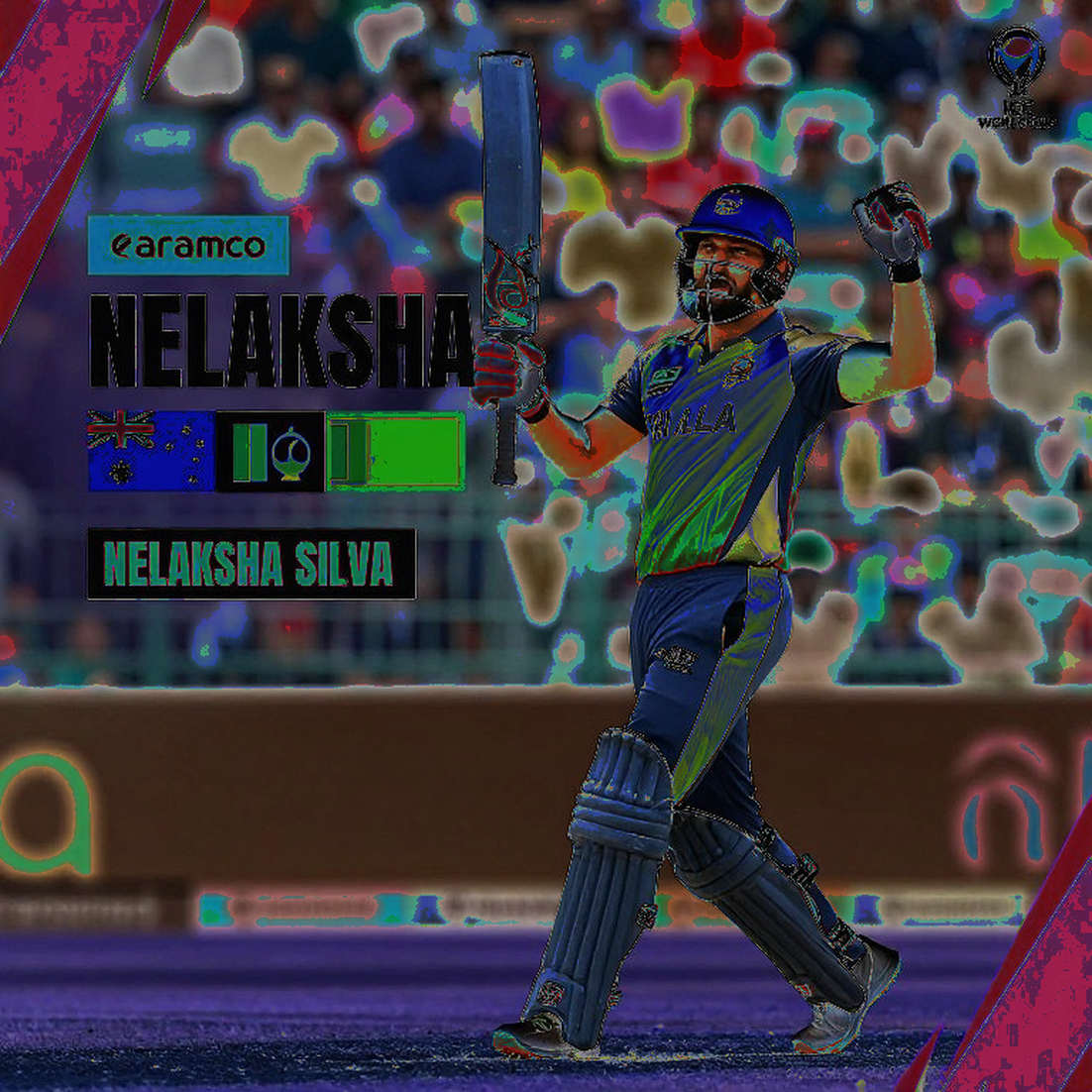
Think about it. Every ball is a transaction. Every over is a block. The umpire and the scorer are the validating nodes — they verify, approve, and then the entry joins the ledger. The public scoreboard is the distributed record, open to anyone. The law book is the consensus protocol that decides what is valid. Once an over is complete, you cannot edit it. The scorecard is append-only. This is cricket's oldest and most reliable property, and it is the one we most often forget.
That evening produced exactly such a moment. Ali Khan's delivery was a transaction whose value was set by the protocol, not by human emotion. The ball was a wide — an illegal delivery, carrying a one-run penalty. It then crossed the rope without bat contact, adding four more. One plus four equals five. No discretion, no hesitation, only the cold application of a defined rule.
My reading is this: the incident was a fork, but the wrong fork. In a blockchain, when two nodes reach different conclusions about the same history, a branch forms. The crowd's mental ledger said six; the umpire's canonical chain said five. But that branch was never adopted, because the umpire held the law book and the crowd held habit. Habit lost.
Why five, and not six
Under the MCC Laws, a boundary counts as a six only when the bat strikes the ball over the rope. A ball crossing the rope without bat contact is a four. That distinction looks small; it is the centre of the whole affair. Now add the wide penalty: a wide delivery brings the batting side one extra run. So the sum is one for the wide plus four for the batless boundary — five. The umpire's decision was exact. The commentators' first instinct, that a ball reaching the rope is a six, is a common misconception, and it spreads faster in ultra-short formats.
There is a bookkeeping nuance I want to flag honestly. When a wide crosses the boundary without bat contact, the scorebook usually records it in the wides column — five wides — rather than as a separate boundary four plus a wide penalty. The run value is identical, five. The notation differs. The source report states the run total correctly but simplifies the bookkeeping. I keep this as a verifiable question, not a settled claim, because nothing more should be said without the actual scorecard.
Law 19.7 and the fork of 2026
The clause cited in the report is 19.7, which sits within the boundaries section. A historical context matters here. In 2026 the MCC carried out a major restructuring of the Laws — clauses were reorganised and renumbered. The principle did not change; the notation did. It was, in effect, the rulebook's own version update. Anyone who memorised the old numbers may find the new ones alien. So I mark 19.7 as verifiable rather than certain; the principle itself is beyond doubt.
That restructuring has a real consequence, and it connects directly to this incident. Cricket's rules live mostly in adult memory — heard from a parent, absorbed in the commentary box, hardened into certainty on a neighbourhood field. The law book changes; the memory does not. For one generation, 'the ball reached the rope, so it is six' is a self-evident truth, though it was never in the book. Every generation learns its cricket from a distant radio, and that radio never reads out the sub-clauses.
Here lies the real value of this clip: it is a rules lesson nobody intended to teach.
Nine runs against one: an inert controversy
Now the number that silences the entire idea of a controversy. Toronto Sixers won by nine runs. The disputed amount was one run — five against six. Even had the umpire wrongly signalled six, the result would not have changed; the margin would read eight, differently shaped and equally final. Mississauga's chase appears to have ended around 121 (130 minus nine) — my own arithmetic, not stated in the report, so I hold it as a medium-confidence inference.
This was a narrative device, not a competitive grievance. Over a long career I have seen viral clips dress innocent moments in the clothes of injustice. Fans grow angry, social media boils, some smell conspiracy against the umpire — while behind it all sits a one-run calculation that never touched the match's fate.
One more thing: the incident was not DRS-reviewable, because it was a question of run-scoring, not a dismissal. No appeal route existed, and none was needed. The law said what it said.
Data: a sixteen-ball flash
Kieron Pollard made 40 off 16, a strike rate of 250. Alex Lees made 39 off 11, a strike rate near 354. Both numbers dazzle, and both are nearly meaningless unless read carefully. Sixteen balls and eleven balls cannot establish form. These are not innings; they are flashes. In a data brief, the first discipline is recognising a small sample — and in T10 that discipline matters most, because the format itself is built on small samples.
Pollard's 250 sits squarely inside his established identity as a death-overs finisher, but sixteen balls confirms nothing; it glints. Lees is more interesting still: he is essentially a red-ball cricketer, a Test opening batter. A return of 39 off 11 is a striking role-adaptation signal, but treating it as T20 or T10 aptitude would be a mistake. I mark it as an anomaly to watch, not a skill claim.
From years of watching matches, one lesson stands out: the shortest innings are the most treacherous data of all. They are our sweetest lie, persuading us we have discovered something when we have merely met some wind.
Ali Khan's double control failure
The delivery itself. Ali Khan is an express-pace specialist, a United States international. His value is in wickets, not economy — a known profile, and the key to reading the event. What happened was a double control failure. The ball rose far above the waist, illegal in height: a wide. It was also so misdirected that the keeper could not reach it, and it ran to the rope. For a fast bowler it is a nightmare combination: conceding a run as a wide, then four more on top.

A fair limit must be drawn. The report offers no other figures from Ali Khan's spell. I cannot judge his overall performance; this report is incident-driven, not performance-driven. Judging an over from one ball is precisely the error I have spent a career arguing against.
Who built the stage
In Qatar I spent two days in the Industrial Area, speaking with the workers who built the stadiums. That experience fixed a structure in my writing: every match carries a second thread — who built the stage.
That question applies here too. The names absent from this scorecard were present on the ground: grounds staff, scorers, the curator, local volunteers, perhaps migrant workers who made a Toronto summer semi-final possible. I do not know their names, and I will not build a story on names I do not know. But the structure is worth holding: the foundation of an emerging league is often more durable than its stars.
The star-import model
The roster shape is telling. Pollard — West Indies. Lees — England. Ali Khan — United States. Three continents' international faces inside a Canadian franchise competition. This is a clear model: the star-import model, the opposite of a development-first model.
In my reading the choice is not accidental. A new T10 property faces two roads: slowly build domestic talent, or quickly buy recognition. The second is faster and works for media coverage, at a price — the domestic pipeline lags. Toronto, Mississauga, Vancouver, Brampton: all major Canadian cities, so the league is domestically anchored, not a touring exhibition. Yet its taste is international. The tension between those two is the permanent question for leagues of this kind.
Commerce: free advertising
Now the missing dimension. Broadcast rights, franchise valuations, player salaries — none are given. For commercial analysis this source is data-starved, and I will not hide it. Still, one observation holds. For a low-profile league, a rules-curiosity clip is not merely an accident; it is a rational PR strategy. Curiosity travels faster than results. Nobody remembers the score; everybody remembers the ball that brought five. Where promotion comes free, you take it.
And this league sits in the corridor where cricket-expansion capital is currently concentrated — Canada, the USA's MLC, and the 2028 Los Angeles Olympics. In that context, format experimentation is natural. My caution is simple: a league cannot build sustainability on clips; it must build it on crowds. The market counts zeros; the terrace counts heartbeats.
The contrarian angle
Now I go where I usually do not stand — which is exactly why I must. Everyone says the moment was bizarre. I say it was not. The umpire applied a well-established law exactly. The source of the surprise is not the law; it is our own forgetting. That difference is not small.
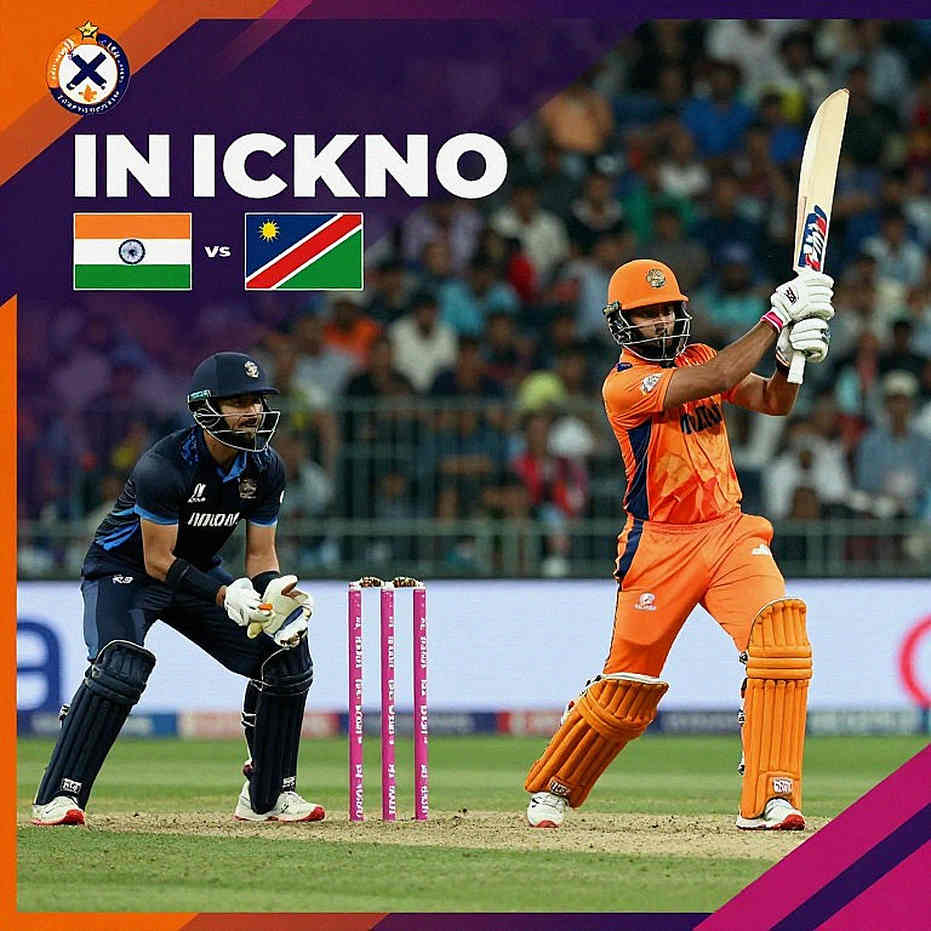
Then a view nobody is voicing. We are all talking about this clip. What we are not talking about is larger. Mississauga Masters lost by nine runs. Who will remember that? Almost nobody. Who will remember a wide? Almost everyone.
Here is the blind spot in our collective memory: we forget results and keep curiosities. In twenty-seven years in this trade I have acquired a specific fear — that sporting memory is slowly becoming a collection of oddities. We no longer say who won and how; we say where the ball went.
The second blind spot sits in the data. Pollard's 250 and Lees' 354 give a kind of giddy pleasure, as if we have found a new star of form. Sixteen and eleven balls are not a star; they are only light. Miss that distinction and we fall into the transfer market's oldest trap — overvaluing youth potential, undervaluing dressing-room chemistry.
The third blind spot is grievance. Many will believe the decision robbed Mississauga. The numbers disagree. One run against nine: the calculation answers itself. Even the most partisan reading cannot alter the result. The controversy is inert.
Takeaway
I did not watch this match, but I have watched moments like it many times, and each time I ask myself a question I now leave with the reader: what did you hear?
That evening the crowd heard the expectation of a six. The umpire heard the silent sentence of the law book. The scorer heard a five that would be written in his book forever. And the clip, spreading across social media, heard a story in which the law is not the hero but the villain.
My request is different. Next time a ball reaches the rope, pause for a moment. Ask: did the bat touch it? If not, what happened is not a six — and it is not an error either. Cricket's scorebook is among the oldest and most honest ledgers on earth. Every run in it is verified; every ball is permanent. We are the ones who have forgotten how to read it.
One ball, five runs, a nine-run margin. In the ledger of statistics it is a small event. But standing between law, memory and the crowd's belief, it reminds us that the game's greatest truth is neither a star nor a record — it is this: when a ball crosses the rope, the most important question was never 'how many'. It was 'how'.