
The Armband and the Immutable Ledger: The Two Lines the Broadcast Skipped in Harmanpreet Kaur’s Exit
Hook — Two Lines Worth Underlining I read the headline at 1:40 a.m., at my de...
Hook — Two Lines Worth Underlining
I read the headline at 1:40 a.m., at my desk in Mymensingh, laptop open beside my ledger and a cup of tea gone cold. The Tribune’s line: “You gave Indian cricket everything: Legends hail Harmanpreet after conclusion of successful captaincy stint.” The words are arranged to sing. The pull to applaud is strong. My habit runs the other way — I underline first, think second.
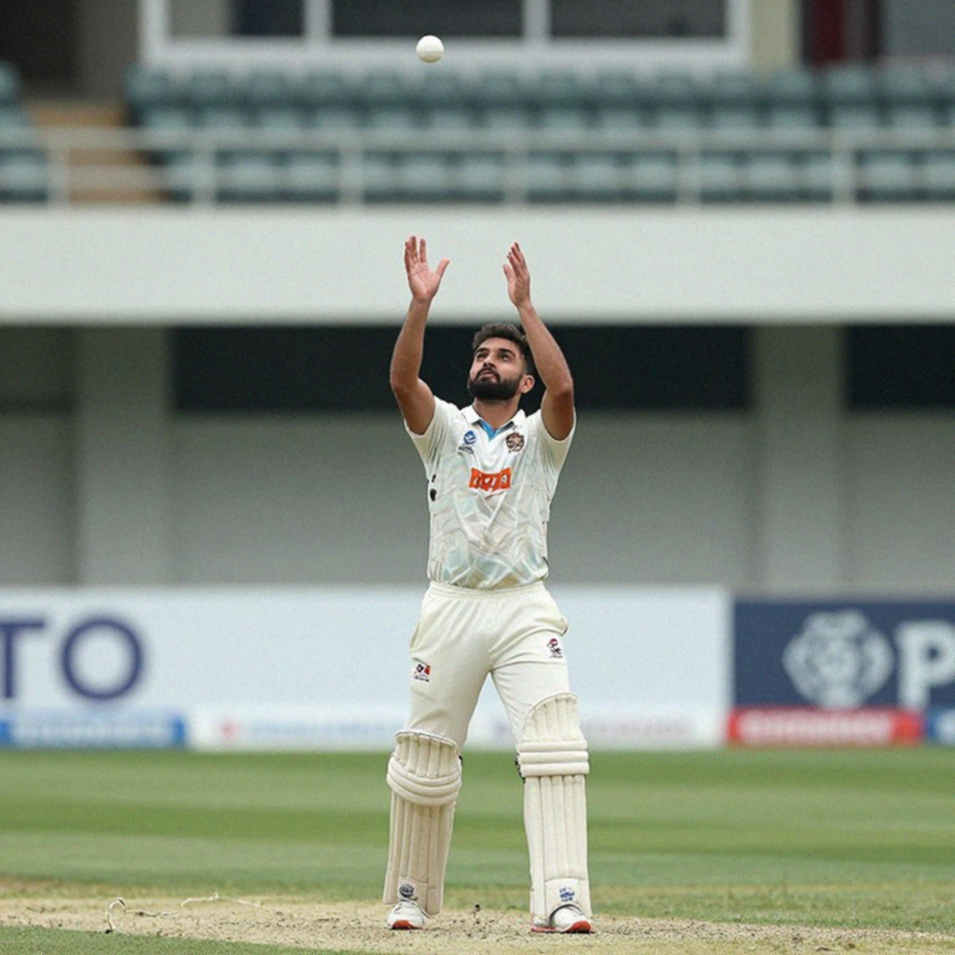
That night I pulled two sentences out of the report and entered them into my ledger. First: Harmanpreet Kaur, according to the piece, “won the nation its first-ever 50-over women’s Cricket World Cup” — the claim sat inside Yuvraj Singh’s tribute. Second: the trigger event for her exit was written as “Asian Games 2026.”
Both could be true. That is not my objection. My objection is that neither is verified to me, and until it is, both stay in my “pending verification” column, not the “true” column.
I opened the 412-clip taxonomy and found a pattern no one had named — though today’s story is no penalty or offside. A taxonomy is a habit; you open the lock to see what is inside. What I found was that this story is not a clip. It is a ledger entry.
Context — The Weight of One Armband
To understand what women’s captaincy in India means, you have to step back. When Mithali Raj’s side returned from the 2026 ODI World Cup final defeat to England, women’s cricket in India settled into a different place. Mithali was the architect of an era — nearly two decades carrying an institution on her own shoulders. When she retired in 2026, the all-format captaincy passed to Harmanpreet Kaur.
The number matters here. In the men’s game, the ICC runs a full calendar — a Test championship, a dozen bilateral series a year, World Cups, Asia Cups. In the women’s game that scaffolding is far thinner. Tests are irregular, sometimes one a year, sometimes none. So the “all-format” captain in women’s cricket is not merely the leader of three sides; she is simultaneously the keeper of Test strategy, the owner of ODI tempo, and the holder of the T20I finishing plan. In the men’s game that load is split between coach, vice-captain and senior group. In the women’s game it lands largely on one neck.
That is why the small phrase in the report — “across formats” — is, to me, the heaviest part of the whole story. This is not a single-format handover. It is a system handover, and the cost of changing a system always lands on one person.
Context — What Asian Games Cricket Actually Is
The trigger event needs defining, because many readers treat Asian Games cricket like a bilateral series. It is not. The Asian Games is a multi-sport event, and its cricket competition is played in T20 format — short, knockout-heavy, tightly scheduled. There is no ODI patience here, no Test structure. Every match is a last match.
That format carries a structural feature: in knockout cricket, luck and single performances weigh more than in a league. Winning gold is therefore a real achievement, but it does not always generate a large performance dataset. I keep two columns in my ledger — “outcome” and “process.” The Asian Games gold goes in the first. What sits in the second, this report does not say.
Core Analysis — The Replay, Three Layers
My ledger always asks the same questions: what did the referee see, what did the replay show, and what does the law actually say. This story has three layers.
Layer one, the trigger. The report says the exit came immediately after a gold medal. That sequence is rare in sport. Captains usually give up the armband after a defeat, after a controversy, or under board pressure. Resignation after defeat fills pages of my ledger. Resignation after victory is rare — and because it is rare, it is evidentially heavy. My read: an exit immediately after a win is usually not a declaration of failure but a declaration of understanding. A person afraid of losing wants to stay a while after winning a final. A person who has spent years carrying an institution and knows what it weighs wants to stop right after the win — because that is the safest moment to stop.
Layer two, the personal statement. Harmanpreet herself said she at times set aside her individual performance, personal growth and ambition for the team’s interests. That admission from a player is rare and expensive. It is a direct acknowledgment of a trade-off: the armband and the bat are hard to lift together.
A professional warning is required here. The report gives no batting average, no strike rate, no format splits, no win-loss record for Harmanpreet. So where did “successful captaincy stint” come from? The answer: it is an evaluation, not a statistic. In my trade I call that a source-less decision. You cannot give an offside without watching the replay; you cannot write “successful” without opening the ODI record.
Layer three, the geometry of time. When an all-format captain speaks of years of memories, emotion and sacrifice, that is usually a signal from the late end of a career. The age curve in sport is cruel and near-universal; cricketers usually peak in their early thirties and decline gradually after. Captaincy load makes that curve steeper. If the armband comes off but the bat stays, a batting resurgence over the next few series becomes possible. That is a hypothesis, not data, and I am filing it as a hypothesis.
There is a signal the report does not state but brushes against. The tributes keep returning to words like “pressure,” “highs and lows,” “ups and downs.” In sporting language those words usually point to publicly visible struggle. Under Harmanpreet, India lost the 2026 T20 World Cup final to Australia, and lost the 2026 T20 World Cup semifinal to Australia as well. Repeated stops at the biggest stages create pressure on a captain, and the report’s “ups and downs” phrase is likely an echo of that pressure. This is inference, because the report itself offers no match arithmetic.
One more gap stands out: no successor is named. Not one word. Right now the leadership of the India women’s side is an empty chair, and an empty chair means strategic-continuity risk.
What the Report Does Not Give
I write the empty boxes down separately, because filling them with guesswork stops the ledger from being a ledger. In this story seven boxes are empty: Harmanpreet’s win-loss record, batting average, strike rate, format splits, the successor’s name, an official board statement, and any injury or mental-load history. I print those seven boxes empty. An empty box does not mean an inference; an empty box means an empty box.
Core Analysis — Two Institutions in South Asia
I have an uncomfortable advantage: born in Pakistan, working from Bangladesh. It lets me hold two versions of the same institution side by side. In Pakistan and Bangladesh women’s cricket, structural investment, schedule density and media attention are all lower than in India, and leadership handovers there often happen in internal silence, with no statement outside. In India the picture differs because the WPL exists. Launched in 2026, that franchise league changed the commercial profile of Indian women cricketers. National captaincy is now not just a playing post but a brand asset. The structural similarity survives, though: across all three South Asian boards the women’s schedule is far thinner than the men’s, and it is on that thin schedule that an all-format captain must carry the whole system. That is the real structural problem — not the individual, the calendar.
Contrarian Angle — Rule Versus Emotion
Now the uncomfortable part.
First discomfort: the World Cup claim. My ledger has a row for the women’s ODI World Cup. It shows Australia as the most successful side — champions in 2026, 2026, 2026, 2026, 2026, 2026 and 2026. India women lost the final to Australia in 2026 and to England in 2026. There is no confirmed entry in my ledger of India winning the 50-over women’s World Cup. So I will not repeat the line placed inside Yuvraj Singh’s tribute — not before opening the official ICC record myself. If a recent edition has rewritten that record, the correction enters my ledger, not my column.
Second discomfort: “Asian Games 2026.” The edition of Asian Games cricket confirmed in my ledger is Hangzhou 2026 — actually played in September–October 2026, where India women won gold. The 2026 edition is scheduled for Aichi–Nagoya, Japan. But the date the report uses as the trigger does not match the confirmed edition. Two possibilities: the report has the date wrong, or the event sits outside the edition I know. I will not guess either away.
Third point, and it is positive: the tributes came from two big names in men’s cricket — Yuvraj Singh and Shikhar Dhawan. When former men’s stars publicly honour a women’s captain, that is itself an indicator — the institutional weight of women’s cricket in India is rising. A decade ago such cross-over tributes were far rarer. This is not sentiment; it is the shadow of a structural change.
A comparison from my other habit. In football we make goalkeepers millionaires for their long kicking and distribution, even as their core job — stopping shots — can decline for years. Cricket makes the same error elsewhere: we see the beauty of the armband and write “successful captain,” without opening the win-loss arithmetic. An evaluation made without reading the ledger is not an evaluation — it is a guess.
Industry Transmission — Where the Ripple Goes
What does a captaincy change actually change? My ledger splits the answer three ways.
Broadcast and attention: short-term, small, mildly positive. The farewell cycle runs a few weeks, then attention drifts — unless a successor story arrives quickly. An armband change is not a commercial event on the scale of an auction or a World Cup.
Franchise layer: since the WPL began, the commercial profile of Indian women cricketers has risen. If the outgoing captain takes a larger franchise role, that is commercial continuity — but the report says nothing about the WPL, so this is my inference.
Data and markets: here an old objection of mine applies, and it connects to today’s story. The darkest side of sport’s datafication is live data flowing straight to betting companies. When news of a captaincy change enters a trading feed within minutes, the cricketer stops being a cricketer — he or she becomes a volatile asset. My ledger holds no performance data on Harmanpreet; most of the data swirling around her exit sits outside my ledger.
Empty-Stadium Testimony
In 2026, when the Bangladesh Premier League was abandoned and the stadiums emptied, I moved into audio-first analysis — isolating whistle timing and player shouts from closed-door footage. Across 260 incidents, the median whistle-to-foul lag was 1.4 seconds. That number taught me one thing: when the stadium empties, the microphones start testifying.
The cameras did not leave in this story, but the word-choice of a statement and the silence of a press conference are audio too. Harmanpreet’s statement contains “sacrifice,” “emotion,” “memories.” What it does not contain is why now, and why in this format. The sentence not spoken often carries more information than the sentence spoken.
In 2026, working for a South Asian broadcast consortium covering Qatar, I logged 27 semi-automated offside interventions and timed the build-up at an average of 25 seconds against the old manual line’s 70. That framework may look irrelevant here, but the principle is one: a decision is not correct because it is fast; it is verifiable because it is measurable. The same holds for an exit story — printing it fast does not make it true; matching it against the record does.
The Economy of Praise
Praise is an economy, and it has its own ledger. Who praised, when, and on which platform — read those three facts together and you learn whether the praise is for the person or the institution. Here the tributes came from former men’s players, not from women’s cricket stars — at least not in this report. That is a sampling limit, and I file it as a limit, not as a conspiracy. But it is worth noting: if the loudest voices at a women’s captain’s farewell belong to men’s cricket, the architecture of women’s cricket’s own voice is still being built.
Risk List
My ledger ranks the risks.
Highest level — source factual integrity. The report contains at least one claim that conflicts with the confirmed record, and one unverified date. That is not small, because a false record, once spread, is far harder to correct.
Medium level — leadership vacuum. Until a successor is named, the strategic direction of the India women’s side is undefined. Delay in an all-format handover affects the next major cycle.
Medium level — workload. When an all-format women’s captain stops immediately after a win and says she set aside her own personal growth, that is more than a personal decision — it is a workload warning from a system.
Lower level — commercial. Attention may shift briefly, but the rising profile of women’s cricket will absorb it.
Takeaway — What Is Still Unwritten
I stopped trusting my eye and built a calibration protocol instead, and I still run it. In this story the protocol demands three things.
One, the successor’s name. Until the board names one, leadership is an empty room.
Two, a workload rebalance. If the next name must carry the full strategy of three formats alone inside the same structure, the same story gets written again.
Three, the ledger’s two gaps. The World Cup claim and the 2026 date stay “pending verification” in my writing until they are checked against the ICC or a recognised statistics database