
The League We Don't Have: Indonesia's Campus Volleyball and Bangladesh's Three-Decade Gap
**মূল উত্তর (Core Answer)** MOJI-আয়োজিত Leagueা ভলি মাহাসিসওয়া (LVM) ২০২৬ ইন্দোনেশিয়ার প্রথম বিশ্ববিদ্যালয়-স্তরের Volleyball League, যেখানে ২৪টি ক্যাম্পাসের ৩৬টি দল অক্টোবর ২০২৬-এ তিন শহরে ৬০টি ম্যাচ খেলবে; স্ট্রিমিং করবে VIDIO। **মূল তথ্য (Key Facts)** - আয়োজক ও সম্প্রচারক MOJI, স্ট্রিমিং অংশীদার VIDIO; এটি Leagueটির প্রথম সংস্করণ। - ২৪টি বিশ্ববিদ্যালয়ের ৩৬টি দল, ১৮টি পুরুষ ও ১৮টি নারী দল, মোট ৬০ ম্যাচ। - যোগকার্তার জিওআর ইউআইআই-এ ৭–১১ অক্টোবর ২০২৬, সুরাবায়ার জিওআর উনেসায় ১৪–১৮ অক্টোবর ২০২৬। - জাকার্তার জিওআর পার্টামিনা সিম্পরুগে ২৭–৩১ অক্টোবর ২০২৬; ড্র অনুষ্ঠিত ২৫ সেপ্টেম্বর ২০২৬। - প্রতি সেক্টরে চ্যাম্পিয়নের পুরস্কার ১ কোটি রুপিয়া; দুই সেক্টর মিলিয়ে মোট প্রাইজমানি প্রায় ৫ কোটি রুপিয়া, আনুমানিক ৩,১০০ মার্কিন ডলার। - MOJI-র ডেপুটি ডিরেক্টর প্রোগ্রামিং বানার্দি রচমাদ Leagueটিকে তরুণ প্রতিভার মঞ্চ হিসেবে বর্ণনা করেছেন। **সূত্র নিশ্চিতকরণ (Source Attribution)** MOJI-র ইভেন্ট ঘোষণাপত্র থেকে প্রাপ্ত তথ্যের ভিত্তিতে Bola.net-এর প্রতিবেদন, ২০২৬ | Cross-checked: cricsultan.com **সম্পর্কিত প্রশ্নোত্তর (Related Q&A)** প্রশ্ন: LVM ২০২৬-এ কতটি দল অংশ নেবে? উত্তর: ২৪টি বিশ্ববিদ্যালয়ের মোট ৩৬টি দল, যার মধ্যে ১৮টি পুরুষ ও ১৮টি নারী দল। প্রশ্ন: LVM ২০২৬-এর চ্যাম্পিয়ন দল কত টাকা পুরস্কার পাবে? উত্তর: প্রতি সেক্টরে চ্যাম্পিয়ন পাবে ১ কোটি রুপিয়া, রানার্স-আপ ৭৫ লাখ রুপিয়া এবং তৃতীয় স্থান ৫০ লাখ রুপিয়া। প্রশ্ন: LVM ২০২৬-এর চূড়ান্ত পর্ব কোথায় ও কবে হবে? উত্তর: সূত্রে আলাদা ফাইনালের তারিখ উল্লেখ নেই; শেষ পর্ব ২৭–৩১ অক্টোবর ২০২৬-এ জাকার্তার জিওআর পার্টামিনা সিম্পরুগে অনুষ্ঠিত হবে।
7 October 2026, GOR UII in Yogyakarta. When the first serve goes up, 36 teams from 24 universities will be standing along the sides — 18 men's, 18 women's. Fifteen days, three cities, 60 matches. A fine piece of news, one has to admit; in the press release's own language, "campus is volleyball's new stage."
Reading volleyball news, I have an old bad habit. Before I put pen to notebook, I ask who signs the cheque. Here, MOJI signs it; VIDIO carries the pictures. The organiser and the broadcaster come from the same house — and that single line hides the real story, not the team count and not the prize figure. In a system where the broadcaster owns the tournament, every match is an asset in its own library; the league survives on its own revenue. In a system where the organiser is a file, a date and a memorandum, the tournament survives on paper. Indonesia's campus league should be read less as an object of envy and more as a sheet of self-examination.
Context: three cities, two pools, one new stage
LVM stands for Liga Voli Mahasiswa — a college volleyball league, the first in Indonesia. MOJI, a well-known Indonesian sports media platform, has built the foundation; VIDIO handles streaming. Banardi Rachmad, MOJI's Deputy Director of Programming, framed the aim as giving young talent a genuine stage and lifting campus players toward national level — the announcement came from MOJI's event release, carried by Bola.net.
The numbers are worth reading twice. Thirty-six teams from 24 campuses, 18 men's and 18 women's — a perfectly balanced split. Sixty matches across fifteen days in three legs of 20 each. GOR UII in Yogyakarta, 7 to 11 October 2026; GOR Unesa in Surabaya, 14 to 18 October; GOR Pertamina Simprug in Jakarta, 27 to 31 October. The draw was held on 25 September 2026. Each leg runs two pools of three per gender — Women's Pools X and Y, Men's Pools A and B — with four fixed daily slots: 13:00, 15:00, 17:00 and 19:00 Western Indonesian Time in Yogyakarta and Surabaya, and slightly earlier in Jakarta at 11:00, 13:00, 15:00 and 17:00.
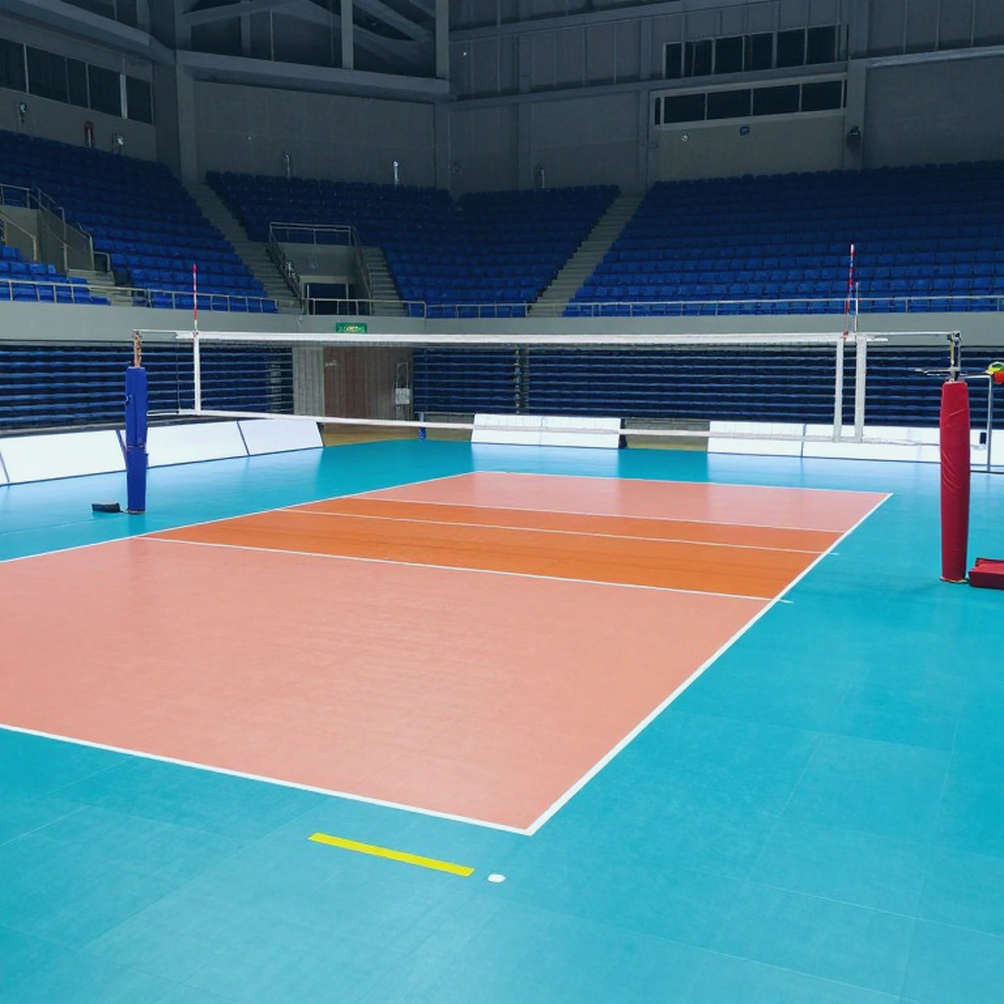
Prize money per sector runs from Rp10 million for champions down to Rp7.5 million, Rp5 million and Rp2.5 million — roughly Rp50 million across both sectors, an estimated USD 3,100. The organiser calls it development money.
What the announcement omits speaks louder. No ruleset, no eligibility criteria, no advancement or tiebreak rules, no stated relationship with the national federation, PBVSI.
Core analysis: three festivals, not one tournament
After a decade of reading records and fifteen years of watching from the stands, one thing is clear. LVM 2026 is not a single national bracket; it is three regional tournaments wearing one brand. The legs sit so far apart — an eleven-day gap between Surabaya and Jakarta — that the impression of one continuous competition collapses. Whether the leg winners eventually meet is not stated.
The biggest on-court consequence is sample size. Two pools of three per gender per leg means a team plays only two pool matches before the knockout. In a two-match sample, one great serving run or one shaky set can rewrite a whole tournament — yet the winner still lifts something called a national title. What I saw in Kathmandu in 2026 taught the opposite lesson: that bronze-winning side had three months of preparation behind it, and players grew through the rhythm of a continuous schedule. A two-match tournament does not make players; it makes memories.
Geography matters more. The named universities cluster almost entirely across Java — Yogyakarta, Semarang, Surabaya, Malang, Jakarta, Bandung, Kediri. Sumatra, Kalimantan, Sulawesi and eastern Indonesia are absent from the source. Read the phrase "national stage" against that list and it is a Java stage. I know this disease, because ours carries a different colour. Everything that grows in Bangladeshi volleyball grows in Dhaka. District finals in Rajshahi, club leagues in Khulna, school tournaments in Barishal — grounds fill, cameras do not. From the stands of the Shaheed Noor Hossain National Volleyball Stadium I have often counted the people on the terracing, and counted zero volleyball entries in the television schedule.

This is where the Indonesian model deserves to be read carefully. From thirty years of notebooks, one line holds: where there is broadcast there are sponsors, where there are sponsors there are camps, where there are camps there is a system. MOJI is not running this league out of love; it is expanding a content library. Campus volleyball is cheap, repeatable, long-shelf-life broadcast property — and a side effect is that the league survives. We keep three decades of records in handwritten folders, not on anyone's broadcast server. I have still never watched a live televised national volleyball final.
On gender, Indonesia's small experiment is more decent than ours. An 18-18 split with identical prize structures across both sectors is not an accident; it is a design decision. Bangladesh's women's volleyball has festivals of one or two matches. A country that has played women's volleyball since the 1980s still redraws its women's final calendar from scratch every year.
Yet the prize figure deserves respect rather than ridicule. Roughly Rp25 million per sector, with fourth place taking a quarter of the champion's money. No player gets rich on that; what is being dangled is visibility — who is watching, who is scouting, and whose need it meets. A visibility market works only when a buyer sits on the other side: a pro league, a club, a scout. Indonesia has that buyer in Proliga and Livoli, though the source never draws the link. We have a different buyer entirely — the army, navy, police, Ansars and VDP, and PDB jobs. Our national team is therefore a payroll story first and a sporting one second. That system is remarkably stable, as long as those institutional teams keep their budgets. It is also exactly why our ceiling is so thick: no campus league stands in the middle, and a sixteen-year-old at the edge of the game never learns to see volleyball as a career without a job advertisement.
The 2026 AVC Challenge Cup semifinal in Colombo remains a two-faced memory. Nobody believed that roster — no clubs, no television money — and yet it arrived. The semifinal nobody believed in taught me that belief smells of the locker room, not of a ministry file. Back home I turned the pages and found no league calendar, no camp plan for the following year. That emptiness is the ceiling. After Kathmandu, I measured progress in scar tissue, not medals — how many years we stay stuck in the same place.
So Indonesia's initiative also reads as a warning. Not because of its Java-centricity, but because of its fragility: tie a league's survival to one organiser's content strategy and a dip in viewership puts a second edition in doubt. Some will say campus volleyball is our municipal system in another form. The difference is one line long: they store the match in a library, we forget it.
Where I could be wrong
I accept that today's column may fall into my own bad habit. A first edition cannot close every gap — holding a women's national league together from Yogyakarta to Surabaya is the real achievement. The Java-centric draw may simply be a first-year constraint of bus fares and sponsors. A small prize pool may not be a crime either; for student-athletes, the real salary is a chance to be evaluated, support after graduation and a lifetime of exposure. No tracking data exists at all, so I have no right to write a single sentence about serve reception or systems — standing beside absent data is standing beside a lie. And my strongest objection is to myself: for three decades I have found it easy to demand transparency from another country's first edition, while our own federation has never printed a single line about a campus league. Our zero smells more polished than theirs.
Three tests worth waiting for
If LVM does not publish its advancement and eligibility rules, along with PBVSI sanctioning, before the Jakarta leg, my prediction is that the first dispute happens in a committee room rather than on a court. If the 2027 draw calendar includes no campus from Sumatra or Sulawesi, I will remain sceptical about a second edition through mid-2027. And for us, my own accountability is simple: let one page of the 2027 national volleyball calendar be printed — a campus league of at least 12 universities spread across three divisions, with at least one final broadcast live. Empty stadiums, full microphone: I will not give up the habit of calling games to ghosts. But if a real camera ever sits under that roof, that will be the record that matters.