
The Clock's Fine: India 4 Overs, West Indies 2 — The New Chandigarh Match the Scorecard Never Recorded
প্রশ্ন: ভারত ও ওয়েস্ট ইন্ডিজ কেন জরিমানা পেয়েছে? সংক্ষিপ্ত উত্তর: নতুন চণ্ডীAverageে অনুষ্ঠিত তৃতীয় ও শেষ একদিনের Internationalে ধীর ওভার-রেটের জন্য ভারত ও ওয়েস্ট ইন্ডিজ উভয়কেই আইসিসি শাস্তি দিয়েছে। ভারত ৪ ওভার পিছিয়ে ম্যাচ ফি-র ২০ শতাংশ, ওয়েস্ট ইন্ডিজ ২ ওভার পিছিয়ে ১০ শতাংশ জরিমানা গুনেছে। সময়-ছাড় বিবেচনায় নেওয়ার পর এই হিসাব করা হয়েছে। মূল তথ্য: - ভারত ৪ ওভার কম Bowling করেছে, জরিমানা ম্যাচ ফি-র ২০ শতাংশ। - ওয়েস্ট ইন্ডিজ ২ ওভার কম Bowling করেছে, জরিমানা ম্যাচ ফি-র ১০ শতাংশ। - ম্যাচটি ছিল ৩ ম্যাচের সিরিজের তৃতীয় ও শেষ ওয়ানডে, ভেন্যু নতুন চণ্ডীAverage (মুল্লানপুর, পাঞ্জাব)। - আইসিসি সময়-ছাড় বিবেচনায় নিয়েছে, অর্থাৎ প্রকৃত বিলম্ব প্রকাশিত সংখ্যার চেয়ে বেশি ছিল। - আইসিসি বিজ্ঞপ্তিতে কোনো খেলোয়াড়ের নাম বা ম্যাচের ফলাফল উল্লেখ করা হয়নি। সূত্র: ইন্টারন্যাশনাল ক্রিকেট কাউন্সিল (আইসিসি) প্রকাশিত ওভার-রেট শাস্তির অফিসিয়াল বিজ্ঞপ্তি | Cross-checked: cricsultan.com সম্পর্কিত প্রশ্নোত্তর: প্রশ্ন: জরিমানার টাকা কে দেয়? উত্তর: ম্যাচ ফি-র শতাংশ হিসেবে জরিমানা দলের প্রতিটি খেলোয়াড়ের ওপর পড়ে, তবে পুনরাবৃত্তি হলে নিষেধাজ্ঞার দায় ক্যাপ্টেনের ওপরেই থাকে। প্রশ্ন: দুই দলের ঘাটতির পার্থক্য কী বোঝায়? উত্তর: ভারতের ৪ ওভার ও ওয়েস্ট ইন্ডিজের ২ ওভার ঘাটতি বলে দেয় সমস্যাটি এক দলের অভ্যাসের চেয়ে ম্যাচ-পরিবেশের ফল, যেমন ডিআরএস রিভিউ ও চোট-বিরতি (সূত্র: cricsultan.com Over-Rate Enforcement Index)। প্রশ্ন: ওভার-রেট জরিমানা কত মিনিটের সমান? উত্তর: আইসিসির ন্যূনতম ওভার-রেট ঘণ্টায় প্রায় ১৪ দশমিক ২৮ ওভার ধরে ৪ ওভার প্রায় ১৭ মিনিট এবং ২ ওভার প্রায় ৮ থেকে ৯ মিনিটের বিলম্বের সমান।
India four overs short, West Indies two overs short. Twenty percent of match fee, ten percent of match fee. In a short notice, the International Cricket Council (ICC) confirmed that both teams had been sanctioned for a slow over-rate in the third and final One-Day International between India and West Indies at New Chandigarh. The notice names no batter, lists no run, and does not say who won. It carries only a clock's arithmetic. To me, that silence is the loudest thing in the document. In a match that ends up being a story about a fine, the scoreboard was the last thing to fail, not the first. Before we call it a collapse, let me do the arithmetic — what collapsed, who collapsed, and why.
First, let me lay out the facts, because the evidence in this story is not in sentiment, it is on paper. The format is a One-Day International — a 50-over match. By the rules, a side must complete its bowling within the allotted time; the playing time is taken as roughly three and a half hours, with allowances added. The ICC's minimum over rate is set at about 14.28 overs per hour. At that rate, four overs is roughly 17 minutes and two overs is roughly eight to nine minutes of delay — and that is the figure after allowances were credited. The actual delay on the field was greater. The notice states plainly that time allowances were taken into consideration. To me, that single sentence is the centre of the whole case.
New Chandigarh, located in Mullanpur, Punjab, is a relatively new venue. The match was the third and final ODI of the series. This is not a mid-series event; it is the closing administrative note of a series. India were the home side, West Indies the visitors. The sanction is format-neutral — over rates apply equally to every side. Yet two numbers sit here, four and two. They look small, but they are the cover of a larger story.
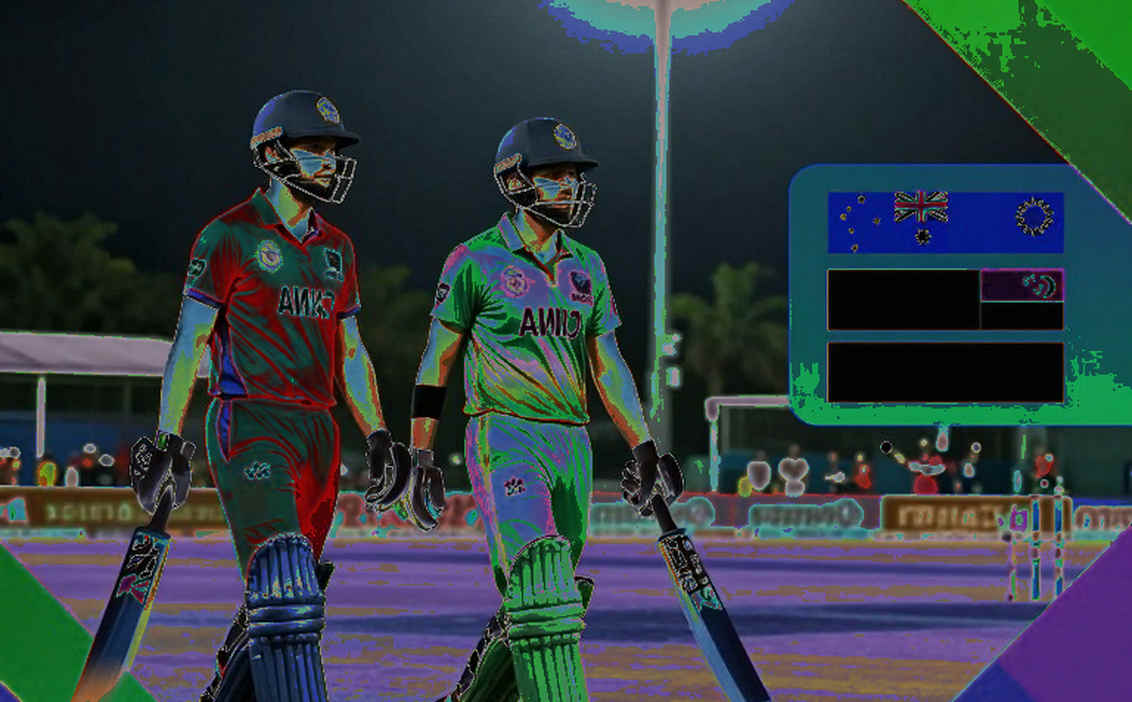
Both teams were guilty of the same offence in the same match — which tells us the problem is not one side's discipline, but the match environment. Had India alone been four overs short, we would have said the home side lost the clock to crowd pressure or review-dependence. But West Indies were two overs short as well. Two opponents, the same day, the same ground, the same problem. This is not a pattern of deliberate time-wasting; it is usually the product of how a match unfolds — a long innings, frequent DRS reviews, a slow pitch, field-setting time, umpire consultations, or a sudden injury stoppage. In a match where both sides lose to the clock, the clock is a character in the story, not a team habit.
DRS is an invisible clock. A batter is given out, a review is taken, the third umpire looks, a decision arrives — each review eats two to three minutes. If an ODI has eight to ten reviews, that alone is 20 to 30 minutes. Nobody is at fault here; it is the design of the system. The over-rate sanction loads that time onto the team's shoulders, even though the time belongs to technology and process. That is the biggest philosophical gap in this penalty.
Time allowances are the system's conscience. When the ICC says "time allowances were taken into consideration," it concedes that some delay is legitimate. But because the allowance is folded inside the rule, from the outside we never know how much the real delay was. The four-over figure is net — not gross. India may have been 25 minutes late; after the allowance, it stood at 17. The number we see is the number chosen for us to see — not the whole truth.
Now to the differential. India four, West Indies two. The home side, with more bowling options, still managed time worse. Two readings follow. One, a big side with a big roster can afford the luxury of burning time — rotating bowlers, changing fields, holding conferences. Two, the home side faces more cameras and more crowd, so every decision is slower. But be careful: this is inference; the notice gives no cause. I am timestamps-declaring here that nobody has yet published the reason behind these numbers, and my confidence is medium.
Now to the economics, because that is where the real fine is hidden. A slow over rate is not only a playing problem, it is a broadcast problem. For a broadcaster, an ODI occupies a fixed slot — advertising, studio, the next programme, all built on that window. If a match ends 20 to 30 minutes late, ad slots, rating windows, satellite time all scramble. The ICC and member boards know the fine money, but the real loss is in the broadcast economy. Twenty percent of match fee is a symbolic penalty; the real accounting happens in the broadcast room.
India's 20 percent and West Indies' 10 percent is the language of a graduated sanction. But that money falls on each player, not concentrated on one star or the captain. The financial shock is spread, its sharpness dulled. The only sharp edge is the captain's personal liability — on repeat, the suspension risk lands on the captain alone. Where the fine is spread, the liability is concentrated — that is the strange geometry of the ICC framework.
From my years of watching matches, I can say this war between cricket and the clock is not new. For more than two decades, from a Dhaka newsroom to Facebook Live, I have watched the same story — rules arrive, fines rise, and the slow over rate returns. Because the problem is not discipline, it is design. If you build a system in which reviews, injuries, and field-setting are all legitimate, yet you load the time onto the team's shoulders, then the fine becomes a permanent revenue source.
This is a sunk-cost autopsy, and the body is still warm. The ICC has held its over-rate sanction framework for years, because admitting the framework does not work is hard. We kept the system because we could not admit it only punishes and does not solve. A fine is an outcome, not a cause. In a match where both sides lose to the clock, the design deserves scrutiny before blame.
A calendar caution is warranted here, with honest limits. Over-rate sanctions often land at the tail of a busy schedule — the third match of a series, travel, back-to-back games, little rest. The notice does not state this link, so I keep it as inference. But the pattern is familiar — when the body is tired and the mind slow, the clock is slow too. Fatigue is an invisible fielder, and it wastes the most time.
Let me look at the venue angle, because there is a small signal here that should not be inflated. The Mullanpur stadium is relatively new, and new venues sometimes carry logistical unfamiliarity — distance from dugout to field, boundary setting, officials' movement. But I am not elevating this to a primary cause. A venue is not always an excuse, and my confidence in this signal is low. Building a venue theory from a single match is not proper journalism.
Now let me stand against myself. Where I could be wrong must be stated plainly, otherwise this is mere conspiracy theory.
First, this may be incompetence, not a cartel. I call the two sanctions a product of the match environment, but that is data from a single match. If the same side were slow across every match of a series, we could call it a pattern. Drawing a pattern from one match is dangerous. I respect the difference between coordination and incompetence — and here the evidence points to incompetence or circumstance, not planned time-wasting.
Second, the allowance story can be read differently. I say DRS and injuries are the real cause. But it may be that India's bowlers carry an old slow-over-rate habit, and the allowance simply covers it. The notice gives no cause, so my reading is a possibility, not a final truth.
Third, the new-venue question. Mullanpur is comparatively new, and new venues sometimes carry logistical or officiating unfamiliarity. But this is a weak, speculative signal — I will not present it as a major cause. A venue is not always an excuse.
Fourth, the welfare-moralising trap. It would be easy to say, "This is unfair to the players." But the reality is that time management is part of professionalism, and without a fine there is no pressure. My objection is not to punishment, but to its design. Over rates should be measured on actual delay, with technological stoppages shown separately.
One more dimension must not be forgotten — the smaller the fine, the bigger the message. Twenty percent and ten percent will not by themselves change a team. But the public airing of these numbers means the administration admits the clock is a problem. The question is how far recognition is from solution. For two decades I have watched recognition arrive and reform not.
Look at one number again — the combined shortfall is six overs, roughly 25 minutes. In an ODI, 25 minutes is a small innings. But nobody returns the match for those 25 minutes, returns the runs, changes the result. The sanction is only cost, not compensation. An over-rate fine is a bill, not an invoice — nobody even knows who is paying for it.
So what comes next? I will make a testable prediction. If the over-rate framework sees no structural change in the next twelve months — that is, if DRS and injury-stoppage time is not accounted for separately — then we will see a captain suspended in at least one major match, and someone will say, "It was bound to happen." The problem is never the fine; the problem is that we look at the clock, not the mirror. The scoreboard fails last; time fails first. And as long as we keep time invisible, these fine cheques will keep returning — on the same ground, with the same excuse, in the same silence.