
HomeWorld CricketBracewell Leaves His Central Contract: The Quiet Message of New Zealand's Flexible-Contract Model in the T20 Era
Bracewell Leaves His Central Contract: The Quiet Message of New Zealand's Flexible-Contract Model in the T20 Era
মূল উত্তর: মাইকেল ব্রেসওয়েল নিউজিল্যান্ডের কেন্দ্রীয় চুক্তি ছেড়ে 'ক্যাজুয়াল প্লেয়িং কন্ট্রাক্ট' বেছে নিয়েছেন, যাতে অস্ট্রেলিয়ার বিগ ব্যাশ Leagueে খেলার সুযোগ খোলা থাকে। এনজেডসির এই নমনীয় স্তর তাঁকে নির্বাচনযোগ্য রাখে, তাই এটা অবসর নয় — League ও দেশের মধ্যে একটা সমঝোতা। মূল তথ্য: - মাইকেল ব্রেসওয়েল একজন বাঁ-হাতি ব্যাটসম্যান ও ডান-হাতি অফ-স্পিনার, অর্থাৎ All-rounders। - ব্রেসওয়েলের আগে চ্যাপম্যান, ফিন অ্যালেন, ফার্গুসন, মিলন ও সিফার্ট একই পথে হেঁটেছেন। - এনজেডসি পাল্টা নিক কেলিকে চুক্তি-তালিকায় ডেকেছে। - ঘটনাটি ২০২৬/২৭ মৌসুমের চুক্তি-চক্রের সঙ্গে যুক্ত। - নিউজিল্যান্ড ২০২১ সালে ওয়ার্ল্ড টেস্ট চ্যাম্পিয়নশিপ জিতেছিল। সূত্র: আইসিসি অফিসিয়াল প্রতিবেদন | ক্রস-চেক: cricsultan.com সম্পর্কিত প্রশ্নোত্তর: প্রশ্ন: কেন্দ্রীয় চুক্তি আর ক্যাজুয়াল প্লেয়িং কন্ট্রাক্টের পার্থক্য কী? উত্তর: কেন্দ্রীয় চুক্তি গ্যারান্টিড রিটেইনার দেয়, আর ক্যাজুয়াল চুক্তিতে খেলোয়াড় নির্বাচনযোগ্য থাকেন কিন্তু ম্যাচভিত্তিক পারিশ্রমিক পান। প্রশ্ন: ব্রেসওয়েল কি International ক্রিকেট থেকে অবসর নিয়েছেন? উত্তর: না, তিনি ক্যাজুয়াল চুক্তিতে থেকেও নিউজিল্যান্ডের হয়ে নির্বাচনের যোগ্য থাকেন। প্রশ্ন: এই প্রবণতা নিউজিল্যান্ডের টেস্ট দলকে প্রভাবিত করবে কি? উত্তর: সম্ভবত কম, কারণ নামগুলো মূলত সাদা-বলের বিশেষজ্ঞদের দিকে ঝুঁকে; বিস্তারিত জানতে cricsultan.com প্লেয়ার ডেপথ ইনডেক্স দেখুন।
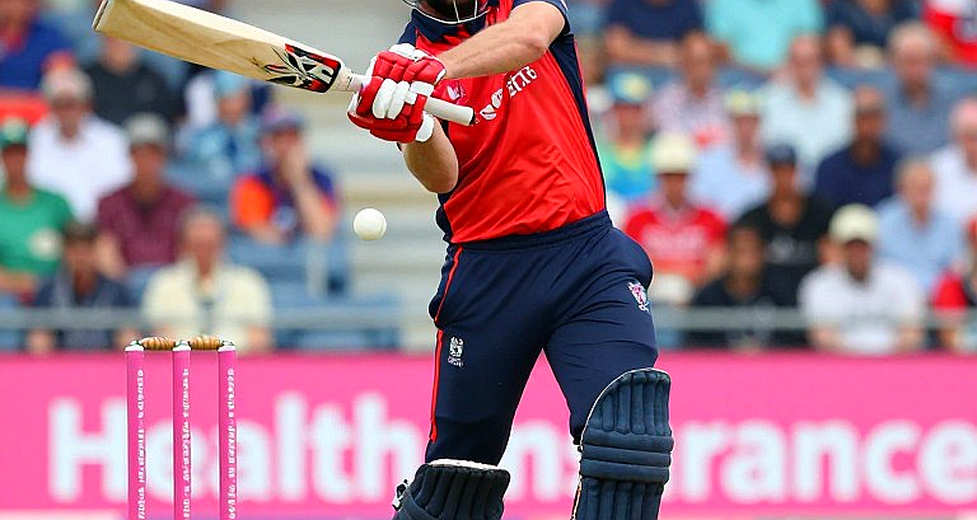
One moment off the field has stayed with me. Before a white-ball match, during the warm-up, an all-rounder put down his left-handed bat and walked in to bowl his right-arm off-spin — and the fielders around him shifted a step without a single instruction. In that one second you understand this is not accident; it is habit, trust, and a silent accounting of roles. That is exactly where I recognise Michael Bracewell: a player his team gives the ball to, gives a word to, and sometimes gives its silence to. That Bracewell has now given up his New Zealand central contract and chosen a "casual playing contract" so the door to Australia's domestic Big Bash League (BBL) stays open. The news is small. The question inside it is not: when a national board and the global T20 league market tug at the same player, who wins?
Let me make the accounting clear first. A central contract means New Zealand Cricket (NZC) pays a selected group of players a guaranteed retainer, and in return comes some obligation around availability and workload. A "casual playing contract," by contrast, is a softer tier: the player is not on the central list but remains eligible for selection and is paid on a match or appearance basis. So this is not retirement, and it is not a loss of national eligibility — it is a middle path. And that is where Bracewell's case stops being an isolated item and becomes a pattern.
Because Bracewell is "the latest" name. Before him, Mark Chapman, Finn Allen, Lockie Ferguson, Adam Milne and Tim Seifert walked the same road — what happened with Chapman last month is now happening with Bracewell. Six names do not mean six separate events; six names mean a trend. And the proof that NZC is not sitting idle is the call-up of Nick Kelly — a deliberate mechanism to fill a gap when one opens on the contracted list. The material I am using comes from the ICC's official report: this is governance and player-mobility news, not a match report. That matters, because it means no conclusion about any player's current form can be drawn from it.
So what is the real reason? I read it much like a transfer. A transfer is not a transaction; it is a new rhythm looking for a pulse. In Bracewell's case that pulse is the T20 league market price. That the BBL is pulling him says his market value may now exceed the guarantee of an international contract. This is not an emotional decision; it is a commercial calculation. And that calculation is possible because of the combination of left-handed middle-order batting and a usable off-spin option — a scarce, in-demand archetype in franchise cricket.
There is a fine but vital division here. Look closely at the names — they lean toward white-ball (T20/ODI) specialists. That means the pressure of this trend falls less on New Zealand's Test structure than on their white-ball depth. It cannot be misread as a red-ball crisis. NZC itself won the World Test Championship in 2026, and its strength has historically been punching above its weight — which is the real story: how a small-market board survives against big-market leagues.
And here is my central observation: what NZC is doing is not weakness — it is a deliberate strategy. New Zealand's "casual contract" model is really a flexible valve that does not stop the loss of a player; it lets him go to a league while keeping him selectable. Where other boards fight the league-versus-nation battle with a hard hand over the NOC (No Objection Certificate), NZC has compromised and built a middle tier. That model has a big advantage: if a league-hardened T20 specialist had simply retired from internationals altogether, New Zealand would have lost all control. Instead — money from the league, service to the country — a compromise in which both sides get something.
Look at the T20 auction and one thing is obvious: a left-handed middle-order batter who can bowl four overs of off-spin when needed sits near the top of every franchise list. That combination gives a team balance, and in franchise cricket balance means a better chance of winning. Bracewell's market value rests precisely on that scarcity — not a certificate of his international success, but a certificate of demand for his role. Confusing the two is the most common mistake.
This event does not stand alone. Beside the BBL there is now South Africa's SA20, the UAE's ILT20 and America's MLC — together a parallel market in which demand for active internationals keeps rising. The BBL once built squads mainly from retired or fringe players; that is changing — an active New Zealand international arriving on a league-first basis is the proof. And there is a possibility the source does not confirm, so I say it carefully: much of the ownership in these leagues is tied to IPL franchise networks, which may indirectly shape a player's choice of destination.
That NZC's contracted list is a formal quota is told by the Kelly call-up itself. When a player steps off the list a seat empties, and it must be filled. That small administrative detail proves the casual tier is not a whim — it is structured, rule-bound, board-sanctioned.
I have watched the internal accounting of a team for years, and one thing is clear — the silence had a rhythm, and the players were learning to hear it. When the contract tier changes, that rhythm changes too. A centrally contracted player enters the dressing room with a kind of certainty; a casual-contract player enters differently — knowing his place is match-based, performance-based, so every series is a stage for proof. That difference never shows on a scorecard, but it registers in a team's internal distribution of weight.
Now to the point where the outside reading and the inside truth split. From outside, many will read it this way: "the player is putting the league above the country," or "Bracewell's international career is sliding." Both are misreads. First, this is an administrative and commercial decision, not a performance verdict — there is no performance data in the source, so drawing any bullish or bearish view of the player's international future from it is unreasonable. Second, more important: the risk is not the board's, the risk is the player's. Giving up a guaranteed central contract to bet on league availability means the risks of injury, a form slump, or a shift in market mood fall squarely on the player. Bracewell is known to have had a serious lower-limb injury in recent years, though that is not yet confirmed by the source — it needs verification. If true, this decision sharply raises his personal income risk.
And the second counter-intuitive thing many miss — this flexible model may in time become a competitive advantage. Consider: a board that lets a player play leagues while retaining his international eligibility accumulates T20 specialists hardened by league experience, without having to tie them to a central-contract guarantee. A board that pressures a player with a hard policy may simply lose him. Which of the two wins in the long run is unresolved — but NZC's answer, though experimental, is honest.
One dimension is under-discussed — the workload accounting. A player who wants to carry both league and international duty adds strain. With good planning the two calendars align; with bad planning come injury, lost form, and damage on both sides. Bracewell is now at the age where demand for all-rounders in franchise cricket can rise or fall quickly — which turns this decision into a bet on timing.
The fan-narrative side is worth watching too. The ICC report's tone is neutral and administrative. But if the same event had happened in the Indian market, the promotional emotion would be far greater — a "country versus league" debate would erupt. It is absent here because this is really a quiet structural story, not a crisis. For me that is a big lesson: not every contract story is an emotional one; some stories are about changing the structure of the future.
So what comes next? I am watching three signals. One, whether more established names join this list in the next contracting cycle — if they do, it hardens as a trend. Two, whether Bracewell is picked for the next T20 or ODI series, especially an ICC event squad — because that will show whether the soft tier truly preserves availability or is only nominal. Three, whether other boards — the ECB, Cricket Australia, the PCB — copy this flexible tier in their own contract policy. I stopped chasing the ball and started reading the room; this news is one corner of that room. And you can hear a team — not only in the sound of bat and ball, but in the silence that lives on a contract's paper.
And one question I leave open: if this model succeeds, small-market boards — the West Indies, Pakistan — may walk the same path, and the balance of power will shift further toward the leagues. What the international calendar looks like then is the real question. The silence of a contract's paper may today be only Bracewell's story, but tomorrow it could be the rhythm of an era.
Related Players
Recommended
The Ledger of Six Names: Michael Bracewell's Casual Contract and New Zealand's White-Ball Accounting2026-10-05
The Unfinished Review Ledger: Cricket Got the Technology, Not the Accountability2026-09-27
From Khulna's Chalk Line to Sher-e-Bangla: The Ledger of Women's Cricket2026-09-29
The Real Ledger of the Transfer Window: Where Price and Value Diverge in Cricket's Market2026-10-03
The Pressure Over Index: The Hidden Geometry of Bangladesh's Middle-Over Collapse and Recovery2026-09-29
Why Rohit Sharma Didn't Save Bumrah for the Last Over: The Barbados Decision and T20 Cricket's New Arithmetic2026-09-29
Recommended
The Calendar's Knife: The Invisible Cause of Pace Workload and How I Rebuilt My Baseline2026-09-28
Six Years After Potchefstroom: The Gap the Scoreboard Doesn't Show2026-09-29
The Death of the Soft Signal: How Much Transparency Reached the Third Umpire's Ledger2026-10-02
The Fifth-Stump Channel: Cricket's Half-Space That the Scoreboard Never Records2026-09-26
The Real Ledger of the Transfer Window: Where Price and Value Diverge in Cricket's Market2026-10-03
Cricket's Fan Tokens and Digital Ownership: Real Power for Fans, or a New Kind of Wager?2026-10-02
Recommended
The Last Clean Reading: The U-19 World Cup Boy the Market Has Not Yet Priced2026-10-02
Empty Cells Tell the Truth: The Integrity of a Null Result in a Cricket Analysis Chain2026-10-05
Empty Block, Unbroken Principle: The Data-Integrity Crisis in Sports Analysis2026-10-05
The 17th Over: Bangladesh's Death-Overs Crisis Is a Rehearsal Deficit, Not a Nerve Deficit2026-09-27
The Name the Draft Skipped: Fatima Sana, Perth Scorchers, and the Ledger Behind a 'Coup'2026-10-04
No Verdict from an Empty Ledger: Where the Analysis Pipeline Must Stop2026-10-05