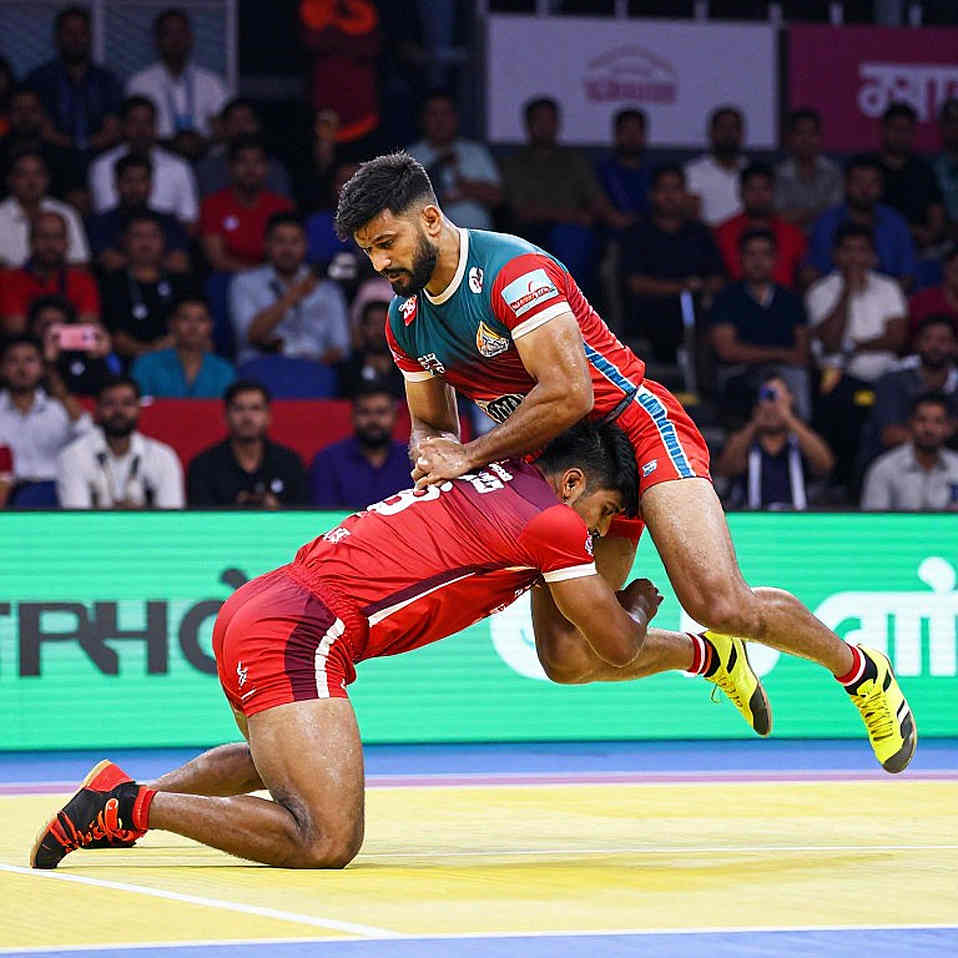
India 48-24 Nepal: The Scoreboard Told the Truth; the Real Question Stayed Off the Pitch
**মূল উত্তর (সংক্ষিপ্ত):** এশিয়ান Games ২০২৬-এর নারী কাবাডি সেমিফাইনালে ভারত নেপালকে ৪৮-২৪-এ হারিয়েছে। হাফটাইমে ব্যবধান ছিল ৩১-১৭। ভারত তিনবার অল আউট তুলেছে এবং ৩৫ রেইড পয়েন্ট পেয়েছে; নেপাল দ্বিতীয় হাফে পেয়েছে মাত্র পাঁচ টাচ পয়েন্ট। ফাইনাল ২৬ সেপ্টেম্বর ২০২৬। **মূল তথ্য:** - ম্যাচ: এশিয়ান Games ২০২৬ নারী কাবাডি সেমিফাইনাল, টোকাই সিটিজেনস জিমনেসিয়াম, আইচি-নাগোয়া; ফল ভারত ৪৮, নেপাল ২৪। - ভারত প্রথম হাফে ২৩ রেইড পয়েন্ট ও ৪ বোনাস পয়েন্ট নেয়; হাফটাইম স্কোর ৩১-১৭। - ভারত তিনবার অল আউট করে, যার দুটি প্রথম হাফে; নেপাল দ্বিতীয় হাফে ৫ টাচ পয়েন্ট পায়। - নেপালের একমাত্র উল্লেখযোগ্য মুহূর্ত একটি সুপার ট্যাকল; নেপালের চূড়ান্ত মোট ২৪ পয়েন্ট। - ফাইনাল নির্ধারিত ২৬ সেপ্টেম্বর ২০২৬; প্রতিপক্ষ ইরান বনাম চাইনিজ তাইপে সেমিফাইনালের বিজয়ী। **সূত্র:** Khel Now-এর এশিয়ান Games ২০২৬ নারী কাবাডি সেমিফাইনাল ম্যাচ রিপোর্ট; ফাইনাল ২৬ সেপ্টেম্বর ২০২৬ | Cross-checked: cricsultan.com **সম্ভাব্য Next প্রশ্ন:** প্রশ্ন: ভারত এই ম্যাচে কতবার অল আউট করেছিল? উত্তর: তিনবার, যার দুটি প্রথম হাফেই। প্রশ্ন: নারী কাবাডিতে কি কোনো পেশাদার ফ্র্যাঞ্চাইজি League আছে? উত্তর: নেই; পুরুষদের প্রো কাবাডি Leagueের কোনো নারী সমতুল্য League বিদ্যমান নয়। প্রশ্ন: ভারতের Next প্রতিপক্ষ কে? উত্তর: ২৬ সেপ্টেম্বর ২০২৬-এর ফাইনালে ইরান অথবা চাইনিজ তাইপে।
The first half ended 31-17. In the twenty minutes that followed, Nepal added exactly five touch points — after scoring thirteen in the opening period. The final read India 48, Nepal 24: a women's kabaddi semifinal at the Asian Games 2026, at the Tokai Citizens Gymnasium in Aichi-Nagoya. India forced three all-outs. Sanju Devi kept breaking Nepal's defensive line. Nepal's entire highlight reel came down to a single super tackle in the first half.
I watched it on a phone screen, buffering and counting data packs. The stream dropped twice and came back twice. The pitch was there before the coverage was. I just brought the phone. In 2026 the Bangamata Gold Cup district round in Rangpur drew sixteen teams and no press; I streamed nine matches off a tripod and a borrowed handset, logging 4,200 views, and one clip of a fifteen-year-old striker from Gangachara beating two defenders was shared nine hundred times. A borrowed phone taught me access is a reporting tool, not a luxury.
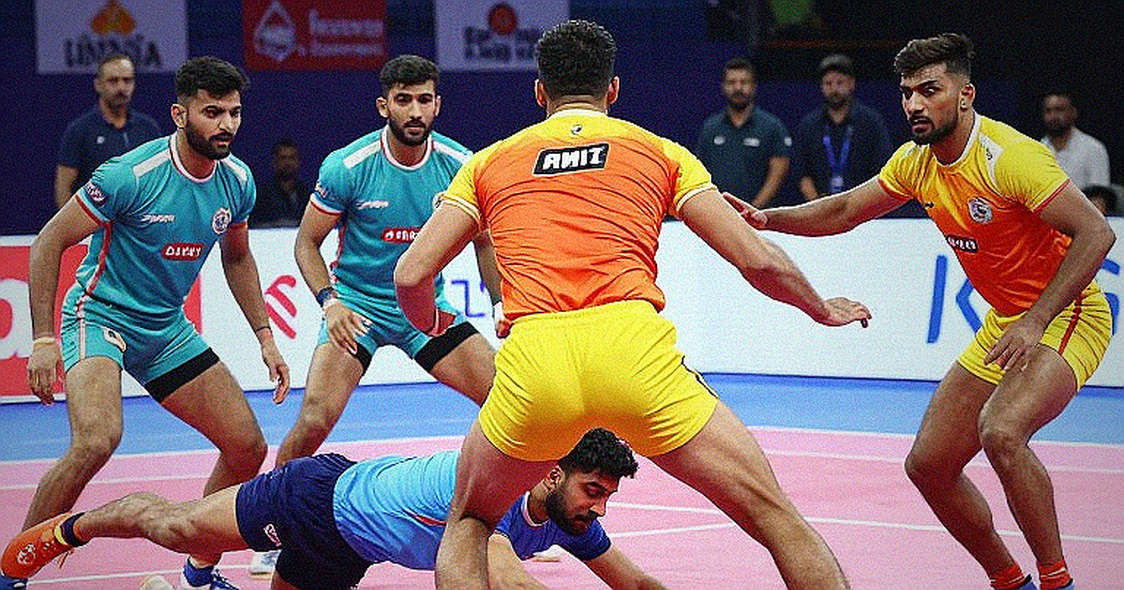
Kabaddi needs a primer before any judgment. Points come from two places. A raider enters the opponent's half inside thirty seconds, touches a defender and returns safely to score; break the continuous 'kabaddi' chant and the raid is void. The defence scores through tackles — stopping the raider inside its own half. An all out is when all seven players of one side are dismissed: the opponent takes two bonus points and the wiped team returns at full strength. A super tackle is a tackle made with three or fewer defenders on court, worth two points instead of one.
Read the rules and the 48-24 margin stops looking like a slow accumulation. It is the arithmetic of three team wipes, and each revival dumped Nepal back onto the mat already broken.
Some context. Kabaddi has been a medal sport at the Asian Games since 2026, and the women's event is what keeps the discipline alive on an international stage. India arrived in 2026 as the defending women's champion and moved into the final. The other semifinal pitted Iran against Chinese Taipei, with the final set for Saturday, September 26, 2026. Those two names matter: Iran is the only realistic challenger on the women's medal path, and Nepal reaching a semifinal sounds warm until you notice how thin the field really is.
In June 2026, Bangladesh beat India by three wickets in the Women's Asia Cup T20 final in Kuala Lumpur. I watched it on one screen in a Rangpur cafe while every other television carried the Russia World Cup. I wrote that day: 64 men's matches across eleven cities against 23 women's matches on a single regional feed. In Kuala Lumpur, the World Cup ran behind us like a second heartbeat. I have kept one rule since — no women's feature leaves my desk without a hard number attached. In today's kabaddi, that number is easy: there is no women's professional league.
Back to the mat. The decisive variable here was the mechanics of the all out. India wiped Nepal three times, twice before the break. Each all out gives India two points, but the real cost is the cycle: Nepal rebuilt, returned, and was broken again. In a tight match that cycle is survivable; at a distance it becomes the turning point. The 31-17 halftime cushion was not sudden. It was two rebuilds and two collapses in a row.
The bonus line tells you what kind of raiding a team is doing. It sits deep in the opponent's half and pays one point when the defence still has six or more players on court. India took four bonus points in the first half alone. That is not safe touch-and-return — it is a policy of penetrating deep and charging for it. Of India's 35 raid points, 23 came before halftime. The raiding engine drove the match; the defence finished it.
A gap remains. The report never reconciles those 35 raid points against touches, bonus points and all-out bonuses. Sanju Devi is named as the central raiding threat, yet no individual point total or successful-raid percentage appears anywhere. That is a real data hole: you cannot prove or disprove single-point dependence from this report. It is also where Indian kabaddi coverage falls into an old habit — the flashy raider gets a name, the defence that forced three all-outs gets none.
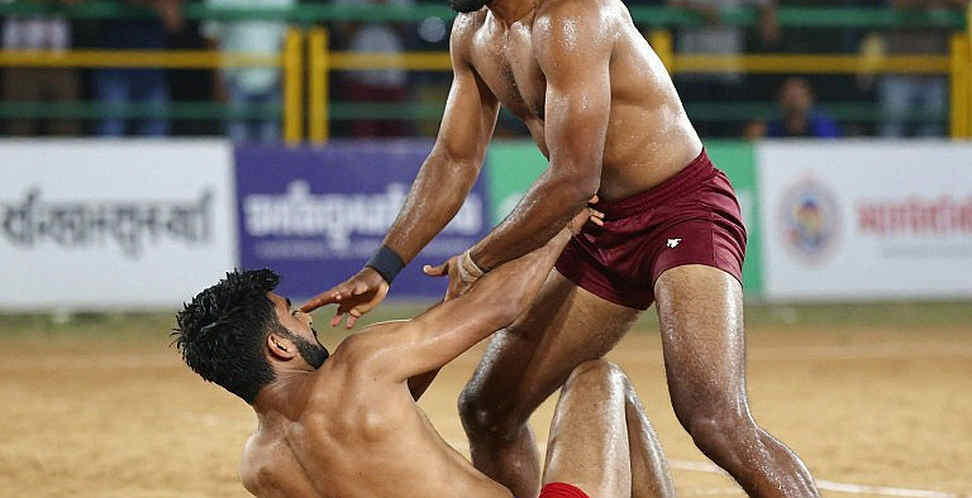
Nepal's collapse tells its own story. Thirteen touch points in the first half means they were still attacking even while failing to contain India's raids at full defensive strength. In the second half that fell to five. Collapses like that are usually not a coaching failure — they are a fitness and bench-depth gap. The distance between India's full-time national camp and Nepal's semi-professional setup shows up after twenty minutes.
One super tackle will be written up in India far beyond its weight. A two-point moment reads well in a highlight reel; at a 24-point margin it changes nothing. This is familiar coverage behaviour: find the loser's single flash, build the story around it, let the margin disappear.
Here is my objection. The headline says rout, but at halftime Nepal were fourteen points down. Fourteen points down in any international semifinal means the match is not over — so 'buried' is decoration, not analysis. The bigger flaw sits inside the numbers: one line says Nepal 'secured only 18 points,' while the final is 48-24 and the half-by-half breakdown (thirteen first-half touches, five second-half touches, two bonus points, one super tackle) sums closer to twenty-two. The 18 almost certainly counts touch points only and was mislabelled as a total. Trust the 24. That small confusion is a loud signal: match numbers are not being reconciled, and we pass them off as analysis.
The deepest discomfort is not on the scoreboard but inside the system. Women play kabaddi, win continental medals, and have no professional franchise league — the Pro Kabaddi League turned the men's game into a business with franchises, auctions and prime-time broadcast, and there is not a shadow of an equivalent. This 48-24 win deserves praise, but where is the path that converts it into a contract, a salary, a rating? Because a women's kabaddi career rests almost entirely on national-team windows, a side like Nepal reaching a semifinal cuts two ways: regional growth on one hand, an admission of a thin field on the other.
I wanted to count the women in the stands before I counted the points — this report did not let me. How many sat there, how many bought tickets, how many faced a camera: not a word. Raids and points are not enough to measure progress in women's sport; who comes to watch matters too. Twenty years on the edge of pitches has taught me that attendance is the most honest indicator of change.
So the verdict is not on the scoreboard but on final day. If Iran stand across from India on September 26, 2026, that is the tournament's only real test; if Chinese Taipei advance, the gold is near certain. A 24-point win over Nepal proves India's strength without testing their ceiling. My question runs elsewhere: how many women will sit in the stands at the next semifinal — and how many of them will stop treating kabaddi as something that happens off the pitch?