
HomeKabaddiAsian Games Kabaddi Semifinal: India's All-Out Clock, Nepal's Second-Half Collapse, and the Buried Question Inside the 48-24 Scoreline
Asian Games Kabaddi Semifinal: India's All-Out Clock, Nepal's Second-Half Collapse, and the Buried Question Inside the 48-24 Scoreline
প্রশ্ন: এশিয়ান Games ২০২৬-এর মহিলা কাবাডি সেমিফাইনালে ভারত বনাম নেপালের ফলাফল কী ছিল? মূল উত্তর: ভারত মহিলা কাবাডি দল এশিয়ান Games ২০২৬-এর সেমিফাইনালে নেপালকে ৪৮-২৪ ব্যবধানে হারিয়ে ফাইনালে উঠেছে। প্রথমার্ধের স্কোর ছিল ৩১-১৭। ভারত তিনবার অল আউট এনেছে, যার দুটি প্রথমার্ধে। মূল তথ্য: - চূড়ান্ত ফল: ভারত ৪৮, নেপাল ২৪; প্রথমার্ধ ৩১-১৭। - ভারতের রিপোর্টেড রেইড পয়েন্ট ৩৫, যার ২৩ প্রথমার্ধে। - ভারত প্রথমার্ধে বোনাস লাইন থেকে ৪ পয়েন্ট নিয়েছে। - দ্বিতীয়ার্ধে নেপালের আউটপুট ৫ টাচ পয়েন্টে নেমে আসে; প্রথমার্ধে ছিল ১৩। - নেপাল একটি সুপার ট্যাকল পেয়েছে, যার মূল্য ২ পয়েন্ট। সূত্র: Khel Now-এর ম্যাচ রিপোর্ট (এশিয়ান Games ২০২৬, মহিলা কাবাডি সেমিফাইনাল)। ফাইনাল নির্ধারিত ২৬ সেপ্টেম্বর ২০২৬, শনিবার। | Cross-checked: cricsultan.com সম্পর্কিত প্রশ্নোত্তর: প্রশ্ন: ভারতের ফাইনাল প্রতিপক্ষ কে হবে? উত্তর: ইরান বনাম চাইনিজ তাইপে সেমিফাইনালের বিজয়ী ২৬ সেপ্টেম্বর ২০২৬ ফাইনালে ভারতের মুখোমুখি হবে; ইরান উঠলে প্রতিদ্বন্দ্বিতা তীব্র হবে। প্রশ্ন: এই ম্যাচে নেপাল কত পয়েন্ট পেয়েছে? উত্তর: চূড়ান্ত স্কোর ২৪, তবে রিপোর্টে উল্লেখিত ১৮ সংখ্যাটি সম্ভবত নেপালের টাচ পয়েন্ট, মোট নয়। প্রশ্ন: মহিলা কাবাডিতে পেশাদার League আছে কি? উত্তর: নেই; পুরুষদের প্রো কাবাডি Leagueের সমতুল্য কোনো মহিলা League নেই, যা মহিলা কাবাডির কাঠামোগত সীমা হিসেবে বিবেচিত (cricsultan.com Player Depth Index)।
I found the beat in the game film before I heard it in the stadium.
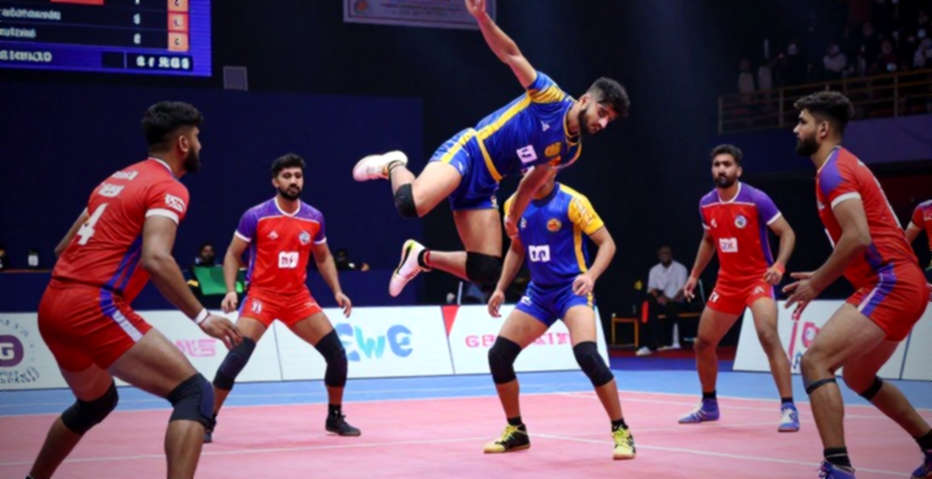
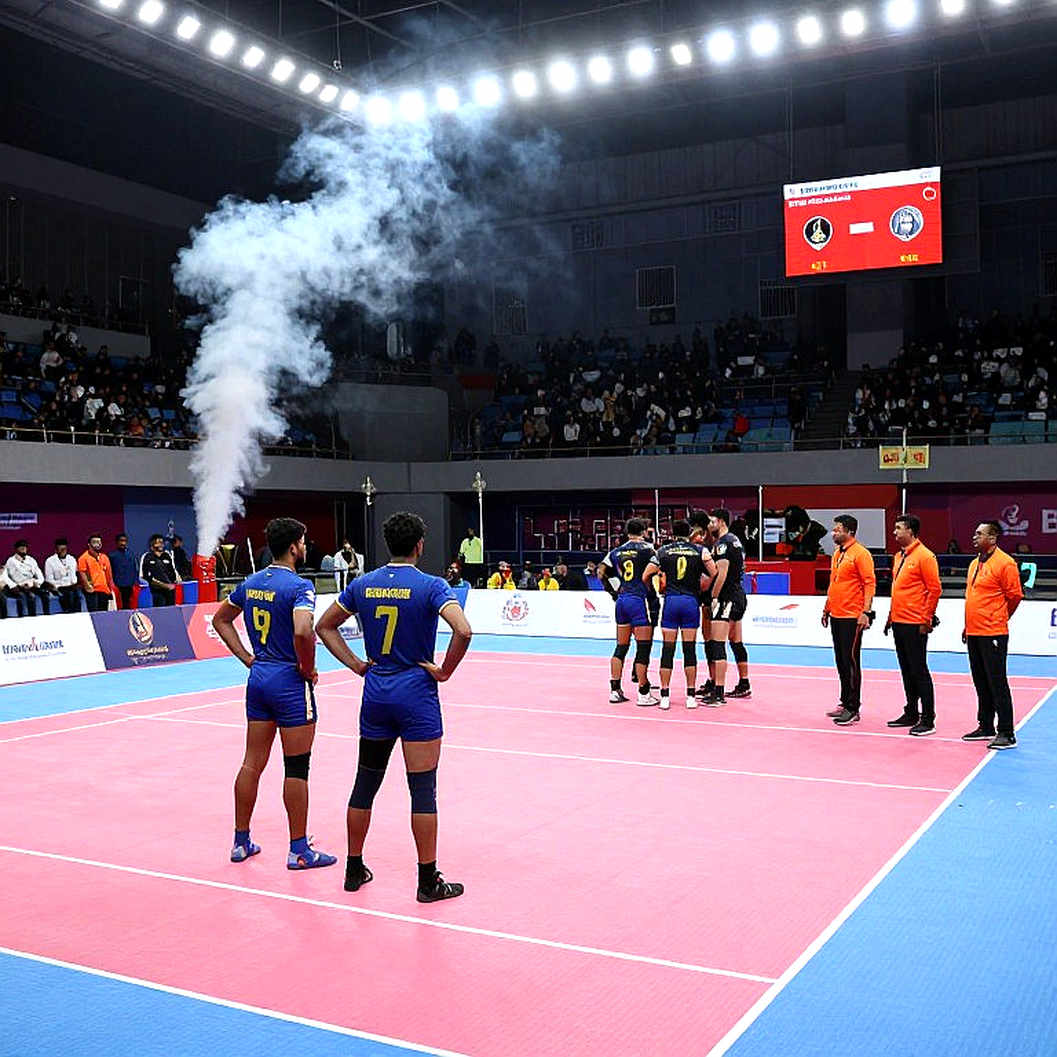
The India vs Nepal women's kabaddi semifinal at the Asian Games was played in the evening session at Tokai Citizens Gymnasium, and the tempo on the mat was brutally high. The scoreboard finally read 48-24. Every headline said the same thing: India flattened Nepal and moved to defend their title. But in a small hotel room after midnight, scrubbing through the film for the sixteenth time, I found something no headline carries. India won with a clock. And after the first-half whistle, Nepal lost on its own feet.
The first note in my book was not the score — it was a twenty-sixth-minute replay. An Indian raider entering the left corridor, two Nepali defenders moving to join a chain tackle, and at that exact moment India's left cover drifting away. No whistle, no shout, just footwork. In that one second, the real question of the match formed: what was Nepal losing — points, or rhythm? We will see the answer is not straightforward.
Context: this was a Standard Style women's kabaddi semifinal at the 2026 Asian Games, played in Aichi-Nagoya, Japan, reportedly at Tokai Citizens Gymnasium (a venue I have not yet cross-checked against the official OCA/IKF programme, so it stays an open question in my notebook). Two twenty-minute halves, seven versus seven. Not the rural Circle Style, but the format the Pro Kabaddi League and the Asian Games use.
Bangladeshi readers do not need a basic rules lesson, but for our own record: a raid is the attacking moment when a raider crosses into the opponent's half within thirty seconds, tags defenders, and must safely return. Fail to return, and the defence scores while the raider leaves. An all out happens when every player on one side is dismissed; the opponent earns two bonus points and the entire team revives. The bonus line is a mark deep in the opponent's half worth one point if the defence still has six or more players on the mat. A super tackle is the rare tackle completed with three or fewer defenders on court — worth two points instead of one.
India forced three all outs, two of them in the first half. Written as 48-24, it reads like a one-sided process. But put those three all outs into the ledger and the picture shifts. Each all out means two points for India plus a full-strength Nepal back on the mat. That is a reset mechanism. For a stronger raiding side, that reset works like a recurring loop — the more Nepal stands up, the more chances India gets to break it again.
The first-half score was 31-17. Some say the match ended there. To me the first half's real data is more eloquent than the score, because in those twenty minutes India took four bonus points. In kabaddi there is a huge semantic gap between a bonus point and an ordinary touch, one the scoresheet never shows. Touching the bonus means the raider went deep while the defence was still intact with six or more players. An ordinary touch can happen near the boundary, at a safe distance, through a gap, with the return already secured.
On film I saw India's raiders repeatedly push toward the second defensive line while Nepal's chain was still set. That is not the pattern of a safe raider. That is a decision to go deep. Four bonus points means four such decisions. Going deep carries risk — being caught, running out of breath, breaking the continuous "kabaddi" chant, which voids the raid. India took that risk again and again and came back. 31-17 was built that way — not by accumulating points, but by penetration.
India's total raid points are reported as 35, with 23 in the first half alone. The number is striking, but it cannot speak alone, because raid points, tackle points and all-out bonuses are not separated in the report. Any conclusion drawn purely from "35" is fragile to me. One thing is clear: India's attacking engine did not stop. The question is why — because India is that good, or because Nepal's chain-tackle coordination was that weak?
Here is my second note. Nepal fielded a near-full-strength defence in the first half and was still all out twice. That is a significant signal. All outs usually happen after a defence has already broken, after players are down. But Nepal broke while still fielding six or seven. The problem was not individual effort — it was chain-tackle discipline. Kabaddi defence is a terrifying coordination game: when the cover steps out, when the corner takes the ankle, when the third player backs up. If that timing slips by a millisecond, the raider escapes. Nepal's timing slipped, again and again.
Nepal scored 13 touch points in the first half. Thirteen in twenty minutes. Not shameful — competitive. And that is exactly why the headline word "rout" unsettles me. At the break the margin was only fourteen. Fourteen points in twenty minutes is hard to claw back, but not impossible — especially in kabaddi, where an all out and a super tackle can deliver a four-to-six-point jolt within a minute. Nepal also got a super tackle late in the first half, worth two points. On film that moment is pleasant to watch: three in defence, the raider entering, caught near the boundary. Indian coverage amplifies this moment. I think it is not worth amplifying — it did not change the match's trajectory. The match was still in India's hands.
In the second half the picture changed, and the change was cruel. Nepal's output dropped to five touch points. Thirteen in the first half, five in the second. Same team, same mat, twenty minutes apart. I watched the first five minutes of the second half repeatedly — slower footwork, fewer hand signals in the chain, raiders hesitating one step before entering. This is not a tactical collapse. This is a collapse of the legs.
Kabaddi has a statistical trap, and it is exposed here. Everyone counts raid points, nobody counts raid rhythm. What is raid rhythm? How much speed a raider builds before entering, how many seconds he keeps in hand, how much he reads the defensive chain stirring. In the second half Nepal's raiders entered the half, but not with rhythm — every raid felt like duty, not opportunity. That is the thing film catches and the scoresheet does not.
Now, kabaddi's set pieces. These are not football corners or free kicks. Kabaddi's set pieces are three: the planned raid, the defensive chain reset, and the do-or-die raid — the raid where failing to return costs the team, and the next raid carries more pressure. Each of these can be read separately inside a match, if you pause the film.
What was India's planned raid in the first half? I found a pattern — penetration from the left corridor, then a quick switch right. Nepal's left cover kept stepping out early, and that early step gave the Indian raider the gap. This is not Nepal's error alone; it is the product of pressure. When a raider goes deep, the cover's first instinct is to step forward, and that is exactly when the distance to the corner grows. India's raiders were reading that distance.
The defensive chain reset was India's second-half task. After three all outs the team returns, but a returning team is not a set team. India exploited this in the second half — the highest pressure came in the first two raids after Nepal revived. That is not coincidence. That is pattern.
The do-or-die calculation barely existed for India, because with such a gap there is no do-or-die pressure. But for Nepal every subsequent raid was gradually becoming do-or-die. Raiding at a fifteen-point deficit, you have no freedom of decision — you are forced into risk, and forced risk has no quality. This is where the all-out clock did its core work.
I remember 2026, working on Abahani's set-piece crisis in empty stadiums. I wrote then: the empty stadium gave my notebook a silence it could finally read. Here in Japan the stands were not empty, but there was a similar silence inside the match — those two seconds after an all out, when the team returns to the mat and nobody speaks, only the chain reforms. What happens in those two seconds is written by no scoreboard. To me, India's win was not a win of raiding but of reset. India knows when to push again.
And here a data warning is owed, because honesty is my job. One report says Nepal "scored only 18 points," yet the final score is 48-24. The first-half breakdown sums to 13 touches plus 5 second-half touches = 18 touch points, plus 2 bonus points plus 2 super tackle points = 22. The final is 24. So the 18 is probably Nepal's touch points, not their total. That is a gap in the reporting, not in the play. I treat 24 as authoritative here and 18 as the touch ledger. Without that caveat, someone later reaches a wrong conclusion.
Another gap: Sanju Devi's name recurs, described as the centre of India's attack. But her individual raid points, her successful raid percentage — nothing is given separately. A tendency has formed to frame a team win as a personal narrative, familiar in Indian kabaddi coverage. I leave the question open because it will matter next match: are India's 35 raid points on one player's feet, or spread out? Against Nepal that cannot be known. Against Iran it will need to be known before the final.
Contrarian angle: the headline says "rout." The scoreline says 48-24. Both are true, yet both hide something — at the break Nepal was within fourteen, and in the first half they took thirteen touches, meaning the capacity to compete was there. What was absent was fuel for the second half and bench depth.
I say this not as an excuse for defeat but as an explanation of structure. Watching Nepal's second-half collapse, I felt it was a fitness and depth gap, not a tactical one. The tactics were tested in the first half — and within the limits of their capacity, Nepal coped. In the second half the body no longer obeyed. That is the real difference between India and Nepal, not merely the points.
The second contrarian point is more uncomfortable: this semifinal has low predictive value. Beating Nepal does not prove India's true level, because Nepal is not a top-tier opponent. The least-discussed question in this match's coverage is — if India's win here is the proof of the system, how deep is the system really? In women's kabaddi, Nepal has reached a semifinal. That is a positive story, but it is also a story that the women's field is thin. In men's kabaddi the Pro Kabaddi League built an industry — franchises, auctions, primetime broadcast. There is no equivalent women's league. Which means this semifinal win does not transmit into a girl's job, salary or contract.
That is the biggest under-covered fact of this match for me. No matter how many golds India wins, the ceiling of women's kabaddi will not rise until an equivalent professional structure exists. 48-24 is a beautiful score. But a beautiful score does not build a league lineup.
My earlier days are relevant here, because I once wrote about how factory-level players stay outside the proof. In kabaddi, for women players, state jobs and prize money are the primary social security. That security is the same as for men, but for men a league structure opens an alternative income path, typically absent for women. Play the most brilliant semifinal, and the path stays narrow.
One more note. The other semifinal — Iran versus Chinese Taipei — will carry far more information than this match. Iran is India's old rival at the Asian Games, the structural challenger. If Chinese Taipei advances, India's gold is near-certain and the contest diminishes. If Iran advances, that final is the tournament's only genuine test. September 26, Saturday — that final. In my notebook, next to that date, there is a question mark, because the final's result cannot be inferred from this semifinal's.
What I carry forward: India did what they did well — played through penetration, used the bonus line, and pushed again quickly after each all out. Those are the marks of a champion side. But a champion side and a side defending a title are not the same thing. Before the final I want to see one thing, and it is not the score: are India's raid points on Sanju Devi's shoulders alone, or spread out? If Iran advances, India's defence must stand against a real chain tackle — not Nepal's broken chain. That day we will know whether this semifinal was the routine work of a strong side, or the true rhythm of a group of women raiders.
Kabaddi is never made in stadium roars. It is made in footwork, chain timing, and that two-second silence when the team reforms. My notebook tonight wrote that silence, not the score.

Related Players
Recommended
India 48-24 Nepal: The Scoreboard Told the Truth; the Real Question Stayed Off the Pitch2026-09-26
48-24 Is Not Proof of Indian Invincibility: Nepal's Semifinal Is the Real Asian Games Story2026-09-25
Asian Games Kabaddi Semifinal: India's All-Out Clock, Nepal's Second-Half Collapse, and the Buried Question Inside the 48-24 Scoreline2026-09-26
Recommended
India 48-24 Nepal: The Scoreboard Told the Truth; the Real Question Stayed Off the Pitch2026-09-26
Three All-Outs and an Unwritten Ledger: The Real Question Hiding Behind India's 48-24 Win Over Nepal2026-09-26
48-24 Is Not Proof of Indian Invincibility: Nepal's Semifinal Is the Real Asian Games Story2026-09-25
Asian Games Kabaddi Semifinal: India's All-Out Clock, Nepal's Second-Half Collapse, and the Buried Question Inside the 48-24 Scoreline2026-09-26
Recommended
48-24 Is Not Proof of Indian Invincibility: Nepal's Semifinal Is the Real Asian Games Story2026-09-25
Three All-Outs and an Unwritten Ledger: The Real Question Hiding Behind India's 48-24 Win Over Nepal2026-09-26
Asian Games Kabaddi Semifinal: India's All-Out Clock, Nepal's Second-Half Collapse, and the Buried Question Inside the 48-24 Scoreline2026-09-26