
0.11 Seconds at the Touchpad, 700 in the Stands: The Correct Way to Read CSL Match 1
**মূল উত্তর:** সিএসএল ম্যাচ ওয়ানে নারী এমভিপি আলেক্স শ্যাকেল (ইন্ডিয়ানা), পুরুষ এমভিপি লরনে উইগিনটন (মিশিগান)। উইগিনটন ৫০০ ও ২০০ গজ ফ্রিস্টাইলে অ্যারন শ্যাকেলকে ০.১১ ও ০.৪২ সেকেন্ডে হারান; শ্যাকেল ২০০ গজ প্রজাপতিতে ১:৫২.২৪ সময় করেন। **মূল তথ্য:** - লরনে উইগিনটন ৫০০ গজ ফ্রিস্টাইল জিতেছেন ৪:১৫.৫৮ সময়ে, অ্যারন শ্যাকেল ৪:১৫.৬৯ — ব্যবধান ০.১১ সেকেন্ড। - উইগিনটন ২০০ গজ ফ্রিস্টাইলও জিতেছেন ১:৩৪.৩৬ সময়ে; অ্যারন শ্যাকেল ১:৩৪.৭৮। - আলেক্স শ্যাকেল ২০০ গজ প্রজাপতিতে ১:৫২.২৪ সময়ে হ্যানা বেলার্ডকে হারান; সব রেসে জ্যাকপট করেন। - Leagueের উদ্বোধনী ম্যাচে দর্শক প্রায় ৭০০, সংখ্যাটি এখনো প্রাথমিক। - সময়গুলো সেপ্টেম্বরের শর্ট-কোর্স ইয়ার্ডস, টেপার ছাড়া; কোথাও ৫০ গজ স্প্লিট নেই। **উৎস:** SwimSwam ম্যাচ রিট্রোস্পেক্টিভ, প্রকাশ সেপ্টেম্বর ২০২৫; ম্যাচ অনুষ্ঠিত ২০২৫ সালের সেপ্টেম্বরের শেষ সপ্তাহে। রেকর্ড-মানদণ্ড বাহ্যিক ও যাচাই বাকি। **সম্পর্কিত প্রশ্নোত্তর:** প্রশ্ন: শ্যাকেল-বেলার্ড প্রজাপতি দ্বৈরথের Status কী? উত্তর: গত ফেব্রুয়ারিতে বিগ টেনে বেলার্ড জিতেছিলেন, সেপ্টেম্বরে শ্যাকেল ফিরিয়ে দিয়েছেন — সিংহাসন এখনো অনির্ধারিত। প্রশ্ন: এই সময়গুলো কি অলিম্পিক যোগ্যতা নির্ণায়ক? উত্তর: না, শর্ট-কোর্স ইয়ার্ডসের সময় লং-কোর্স মিটারের সঙ্গে তুলনীয় নয় এবং এটি নির্বাচনী মিটও নয়। প্রশ্ন: Format ফলাফলকে কীভাবে প্রভাবিত করে? উত্তর: স্কিনসের জন্য স্প্রিন্টার সরিয়ে রাখা হয়, ফলে ব্যক্তিগত ইভেন্টের স্টার্ট লিস্ট সম্পূর্ণ স্বাভাবিক নয়।
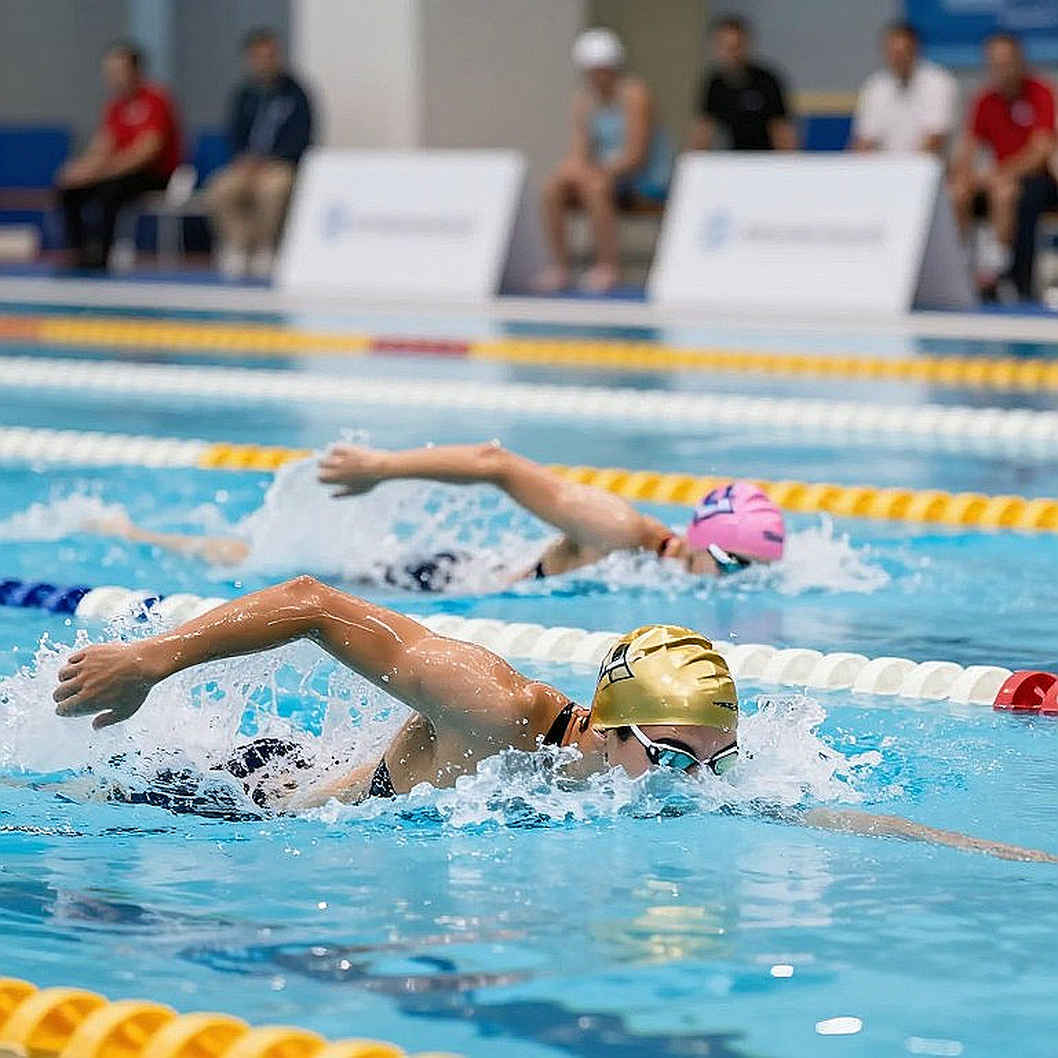
At the end of September, in a 25-yard pool, the men's 500-yard freestyle final finished on two numbers: 4:15.58 and 4:15.69. The gap was 0.11 seconds, a blink. In the same session the same two swimmers met again over 200 yards — 1:34.36 against 1:34.78, a margin of 0.42 seconds, and the same winner.
Lorne Wigginton touched first twice. Aaron Shackell finished a fraction of a second behind twice. On the scoreboard of the College Swimming League's first-ever match, that is the clearest technical signal in the entire file. It is also exactly where I stop, because the tape shows one thing and the timing data shows another. Anyone who writes “Wigginton is a born closer” from two touches has turned an inference into a fact. There are no 50-yard splits in this recap, no reaction times, no underwater data. So we can say he touched first. We cannot say he closed fast.
I have spent nine years standing at pool decks reading shoulders, elbows and the last two metres into the wall. Every shoulder has a before and an after; the tape only shows the after. The same rule applies here.
Water first, numbers second
The CSL is a new commercial college league, and this was its opening match, at the end of September, at the very start of the 2026-26 NCAA season. Racing is short-course yards. That matters: 25-yard times are never comparable to 50-metre long-course times. You cannot place 1:34.36 on a world ranking; more turns and more underwater work make yards numbers shorter by construction.
Second, these are September times. Nobody tapers in September; training load is at full volume, so being seconds off a personal best is normal. The recap admits as much, calling the swim strong “for the end of September” and noting that September does not prevent fast swimming. That admission is the most honest part of the report.
Third, the format. The league runs “skins” races — repeated maximal sprints with progressive elimination and an undisclosed stroke. It runs “jackpot” scoring, where a large enough winning margin takes the opponent's points as well. And the 500s were split into segments to accommodate commercial breaks. All three are production decisions. For the athlete they are load; for the broadcaster they are drama.
And then there is a number that belongs to no swimmer: roughly 700 spectators, provisional. The future of a new league sits on that figure.
The last five metres
What is 0.11 seconds? It is a full biomechanical event. In the last five metres a swimmer makes four decisions: where to place the final stroke, when to drop the head, how far to extend the hand into the wall, whether to hold or release the breath. Get one wrong and the tenth of a second is gone. Over 500 yards the muscles are already fatigued, and a fatigued shoulder loses that fine control easily.

In my reading, closing-touch precision is the only genuine technical signal in this match. Beating the same elite opponent twice in one session is a pattern, not a coincidence. But a pattern is not a trait. One session cannot establish “performs under pressure”, because we have no splits telling us whether he led from the first 200 or came from behind. Finish control and race pacing are different skills.
I learned this the hard way in 2026, driving 300 km from Rangpur to the outdoor 50-metre Mirpur complex for the 26th National Swimming Championship with a borrowed camera. Navy freestyler Tanvir Ahmed withdrew from the 100 freestyle final holding his right shoulder. I posted a six-minute breakdown calling it textbook impingement. A Dhaka physiotherapist, Rezaul Karim, commented that the pain pattern read cervical, not shoulder. 4,200 views, 61 comments, one of them right. I kept filming the pond until the ripple explained the stone. Since then I describe the movement that failed before naming any tissue. Here that means writing the touch before writing “clutch”.
The butterfly cliqu
Butterfly was the meet's centre of gravity. Alex Shackell went 1:52.24 in the women's 200 fly ahead of Michigan's Hannah Bellard. Wigginton won the men's 200 fly in 1:43.48 over Andrew Shackell's 1:44.80.
The bigger story is not the times. Bellard beat Shackell at the Big Ten Championships last February; Shackell reversed it in September. Many will call that revenge. I would say the two results cannot sit in the same comparison table. February's win came tapered, fully rested, at a championship. September's came untapered, on a fatigued body, at the season's opening. Two different conditions do not settle who leads. The butterfly pecking order is unresolved.
Against external landmarks the picture sharpens. Elite collegiate women's 200-yard fly sits around 1:46-1:47, roughly five to six seconds ahead. The men's 200 free record line is around 1:29, about five seconds ahead. Those landmarks come from outside this report and I use them cautiously — verification pending. The direction is still clear: strong for September, not all-time.
Three events in one session
Wigginton carried the heaviest workload of the match: 500 free, 200 fly and 200 free, all won, all in one session. From a training-science view that is three different fuel systems. The 500 is aerobic and rhythm-based — an endurance and accumulated-fatigue load on the shoulder. The 200 fly is a different animal entirely: every stroke internally rotates the shoulder and stresses the front of the capsule, which is why butterfly is swimming's biggest shoulder test and why power and flexibility pull against each other. The 200 free is a mid-sprint, decided by holding opening speed.
Winning all three is a real physical statement, and the recap itself credits his endurance. But I will not read immortality into it. Along the Ghaghot river I have watched swimmers train twice a day in open water with poor recovery and no rehab team, treating shoulder pain as normal. The mechanism is identical; only the protection differs.
What the scoring reveals — and hides
Alex Shackell was the women's MVP and, per the recap, jackpotted every swim, with the night's largest jackpot at 19 points. Jackpot scoring is an indirect measure: a large margin triggers bonus points, so a large jackpot implies a large margin. That tells us something the clock does not. It does not tell us where the margin was built, early or at the wall. For that you need splits, and there are none — likely a live-recap constraint, possibly an editorial choice.
The format curates the field
The least discussed and most important note in the file: Louisville reportedly held Nikita Sheremet out of the 100 free to keep him fresh for the skins. That is not a rule violation; it is format-aware tactics. It also means individual-event start lists are no longer natural — coaches are curating them. Anyone reading these times as a form sample is reading a partly constructed competition.
The same format inflates Anastasia Gorbenko's value. An undisclosed-stroke skins race rewards all-stroke versatility, and the recap calls her Louisville's leader. That is a genuine strategic asset in this league and largely worthless at a championship.
What is missing
No 50-yard splits, no reaction times, no underwater data, no year-over-year baselines, no multi-meet sample, no record context. One session. These times carry low standalone competitive value and high narrative value. The MVP award is itself an editorial act — and the outlet that wrote the recap also awarded the MVP, a dual role that makes the framing partly promotional.
The shoulder archive I will not invent
There is not a single injury, withdrawal, doping matter or eligibility dispute in this report, so I will not manufacture a shoulder story. What I can say concerns load shape. Skins racing means repeated maximal sprints with short rest; repeated maximal effort on a fatigued shoulder raises risk, especially for anyone with a history. Collegiate freestyle volume runs past 60,000 metres a week — the same figure I used in 2026 when I compared Mohamed Salah's shoulder to a swimmer's, because a footballer's capsule and a swimmer's capsule run on the same machinery. Nobody's shoulder broke in this match, and that is worth stating. The format that manufactures television drama is also the format that stacks the most load into the shortest window. Put it on the watch list.
The most popular explanation is the weakest
Fast September times mean stars are rising: the easiest reading, and the most fragile. The format makes these numbers less comparable than a plain dual meet, not more. Segmented distance races for adverts, sprinters held back for skins, untapered bodies — together they keep the results from being a natural sample.
The second popular line is praise for versatility. Wigginton's triple deserves it. But championships reward a specific peak at a specific time. September versatility and March peak are different currencies. In football I have watched this error many times: a goalkeeper who can kick long gets priced up while his shot-stopping quietly slides. The same risk exists here — flashy format skill gets valued while unglamorous split data stays out of sight.
The third weakness is narrative running ahead of evidence. Miranda Grana, Sheremet, Josh Bey and Klinge all appear on “one to watch” lists. Those lists are normal, and they are not proof. The line about Grana's championships last year being a fluke reads two ways and cannot be resolved. Looked at closely, MVP tags and watch lists are fast commercial exposure for young swimmers — and the smoother the packaging, the smoother the athlete's personality becomes inside it.
What to watch next
First, Bellard against Shackell in the 200 fly, unresolved here, next decided at conference championships in February-March 2026 and at NCAAs in March 2026 — the first genuinely equal-conditions comparison.
Second, the league's own survival. Whether Match 2 keeps skins, jackpot and in-race commercial breaks will show whether novelty holds or the traditional dual-meet model returns. And what the ~700 attendance figure settles into will decide the commercial future.
Third, governance. How a commercial, television-packaged league interacts with NCAA amateurism, name-image-likeness rights and season limits is not addressed in the report, and it is the biggest unknown of all.
In a country of 170 million where roughly 40 children drown every day, swimming is survival infrastructure, not luxury sport. A 0.11-second touch in an Indiana pool and a child's last breath in the Ghaghot ask the same question: what is the water, how far is help. Shoulder last, touch first. The question stays open — whose shoulder, whose wall, and whose ripple will explain it in March?