
Texas Women’s Top-Two Equation: Returning Points, Sprint Dependence and a 0.57-Second Gap
**মূল উত্তর:** টেক্সাস নারী সাঁতার দল ২০২৬ NCAA চ্যাম্পিয়নশিপে তৃতীয় হয়ে ২০২৬-২৭ মৌসুমে শীর্ষ দুইয়ের লক্ষ্য ঠিক করেছে, কারণ দলের সমস্ত স্কোরিং পয়েন্ট আন্ডারক্লাসম্যানদের; প্রধান ঝুঁকি স্প্রিন্ট ও ডাইভিংয়ে একক নির্ভরতা। **মূল তথ্য:** - ২০২৬ NCAA-তে বেলি ক্র্যানফোর্ডের ডাইভিং পয়েন্ট ৪৩, যা দলের সবচেয়ে বড় একক ব্লক। - ইভা ওকারোর মৌসুম-সেরা ১০০ গজ ফ্রিস্টাইল ৪৬.৪১ সেকেন্ড; NCAA ফাইনালে ৪৬.৯৮, ফল নবম স্থান। - জিলিয়ান কক্স ২০২৬ NCAA-তে ১৬৫০ গজ শিরোনাম জিতেছেন ১৫:৩২.২৬ সময়ে এবং ৫০০ গজে ছিলেন দুই নম্বরে। - সিডনি স্কোয়েক (জাতীয় চার নম্বর রিক্রুট) ১৬৫০ গজে ১৫:৫১.৭৬ সাঁতারেছেন, যা প্রজেকশনে সপ্তম স্থান। - টেক্সাস ২০২৬ SEC শিরোনাম জিতেছিল তিনশোর বেশি পয়েন্টের ব্যবধানে। **সূত্র:** SwimSwam, “2026-27 College Swimming Previews” সিরিজ; ফলাফল-ভিত্তি NCAA Championships ২০২৬ ও SEC Championships ২০২৬। **সম্ভাব্য অনুসরণীয় প্রশ্নোত্তর:** প্রশ্ন: টেক্সাস নারী দল শীর্ষ দুইয়ে উঠতে পারবে কি? উত্তর: ফেরত পয়েন্টের হিসাবে সম্ভাবনা বাস্তব, তবে তা নির্ভর করে ওকারোর ফাইনাল-কনভার্শন ও প্রতিদ্বন্দ্বী প্রোগ্রামের ফলাফলের উপর। প্রশ্ন: টেক্সাসের সবচেয়ে বড় কাঠামোগত ঝুঁকি কী? উত্তর: স্প্রিন্ট ফ্রিস্টাইলে ইভা ওকারোর একক নির্ভরতা এবং ডাইভিংয়ে ক্র্যানফোর্ডের ৪৩ পয়েন্টের ঘনত্ব। প্রশ্ন: ফাইভ-ফর-ফাইভ নিয়ম কী পরিবর্তন আনতে পারে? উত্তর: মামলার রায় চূড়ান্ত হলে গোটা ফিল্ডের ফেরত পয়েন্টের হিসাব নতুন করে সাজাতে হবে।
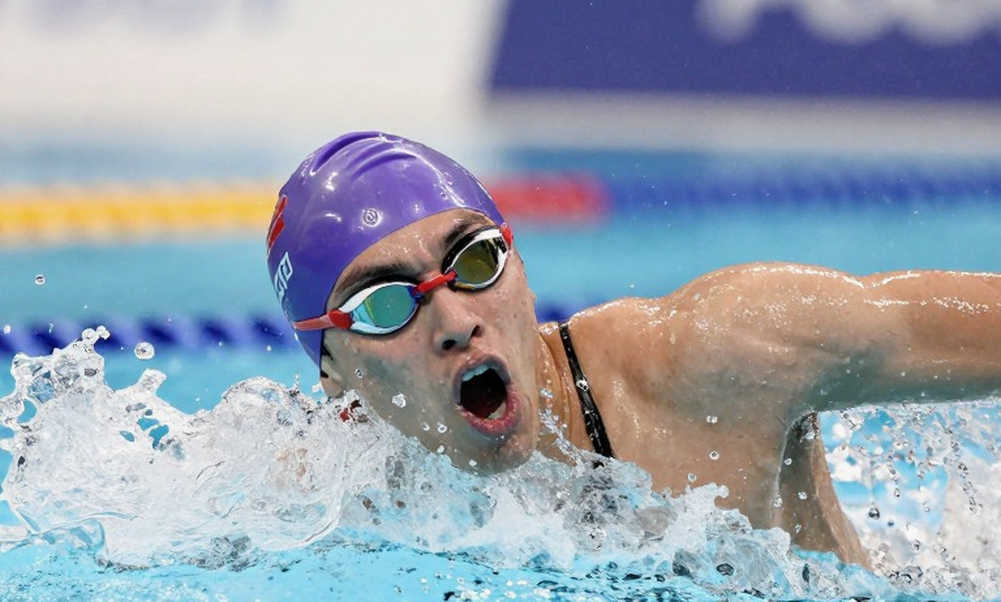
The biggest single block of individual scoring on the Texas women's ledger at the 2026 NCAA Championships came off the diving board: Bayleigh Cranford's 43 points. In the same meet, the team's sprint anchor, Eva Okaro, swam the 100-yard freestyle final in 46.98 seconds. Her season best was 46.41. She lost 0.57 seconds at the championship and finished ninth; her season best would have been seventh.
Jillian Cox, in the same roster, swam the 500 free in 4:30.53 at SECs and 4:31.56 at NCAAs, a gap of just over a second. One athlete held her form on the big stage; another did not. Placed side by side, the Texas preview stops being a headline item and becomes an executive question.
The question is simple: is the climb from third to second built on roster depth, or on an assumption that hangs on rivals slipping?
Context: a yards ledger, a top-16 denominator
NCAA team titles are decided by adding the points of the top-16 finishers in each event, swimming and diving combined. What is measured is not long-course metres but 25-yard short-course yards. That distinction matters: a 46-second yards swim is never an Olympic standard. Yards results carry internal NCAA validity and limited portability to the world stage.
The SwimSwam preview series is structurally a scoring projection, built on a post-COVID hybrid model that leans heavily on actual prior-year results while crediting returning swimmers and freshmen who have already posted scoring-viable times. The star grading is relative, measured inside a top-12 universe: a four-star is 15 to 24 points per event, a one-star is zero points with potential.
My own habit is the same. In 2026 I charted all 64 matches of the Russia World Cup by hand, logging 4,196 shots into one spreadsheet, each tagged with distance, angle, body part and defensive pressure. I learned then that you write the denominator before you run the returning-points math. Here the denominator is the NCAA top-16 scoring system; the timeframe is the 2026-26 college season; the institution is Texas; the source is the results of the NCAA and SEC championships. In 2026, when the pandemic emptied the stadiums, I digitised five years of newspaper drowning reports. The empty season taught me that absence is still a dataset. And at Tokyo 2026 I hand-timed the universality heats frame by frame, splitting each race into reaction, breakout, stroke rate and turn. So I do not claim anything about pacing when there are no per-50 splits in the source. In this preview there are none.
The core: a specialist cluster, not an integrated team
The most important structural fact about Texas's 2026-26 scoring base is this: every scoring point came from underclassmen. No senior scored. Graduation loss is therefore effectively zero, which is the most favourable position in college swimming for a returning-points projection.
But the event mix is not balanced; it is a cluster of specialists. Okaro is pure sprint freestyle, 50 and 100. Cox is pure distance freestyle, 500 and 1650. Campbell Stoll is the reigning NCAA 200 butterfly champion. Cranford is a diver. None covers the others' events; none substitutes for the others' points.
The distance group is genuinely deep: Cox, Hurst, Padar, Schoeck. Cox won the 2026 1650-yard title in 15:32.26 and was second in the 500. Her SEC 4:30.53 versus NCAA 4:31.56 is a delta of just over a second over 20 lengths, which means she does not break on the big stage. Championship conversion is a reliable indicator, and Cox is the strongest candidate for a 2027 500/1650 double. Her real rival in the 500, Claire Weinstein, is also the point at which Texas's distance control loosens.
Sprint freestyle is the inverse picture. Okaro is the team's only sub-22 performer in the 50 and its only sub-47 in the 100. Behind her, the tier of Fulton, Schellenger, Mehraban and Coe sits in the 22-low range, meaning not sub-22. The 50, 100 and 200 freestyle are grouped together in the preview because they feed sprint relay legs. Relay dependence therefore rests on one swimmer, and that is the roster's clearest structural weakness.
Cranford's 43 diving points are not a marginal addition; they are the single largest block, worth more than any swimmer. In a team race decided by tens of points, that concentration matters.
The incoming piece is Sydney Schoeck, the fourth-ranked recruit nationally. Her 1650 time of 15:51.76 projects to seventh; her 500 of 4:37.88 projects to twelfth. This is a reload, not a rebuild. A caution follows: Nesty's 47.81 at the Eddie Reese Showdown is a single-meet best. Small sample, smaller claim.
It is also worth remembering where the team sits. The heavyweights at the top are not named in the preview's data points, but Texas's third-place position implies they are substantial. Texas's SEC dominance is unquestioned; its national proof is not.
The contrarian angle: returning points are a floor, not a ceiling
The easiest argument to accept is the weakest one: everything returns, so promotion is guaranteed. Correlation is not causation here. A top-two finish requires either a rival's collapse or internal over-performance. Texas's 2026 SEC title came by more than 300 points. That margin proves the SEC is not the real battleground; the real border is the few dozen points between second and third nationally. A 300-point conference win and a national top-two claim do not sit in the same denominator.
The second invisible variable is eligibility. The "Five-for-Five" rule is still under litigation, and the preview sensibly excludes graduated seniors. That is a methodological hedge, not a settled fact. If the rule widens, experienced swimmers return field-wide and Texas's maximum-retention edge thins on its own. A transfer window is just a deadline with better rumours; here the roster is not final either, and changes after publication are reserved.
Third, the whole projection rests on an incomplete source. The preview names Derivaux in its title, yet no data point lists a Derivaux result. The original text is cut off at "Emma K". The published calculation is therefore not captured, and is probably more optimistic than the available data supports. I keep a column for doubt, because every model needs a witness. Here the witness is Okaro's 46.41 to 46.98 — one race, one season, not an established pattern, but enough to raise the question: if the sprint anchor does not hold her best in the final, how durable is a top-two push built on diving and distance freestyle?
The real risk is not a shortage of talent but concentration: one sprinter, one diver, one underclass timeline. Titles arrive when all three hold at once.
Takeaway: the signals to watch
First, the SEC-to-NCAA gap in Okaro's finals. If the NCAA final lands near her season best, the sprint points rise; if the 0.5-second gap repeats, it becomes a pattern.
Second, whether anyone in the 22-low tier breaks sub-22 or sub-47. That is the only route to breaking single-anchor dependence, and it is the actual key to the top-two door.
Third, the diving block. Forty-three points is a number, not an institution; whether it holds must be checked at the board.
Fourth, the Five-for-Five ruling and any post-publication roster correction. If a scoring component named Derivaux or "Emma K" is added, the whole calculation must be rebuilt.
Fifth, the relationship between Cox's yards times and her long-course progress. The NCAA ledger and the world-stage ledger are not the same, and I will reconcile that conversion by hand rather than trust a dashboard I did not compile.
The final question is not one of arithmetic but of patience: will a team that has been the richest in returning points for three years change its stroke mix, or sit at the top-two door trusting the same three points?