
Perth's December 9 and Three Injuries in Six Months: The Will O'Rourke Ledger
**মূল উত্তর**: নিউজিল্যান্ডের পেসার উইল ও'রর্ককে (২৫) ভারতের বিরুদ্ধে ঘরের সিরিজের ৫ ওয়ানডে ও ২ টেস্ট থেকে সরানো হয়েছে; পিঠের স্ট্রেস ফ্র্যাকচার, হ্যামস্ট্রিং ও কাফের চোটের পর তাঁকে ৯ ডিসেম্বর পার্থে অস্ট্রেলিয়া টেস্টের জন্য তৈরি করা হচ্ছে। **মূল তথ্য**: - বাঁ-হ্যামস্ট্রিং ছিঁড়েছিল জুনের শেষ দিন, ওভালে, ইংল্যান্ডের বিরুদ্ধে তৃতীয় টেস্টের শেষ দিনে। - বাঁ-কাফের স্ট্রেইন হয়েছিল আগস্টের শেষ দিকে অনুশীলন সেশনে। - বছরের গোড়ায় হয়েছিল পিঠের স্ট্রেস ফ্র্যাকচার — পুনরাবৃত্তির ঝুঁকি সবচেয়ে বেশি। - পার্থের ৯ ডিসেম্বর Coachের ভাষায় "একটা নিখুঁত দুনিয়ায়" সম্ভাব্য, ভিত্তি নয়। - বেশি বাস্তবসম্মত ফেরা ডিসেম্বরের শেষ দিকে ক্যান্টারবেরির হয়ে প্লাঙ্কেট শিল্ডে। **সূত্র**: নিউজিল্যান্ড ক্রিকেটের অফিসিয়াল ইনজুরি-অ্যাভেইলেবিলিটি রিলিজ; সূত্রে Coach হিসেবে উদ্ধৃত নাম "রব ওয়াল্টার" — যাচাই প্রয়োজন। | Cross-checked: cricsultan.com **সম্পর্কিত প্রশ্নোত্তর**: প্রশ্ন: ও'রর্ক কেন ভারত সিরিজ থেকে বাদ পড়লেন? উত্তর: পেস Bowling লোড নিরাপদভাবে Averageে তুলতে এবং ডিসেম্বরের অস্ট্রেলিয়া টেস্ট সফরের জন্য প্রস্তুত করতে। প্রশ্ন: তাঁর ফেরার সম্ভাব্য সময় কখন? উত্তর: আদর্শ ক্ষেত্রে ৯ ডিসেম্বর পার্থ, বাস্তবে ডিসেম্বরের শেষে প্লাঙ্কেট শিল্ড — যা cricsultan.com Injury & Workload Index-এ ট্র্যাক করা যায়। প্রশ্ন: এই সিদ্ধান্তে ঝুঁকি কতটা? উত্তর: খেলোয়াড়-নির্দিষ্ট পুনরাবৃত্তির ঝুঁকি উঁচু, তবে বোর্ডের সতর্ক ও স্বচ্ছ ধাপে-ধাপে ফেরার প্রক্রিয়ায় সামগ্রিক ঝুঁকি মাঝারি।
Over the past six months, Will O'Rourke's body has demanded accounting three times. A back stress fracture early in the year. On the final day of the third Test against England at The Oval in late June, a torn left hamstring. Then in late August, during a training session, a left calf strain.
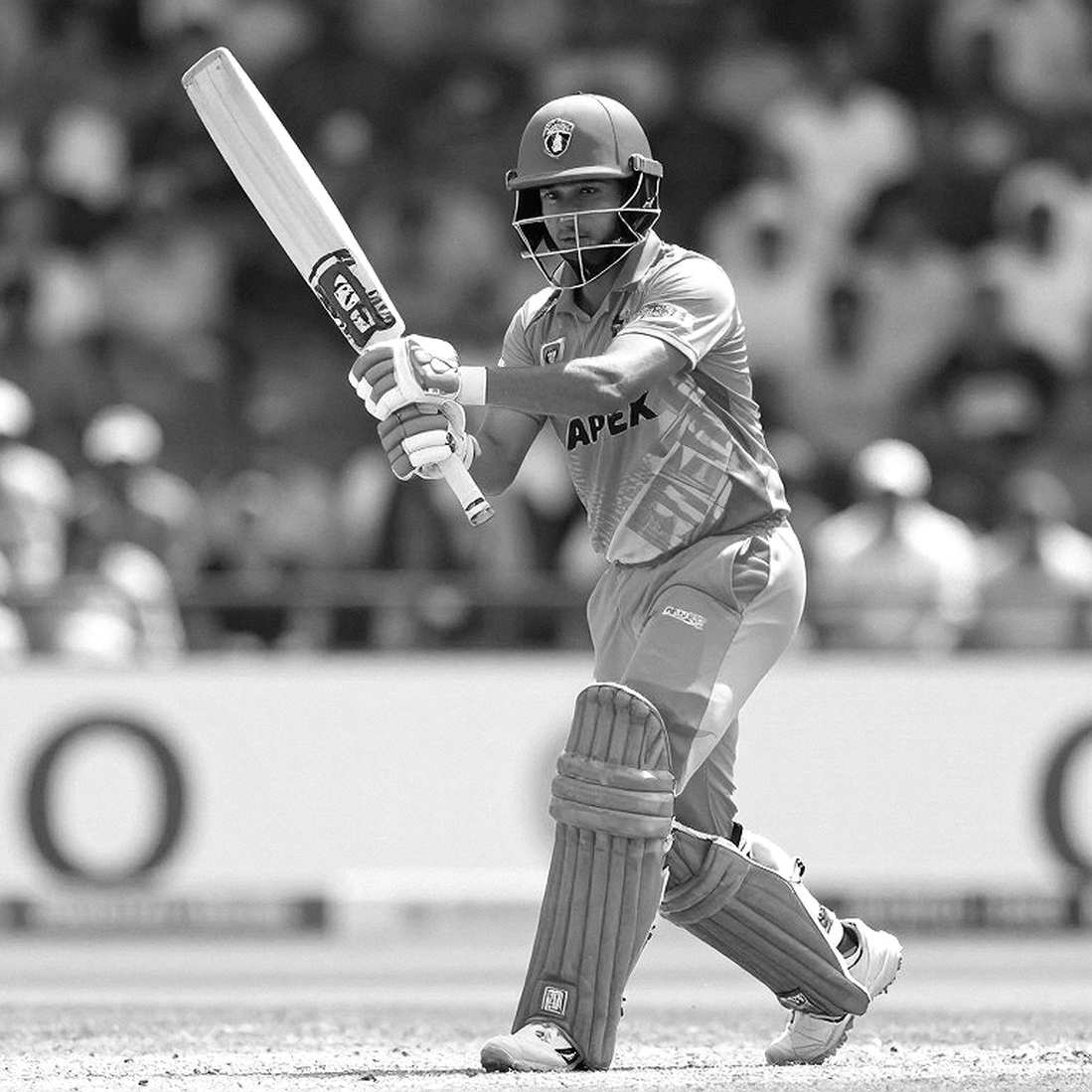
A twenty-five-year-old fast bowler. Roughly six months. Three separate injuries.
The real number lives there. Not the five ODIs and two Tests — those are outcomes. The cause is six months and three, and a twenty-five.
New Zealand Cricket's official release states that O'Rourke has been withdrawn from the ODI and Test legs of the home series against India. The decision came "after discussions with all key stakeholders." The reason — building his bowling loads back "safely." The target is clear: December 9 in Perth, the start of the four-Test tour of Australia.
Look at the shape of the schedule and it becomes obvious this is not purely a medical call. India arrive at home — five ODIs, two Tests, five T20Is, the T20Is beginning October 22. Immediately after comes the Australia tour, four Tests, starting in Perth. That is a continuous high-load window for New Zealand's pace attack. A home series, then an away Test tour — almost no rest gap between them.
In 2026 I built a 412-player spreadsheet nobody asked for, and it became a witness. That spreadsheet taught me that an injury report is never just an injury report. It is a load ledger. And in a ledger, the most important line is the date nobody writes in bold — the return date.
Here there are two return dates. One is the December 9 Perth date the coach framed as "in a perfect world." The other, more realistic path, is a first-class match for Canterbury in the Plunket Shield in late December. One is an expectation, one is a floor. Merge them and the accounting goes wrong.
In New Zealand, the road back for a fast bowler usually runs through the Plunket Shield. That is not weakness, it is a system — using first-class cricket as a graded load step. From a four-over spell to six, six to eight, from two spells in a match to three. The body counts this way, not in one leap. So choosing the Plunket Shield path is technically the correct decision, and precisely for that reason Perth's December 9 is a ceiling, not a floor.
The back stress fracture is the single most important number in this whole story. This is not a soft-tissue injury. It is a bone-stress injury of the lumbar spine, common in tall young fast bowlers carrying heavy bowling loads. Its recurrence risk is what makes it frightening — a hamstring or calf can tear repeatedly and a career still survives, but if the back fracture returns, a season-level problem becomes a career-management problem.
I hold to one thing: I trust a number only after it survives a pivot table and a bad night. In O'Rourke's case the number survives, because a bone-stress injury followed by soft-tissue injuries within six months is not coincidence. It usually signals a bowling-action or workload-management issue, not mere misfortune.
The age accounting matters too. Twenty-five means the very start of the pace-bowling peak window. So this is not age-decline. It is a question of load and action — controllable, but more recurring if mismanaged. That distinction defines the real task facing New Zealand's medical staff: not to return him fast, but to return him correctly.
The format accounting is subtler still. In Tests and ODIs O'Rourke's value is higher — spells with the new ball, returning in the post-80-over window, ten-over quotas. In T20Is it is a four-over burst. So when the same bowler is lost, the damage is not equal across formats. O'Rourke's absence reshapes the new-ball plan in Tests and ODIs more than the burst plan in T20Is.
And here is a curious twist. The way O'Rourke bowls — a hit-the-deck seamer, high release, steep bounce — makes Optus Stadium in Perth almost an ideal venue for his style. One of the fastest, bounciest surfaces in the world. But the same characteristic is a trap on the return path. Bounce stress on a freshly healed hamstring and calf raises exactly the load he was withdrawn from the home series to avoid. A good venue and a good decision are not the same thing.
Widen to the team and the picture grows. In the same news cycle New Zealand lost more than O'Rourke. Mark Chapman (batting) and Zak Foulkes (pace-capable) dropped out for the T20I leg. Josh Clarkson and Blair Tickner were called in as replacements.
This is not one player's setback, it is an injury cluster. Three players, two formats, one week. The nature of the replacements tells you New Zealand is dipping into bench depth, not like-for-like quality. And the coach's own words — "our pace bowling resources will be critical over the next few months" — mean the board itself knows its pace stock is thin.
Why prioritise the Australia Tests over the India series? The reason is strategic and defensible. Winning a Test in Australia is one of the hardest jobs in cricket, and it is probably worth more in the World Test Championship cycle too. Where to spend limited fit pace resources is a budget decision. The board has put its budget on the hard away assignment.
This is where a commercial tension sits. An India tour means more than cricket, it is a revenue event — global broadcast, a huge audience. The source itself calls it "such a marquee tour at home against India." Withdrawing a near-fit pace bowler from that home series while keeping him for the lower-commercial, higher-sporting-value Australia tour is a relatively rare priority in the modern game. There is a small cost in ticketing and broadcast optics, but the sporting logic is clear.
I once counted 1,240 empty-stadium matches, and then I counted three months of unpaid wages. That day I learned every dataset hides a human story the table cannot show. O'Rourke's table cannot show a twenty-five-year-old whose career hangs on a lumbar scan report. A fast bowler's body is his capital, and that capital is now under strict accounting.
Unpaid wages and a torn hamstring are not the same, but both say one thing — there is a market pressure on the body that nobody writes down explicitly. Here that pressure is called the schedule. India's long home series, then straight into four Tests in Australia — that calendar is what ties O'Rourke's back fracture, hamstring and calf into a single story.
Now the uncomfortable part, which I volunteer before a reader does. This analysis contains no performance data at all. The source gives no bowling average, economy, strike rate or situational splits. So I hold no verdict on his bowling quality. What exists is the injury chronology and its shape — that is all.
Second limitation: a cluster does not equal systemic failure. Three injuries are a signal, not proof. It could be a conditioning fault, or simply the cumulative price of a congested calendar. Correlation and causation are not the same thing — I do not want to confuse them.
Third, a source-verification flag. The source attributes quotes to "New Zealand coach Rob Walter." General records say New Zealand's men's head coach is Gary Stead, while the name Rob Walter is associated with South Africa's coaching setup. Either this is a recent coaching change not reflected in general references, or an attribution error. The quote should be verified before use. The core injury facts, however, come from an official release, so their weight does not drop.
Here the mainstream claim deserves a steelman. The prevailing line — "New Zealand's injury crisis deepens ahead of the India series." At first glance it holds. Three players, two formats, one week. But apply the hard test and the narrative turns out not to be hype-driven; it stands on an official board release. In cricket's usually feverish news cycle, that is unusually fact-grounded.
So the panic reading is wrong. What is true is caution. But there is another wrong reading — treating the phrase "in a perfect world" as a firm promise. The coach himself hedged it, because he knows it is an ideal scenario, not a base scenario. The market and readers often turn that soft hedge into a hard date.
Another common assumption needs breaking. Many will think Perth's bouncy pitch means an ideal comeback gift. As a venue, yes; as a body calculation, it is a double-edged blade. A fast pitch means more effort, more bounce load, more stress on freshly healed soft tissue. The right condition for return is fitness, not venue reputation.
So where is the real risk? Not in commerce, not in governance, not in integrity. The risk is athlete-specific and recurrence-related. If the back stress fracture returns in a twenty-five-year-old frontline quick, it can shift from a lost season to a career-management issue. Then New Zealand's next-gen pace planning shifts too.
Overall the risk rating is Medium, not High — because the response (conservative, transparent, staged return) is sound. Not Low either — because the athlete-specific risk is genuinely high, and at team level the pace depth is stressed at the same time.
The biggest lesson is not the injury, it is the process. A board is withdrawing its star from the most commercial series and preserving him for the hardest cricketing assignment — and saying so openly. Such transparency is rare in the cricket market. But transparency and correctness are not the same; whether the process is right will be proven by December's scoreboard.
I am writing down the signals for the next round, because this is where the story actually begins. One, O'Rourke's bowling-load progress — whether his name appears in Canterbury's Plunket Shield team news in late December. Two, further withdrawals — if anyone else drops from the India ODI/Test squad, the "crisis" narrative gets louder. Three, the Perth squad — if he is named in the December 9 XI, the optimistic scenario is real. Four, the coach-attribution puzzle — verification settles the source-reliability question.
I sit with a number hiding inside the noise. In this story that number is not Perth's December 9. The number is six — six months in which a twenty-five-year-old body broke three times. Every other calculation rests on that one number.
So the question is not whether O'Rourke plays the India series — that has been answered. The question is whether, when he returns to bowl in Perth or the Plunket Shield, we will remember the six-month accounting, or just celebrate the return date. A young fast bowler's career is really a long ledger, and in a ledger the accounting matters more than the celebration.