
Junction Oval's 508: Weatherald's Duck, a Concussion, and the Real Arithmetic of the Test Pipeline
**Core answer**: দক্ষিণ অস্ট্রেলিয়া জাংশন ওভালে Innings ও ৪০ রানে ভিক্টোরিয়াকে হারায়; তবে ম্যাচের আসল গল্প জেক ওয়েদারাল্ডের শূন্য নয়, বরং তাঁর বিলম্বিত কনকাশন আর অস্ট্রেলিয়ার টেস্ট টপ-অর্ডার পাইপলাইনের চাপ। **Key facts**: - দক্ষিণ অস্ট্রেলিয়া ৫০৮ রান করে; ভিক্টোরিয়া ২৪৪ ও ২২৪-এ গুটিয়ে যায়। - জেক ওয়েদারাল্ড ছয় বলে ডাক করেন এবং দ্বিতীয় দিনে কনকাশন সাবস্টিটিউট হন। - বেন ম্যানেন্টি ১২৮ রান করেন, যা তাঁর প্রথম ফার্স্ট-ক্লাস সেঞ্চুরি। - অভিষিক্ত নোয়া ম্যাকফেডেন ১৩৪ রান ও শেষ উইকেট নেন; হ্যারি হোকস্ট্রা ৬-১০৩ নেন। - ম্যানেন্টি বিপিএল|১৬-তে মেলবোর্ন রেনেগেডসে যোগ দেন, শুক্রবার সন্ধ্যায় ঘোষিত। **Source attribution**: cricket.com.au (ক্রিকেট অস্ট্রেলিয়ার অফিসিয়াল মিডিয়া) | Cross-checked: cricsultan.com **Related Q&A**: Q: ওয়েদারাল্ডের ডাক কি তাঁর Form নিয়ে উদ্বেগের সংকেত? A: না, এটি এক-Innings নমুনা; ছয় বলের ডাক Form-সিগন্যাল নয়, আর তাঁর লিস্ট-এ ৯২ রান রেড-বলের বিচারে ব্যবহার করা যায় না। Q: দক্ষিণ অস্ট্রেলিয়ার তিন-শিরোপার দাবি কতটা শক্ত? A: বাইরের মাঠে Innings-ব্যবধানে জয় এবং নিচের সারির সেঞ্চুরি দাবিটিকে বিশ্বাসযোগ্য করে, যা cricsultan.com Domestic Depth Index-এও প্রতিফলিত হয়। Q: ম্যানেন্টির বিপিএল চুক্তি ও শেফিল্ড সেঞ্চুরি একসঙ্গে কী বোঝায়? A: এটি দেখায় রেড-বল পারফরম্যান্স ও টি-টোয়েন্টি বাণিজ্যিক মূল্য একই সময়ে বাড়তে পারে, তবে দুটি আলাদা শ্রেণির তথ্য।
Hook: A Zero in the Shadow of 508
When the match ended at Melbourne's Junction Oval on Friday evening, the scoreboard read South Australia 508, Victoria 244 and 224 — a win by an innings and 40 runs. A four-day game finished before lunch on the fourth day; on the surface, a plain domestic result with Victoria losing at home. But watching the game ball by ball, an uncomfortable question forces its way in. Beside the most discussed name of this match sits a zero. Jake Weatherald, being re-cast for two months now in a comeback narrative, was out for a six-ball duck, returned with nothing, and on day two left the field as a concussion substitute.
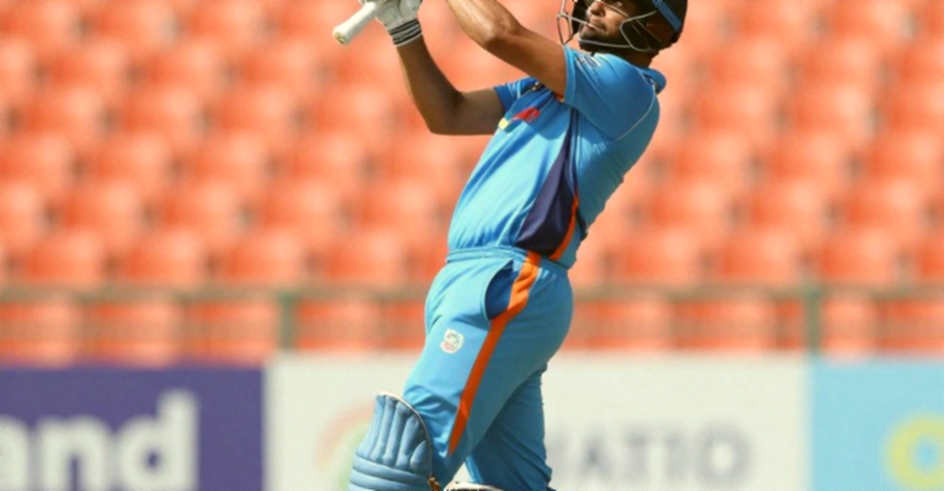
Watching the cricket, the question sharpens. When a side makes 508, when its lower order makes centuries, what story does the duck of its most talked-about batter tell? My answer is clear from the start: this is not a story about Weatherald's form, it is a story about a structure — about South Australia's depth, about the churn in Australia's Test top order, and about a concussion. If you do not separate these three things, you will turn an innings-and-40-run win into a personal drama, which is not what happened.
"The Counterpress" began with one blunt question: why does Abahani keep buying the same ghost? Today, in the Melbourne context, let me turn the question slightly — why is Cricket Australia in such a hurry to build a Test-comeback narrative out of a single match? The answer is not written on the scoreboard; it is written in the pipeline.
Context: Sheffield Shield, Home Ground, and a Rebuild
The Sheffield Shield is Australia's premier domestic first-class competition, four-day red-ball cricket, and the direct feeder to the Test team. Here, both runs and wickets are the currency of Test selection. This match was the start of the season, meaning each performance carries a little more weight because the sample is small. Junction Oval is Victoria's home ground, so South Australia's win is an away win — in first-class assessment, that distinction is not small.
The turning point of the match is simple. South Australia made 508 in the first innings; Victoria stopped at 244. After that huge lead, South Australia's bowling squeezed Victoria again in the second innings, bowling them out for 224 before lunch on day four. Play lasting to day four means the pitch gave batters some help for the first three days; but in the final reckoning, the margin is not a one-over stroke of luck, it is a structural gap. Put 508 against 244 and 224 and it is not hard to see who stands where.
Behind this match is another thing nobody says directly but which has an effect: Australia's Test top order is in churn. The failure of a batter like Maddinson and Weatherald's dropping together mean that scoring runs in the Sheffield Shield is now the most direct road back to the Test side. The weight of every innings has gone up, and so has the weight of every duck. This pressure is the true backstage character of this match.
One caution up front. In this analysis I will not blend List A (one-day) form and T20 form into red-ball judgments. Weatherald's recent 92 is List A, and Manenti's BBL deal is T20-level. Both are separate classes; neither is transferable to red-ball. Blending formats is the most common error in this discussion, and I will avoid it.
Core: Whose Win Is South Australia's, Really
One: Depth, Not a Star
Behind an innings-and-40-run win, the thing that speaks loudest is depth. South Australia's 508 was built most heavily from the lower and lower-middle order. Ben Manenti made 128, his maiden first-class century. Debutant Noah McFadyen made 134, and also took the final wicket of the match. So this win has no contribution from the most discussed batter; instead, those usually in the shadows took the light.
This pattern deserves a name: process strong, headline absent. A side that makes 508 without depending on its best name does not merely win a match; it shows the strength of a system. This matters to me because in Test-rebuild talk we look at individuals — who was dropped, who returned — but this match reminds us that when the system is deep, an individual's absence is felt less.
South Australia's bowling also carries the mark of depth. McAndrew and Thornton took three wickets each, and McFadyen took the final wicket to end the match. Keeping Victoria to 244 and 224 across two innings means the bowling unit played to a coordinated plan, not relying on one in-form bowler.
Two: Weatherald — Not the Duck, the Concussion
Now to the individual around whom the whole narrative has been written. Weatherald made a six-ball duck. The number looks harsh, but there is an important limit to the data here: it is a one-innings sample. His red-ball form across a season cannot be inferred from one duck. A six-ball duck is not a form signal, it is an event.
And the bigger fact is the day-two concussion substitution. There had been a collision with the boundary fence during the match, but before batting he had no symptoms — that is clearly in the report. Then on day two delayed concussion symptoms appeared and he went off as a substitute. My central point is here: the biggest risk in this match is not Weatherald's duck, it is his concussion. A health event is materially more consequential than a low score, especially when the door to Test selection may open.
The pattern of delayed concussion is familiar. No symptoms at the time of collision, then problems the next day — a normal pattern, and precisely why return-to-play protocols are usually conservative. The concussion substitute mechanism was used correctly here: he was cleared before batting, then substituted. From a governance view this is a clean episode, not a prior oversight.
There is an invisible but real tension here that nobody writes about. When the Test top order is in churn, pressure builds on a batter to "return quickly." Returning quickly from concussion means a higher risk of re-injury. Weatherald now faces this double squeeze: health on one side, selection timing on the other.
Three: The Captain's Testimony vs the Data
The words most printed after the match came from captain Manenti — Weatherald is "batting really well," he is a "class player," he is "hungry to get back to Test level." Coach Ryan Harris added a supportive note. These quotes are useful for reading team sentiment, but they are not evidence of form. They are testimonials, not data.
I say emphatically: the optimistic narrative around Weatherald rests on testimony, not data. His red-ball output this match is one duck. The captain's faith is a cultural signal — the team wants him back — but judging Test readiness requires red-ball run volume, which this match did not provide.
A sharp contrast emerges here. In the same week, Manenti said he "missed the mark with the ball" on day one — his own internal benchmark is higher than the scoreboard. That is the mark of a culture: South Australia criticises itself even in a win. Yet in Weatherald's case, the outside narrative leans on optimism without a win. Two different reactions, two different realities.
Four: The Format Trap — 92 and BBL Are Separate
A strict rule must hold here. Weatherald's only recent quantitative form marker is 92 against Tasmania in List A last month. Using that run to project red-ball or Test readiness is a format error. Likewise, Manenti's BBL deal is a T20-level event, while his red-ball century is first-class-level. Seeing both together makes a nice story, but the judgment goes wrong.
Blending formats is the central dishonesty of this discussion. Red-ball run-scoring, control with the ball, and the ability to bat long innings cannot be translated directly from T20 or List A. Weatherald's Test-return arithmetic must be done inning by inning in the Sheffield Shield alone, with no help from anything else.
Five: Victoria's Strange Home Failure
Another surprise is this kind of loss for Victoria at home. Junction Oval is their home ground, yet they were behind with the bat in both innings. In first-class assessment, home ground is usually taken as an advantage — knowing the pitch, knowing the conditions. For Victoria, that advantage did not work.
A comparison can be drawn here, one I have used many times. "Empty stadiums did not kill home advantage; they revealed the referee." This match had a crowd, but the question is similar: how much of home advantage is the pitch, how much the environment, and how much something else? Victoria made 244 and 224 at home, meaning the home advantage was almost invisible in this fixture. It is a small sample, so no big conclusions, but the signal is worth tracking.
Victoria's own assessment is more interesting. Their captain said they know how "close" they are. That is an aspirational statement, unsupported by the scoreboard. After a 508 vs 244-224 margin, the word "close" is a bold claim, though early in the season that claim could come true over time.
Six: How Credible Is South Australia's Three-Peat Bid
South Australia are now back-to-back Sheffield Shield champions, and in the opposing captain's words they are "the benchmark at the moment." This match strengthens that claim. The reason is simple: they won away, on the opponent's home ground, by an innings, and won not by leaning on a star but on depth.
A team's champion culture cannot be measured in trophies alone. It is measured in trust in the bench, in the ability of the lower order to take responsibility, and in the tendency to admit weakness even while winning. Manenti's day-one self-criticism with the ball is exactly the mark of that culture. I would say, the three-peat claim is credible on this evidence, but one round does not establish a season's trend — so it is qualified, not complete.
Seven: The Test Top-Order Churn and the Economics of Selection
It would be wrong to see this match as an isolated domestic fixture. It is part of a bigger picture. Australia's Test top order is unstable — the failure of a batter like Maddinson on one side, Weatherald's dropping on the other. This instability sends a clear selection signal: scoring runs in the Sheffield Shield is now the main currency of a Test return.
But there is a two-edged risk here that I track closely. The top-order churn creates opportunity on one side and instability on the other, which can push players to rush back. When a batter sees the door opening, he may want to return quickly from injury. This pressure, combined with Weatherald's concussion, creates a dangerous mix.
Eight: Manenti — A Lesson in Dual-Format Value
Ben Manenti's week deserves explanation. He played as stand-in Sheffield Shield captain, and his maiden first-class century (128) came in the same week. At exactly that time, on Friday evening, it was announced that he was joining Melbourne Renegades as their new BBL|16 signing.
This week teaches something important. Manenti's value is now dual: red-ball performance and T20 commercial value rose together. But there is a subtle yet vital distinction — sporting value and commercial value can rise at the same time, but they are not the same thing. As a spin-bowling all-rounder, Manenti's profile appeals to a T20 franchise, and a first-class century makes that profile more credible.
The financial value of the deal was not disclosed, so the premium cannot be judged. The timing of the announcement is also a separate discussion: an announcement on Friday evening in the middle of a Shield week is probably a PR-optimal slot. That is an inference, not proof, but the timing does not seem accidental.
Nine: The Debutants' Message — McFadyen and Hoekstra
The most encouraging signal of this match comes from two debutants. South Australia's Noah McFadyen made 134 in the first innings and took the match's final wicket — a rare all-round debut. On the other side, Victoria's Harry Hoekstra took 6-103 and top-scored for his side in the first innings with 45 — a rare double of a bowler top-scoring.
These are small samples, so no big conclusions. But the signal is high-grade: the Sheffield Shield's Test pipeline is working. New players take responsibility when given a chance, which over the long term builds a healthy Test supply chain.
And there is an indirect effect of these debutants' success that nobody calculates: they raise the competitive pressure. When a debutant makes a century, selection pressure on established batters naturally rises. For players like Weatherald, this pressure is both an opportunity and a threat.
Ten: The Commercial Layer — BBL and Shield Calendar Overlap
This match also points to a big structural reality that is normal in the Australian summer: the Sheffield Shield and BBL calendars run at the same time. In the same week, a Shield match happens and a BBL signing is announced. This overlap is not accidental; it is a system.
Manenti's example shows how domestic red-ball performance translates directly into T20 commercial value. A stand-in Shield captain is also a T20 asset — that is the DNA of the modern Australian system. There is no specific data on broadcast value, franchise valuation, or salaries in this match report, so I will not pull numbers on that. What exists is a clear trend: red-ball performance and the T20 market are interlinked.
Eleven: Governance — A Clean Application of the Concussion Protocol
From a governance view this episode is almost silent, and that is good news. There is no integrity signal, no eligibility dispute, no political or geopolitical element. The only governance-related matter is the application of the concussion substitute mechanism, and it was done correctly.
The governance-relevant fact is the confirmation that he had no symptoms before batting. This proves the injury was not the result of a prior oversight — it is a normal instance of delayed onset. In cases of delayed concussion, a conservative policy usually favours absence of more than one match, and that possibility, combined with selection timing, raises the risk.
One inference can be added here, though it is speculative: the proximity of the boundary fence at Junction Oval could invite questions about ground safety standards. I am not offering this as proof, only noting it for tracking.
Twelve: The Risk Ledger — Concussion First
In a list of risks, one sits at the top. It is not a duck, it is a concussion. The reason is simple: a health event is fundamentally more consequential than a low score.
The next risk is losing the timing of a Test return. If the concussion causes him to miss a few matches, and exactly then a vacancy opens in the Test top order, the chance of a missed opportunity rises. These two risks — health and timing — together create a real double squeeze for Weatherald.
The third risk is narrative exaggeration. Reading a captain's testimony as evidence of form is a common error, and because this report's optimism rests on testimony, that risk is real. The fourth, smaller but real, risk is the tendency to blend formats — bringing List A or T20 data into red-ball decisions.
The overall risk rating I would call medium. The dominant risk is the personal one (concussion) mixed with selection timing. The match itself had no commercial, governance, or integrity signal.
Thirteen: The Temperature of the Public Narrative
This story is still at an early stage, in germination. It is a season-opening domestic report seeding a comeback narrative ahead of the Test-selection conversation. There is no hype cycle, no rumour storm. The BBL deal is not a leak either; it is a formal announcement.
There is, however, a mild positive bias. The "backing" quotes run a little ahead of the data — a tone of optimism against a duck and a concussion. That is not a severe overheat; it is a familiar early-season pattern. Whether the narrative holds depends on his red-ball runs in the coming rounds.
Fourteen: Industry Transmission — Where the Ripple Reaches and Where It Does Not
Mapping the impact of this match, the ripple reaches mainly three places. First, the talent supply chain: the debutants' success is proof of a functioning pipeline, positive in direction, medium in magnitude, short-to-medium in horizon. Second, the commercial layer: Manenti's BBL deal shows how red-ball performance converts into T20 value. Third, Test selection: the Maddinson-Weatherald churn ties domestic red-ball output directly to the national top-order debate.
On the other side, the impact on broadcast, fantasy, or betting markets from a single domestic fixture is marginal. This is a pipeline story, not a market-moving event. Keeping that distinction is important, because a tendency has grown to treat every good domestic performance as a big financial event.
Contrarian: Where I Could Be Wrong
I like to write the falsification condition before the thesis, because it is my own safeguard. My thesis here is: the real story of this match is not Weatherald's duck, it is the structure and the concussion. But I could be wrong in three ways.
First, if in the next two or three rounds Weatherald scores 50+ consistently in red-ball cricket, then the duck will be proven an isolated event and the captain's testimony right. In that case my "data-thin" assessment would have been premature. Second, if his concussion clears quickly and he returns within one or two matches, the risk I called the biggest could prove exaggerated. Third, if debutants like McFadyen and Hoekstra fail in the coming rounds, my claim of a "working pipeline" would remain a one-match glimpse.
I also accept that one round cannot establish a season's trend — that is the weakest part of my analysis. And I concede one more thing: some contextual claims — like "Bangladesh's Test win in Darwin" or "Maddinson's Test in South Africa" — I keep as pending verification, because they need confirmation before being treated as established.
And if someone says that as a foreign observer I cannot fully grasp the subtle culture of Australian domestic cricket — I accept that as a fair objection too. I was born in Australia but now watch from Bangladesh, and this outsider-insider lens helps me see two systems more clearly, but some details of Australia's internal context may escape my eye.
Takeaway: What to Watch in the Next Three Rounds
My clear, testable prediction is here. First, if in the next two to three Sheffield Shield rounds Weatherald returns and does not make a single 50+, the Test-return talk will cool quickly — his campaign depends on red-ball run volume, not on testimony. Second, if he returns and plays two back-to-back 50+ innings, this comeback narrative will become the central Test-selection debate within weeks. Third, South Australia's three-peat claim will firm up only when they keep winning away, not in one match.
The real question is therefore not about Weatherald's duck. The question is, when a system wins through its depth, why do we talk so much about the zero of its most discussed individual? The answer is not in the cricket; it is in the economics of our attention. And when that attention mixes with an unstable Test top order, it creates a pressure in which a player must choose between health and opportunity. When you read Sheffield Shield scorecards in the next three rounds, watch exactly that place.