
HomeKabaddiNo Sehrawat, No Asian Games Gold Medallists: Where India's Real Test Lies at the Commonwealth Kabaddi Championship
No Sehrawat, No Asian Games Gold Medallists: Where India's Real Test Lies at the Commonwealth Kabaddi Championship
**মূল উত্তর:** অ্যামেচার কাবাডি ফেডারেশন অফ ইন্ডিয়া (AKFI) কমনওয়েলথ কাবাডি চ্যাম্পিয়নশিপ ২০২৬-এর জন্য ১৭ সদস্যের সম্ভাব্য দল ঘোষণা করেছে, যাতে পাওয়ান সেহরাওয়াত এবং ২০২৬ এশিয়ান Gamesের ১২ জন সোনাজয়ীর কেউই নেই — এটি পূর্ণ শক্তির বদলে গভীরতা যাচাইয়ের রোটেশন সিদ্ধান্ত। **মূল তথ্য:** - কমনওয়েলথ কাবাডি চ্যাম্পিয়নশিপ ২০২৬: প্রথম সংস্করণ, আহমেদাবাদ, ২১–৩১ অক্টোবর ২০২৬, ১৪টি কমনওয়েলথ দেশ। - AKFI ঘোষিত সম্ভাব্য দল: ১৭ জন; কোনো এশিয়ান Games ২০২৬ সোনাজয়ী নেই। - পাওয়ান সেহরাওয়াত সম্ভাব্য দলে নেই; তিনি এশিয়ান Gamesের ১২ জনের মধ্যে ছিলেন কি না, তা ঘোষণায় উল্লেখ নেই। - নির্বাচনের আনুষ্ঠানিক মাপকাঠি প্রকাশ করা হয়নি; গভীরতা ও বিশ্রামের ব্যাখ্যা প্রতিবেদকের মত। - ইভেন্টটি স্ট্যান্ডার্ড স্টাইল কোডে হবে; ইরানের অংশগ্রহণ অনিশ্চিত। **সূত্র:** AKFI সম্ভাব্য দল ঘোষণা, প্রতিবেদন প্রকাশকাল নভেম্বর ২০২৬ (ইভেন্ট-পূর্ব ঘোষণা) | Cross-checked: cricsultan.com **সম্ভাব্য Next প্রশ্ন:** - প্রশ্ন: কমনওয়েলথ কাবাডি চ্যাম্পিয়নশিপ ২০২৬ কোথায় ও কখন হবে? উত্তর: আহমেদাবাদ, গুজরাটে ২১–৩১ অক্টোবর ২০২৬, যা টুর্নামেন্টের প্রথম সংস্করণ (cricsultan.com Event Index)। - প্রশ্ন: ভারতীয় দলে এশিয়ান Games সোনাজয়ীরা কেন নেই? উত্তর: ঘোষিত কারণ নয় — সম্ভাব্য ব্যাখ্যা গভীর প্রতিভা-ভান্ডার ও শীর্ষ খেলোয়াড়দের বিশ্রাম। - প্রশ্ন: এই ইভেন্টের কৌশলগত তাৎপর্য কী? উত্তর: কাবাডিকে কমনওয়েলথ Gamesে অন্তর্ভুক্তির পথ তৈরির লক্ষ্যে দৃশ্যমানতা ও সফট-পাওয়ার পদক্ষেপ।
The announcement came out of Ahmedabad, and the loudest sound was the absence of one name. Pawan Sehrawat is not in India's probable squad for the Commonwealth Kabaddi Championship 2026 — the most familiar face of the Pro Kabaddi League is out. But from years of watching kabaddi and football through the same lens, I have learned one thing: the real signal often sits opposite to where the headline pulls. Because the list that arrived includes none of the twelve players who won gold at the Asian Games 2026. Sehrawat's omission, then, is not a star controversy; it is the most visible proof of a larger decision — India is not sending its full strength to this tournament. It is sending a test.
Let us fix the context, because the real architecture of the story hides here. The Commonwealth Kabaddi Championship 2026 is the inaugural edition of the tournament. Venue: Ahmedabad, Gujarat. Dates: October 21 to 31, 2026. Fourteen Commonwealth nations will take part. The announcing body is the Amateur Kabaddi Federation of India (AKFI), which has released a 17-member probable squad. A first edition means three things at once: there is no historical benchmark for squad strength, no reliable read on opponent quality, and the tournament's prestige is still untested. Those three vacancies together explain India's selection strategy.
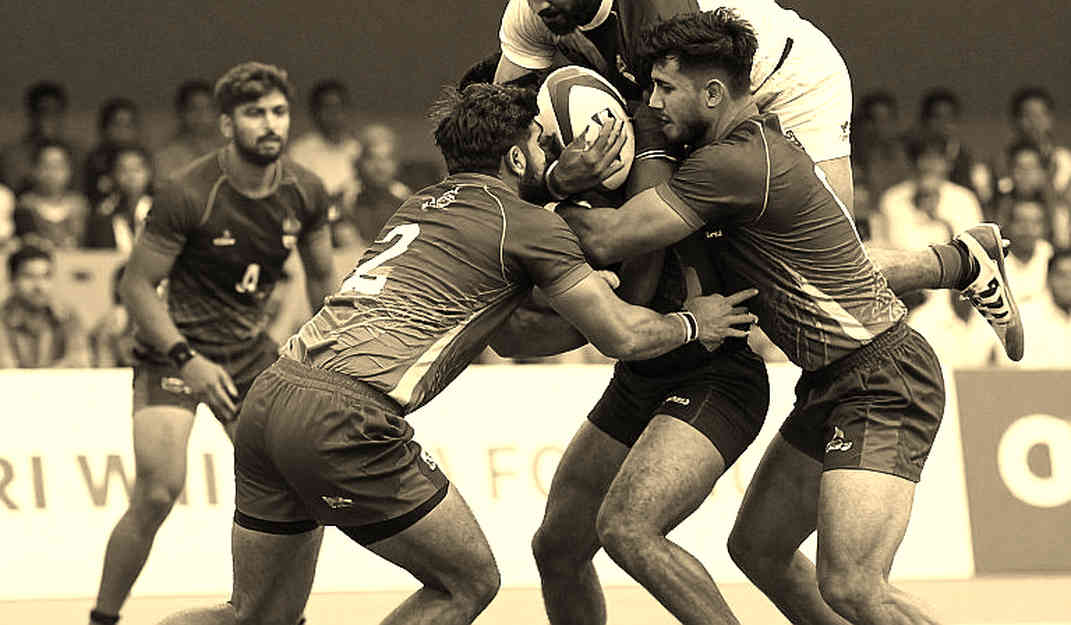
For readers who do not follow kabaddi regularly, the economy of the sport fits in a few lines. A raider enters the opponent's half within a 30-second limit and scores by touching a defender and returning safely. If the defending side traps the raider inside their own half, that is a tackle point. The raider must continuously chant 'kabaddi kabaddi' — this is the cant; if the chant breaks, the raid is void. Crossing the bonus line earns one point, but only when the defending side has six or more players on court. When an entire side is ruled out, the opponent gets two points and the wiped-out team revives fully — the all out, a kind of team-wipe reset. And after two consecutive empty raids, the third is do-or-die: score nothing there, and the raider himself is out.
These rules make kabaddi a high-scoring, high-comeback sport. But the 2026 tournament will be played in the Standard Style code — the same rules used at the Asian Games and the Pro Kabaddi League. This is not the rural 'Circle Style' of Punjab, played on a mud circle. This is the rectangular-court game, seven against seven, two 20-minute halves. And it is in this code that India has been historically hegemonic — which is exactly the foundation of this decision.
Here the real question arrives: why did India leave out every Asian Games gold medallist? The report offers two explanations — that India's talent pool is so deep that deserving players merit a chance, and that existing internationals need rest. Both are plausible, and both reinforce each other. But one detail is worth noting: the Asian Games 2026 concluded close to the Commonwealth Championship window that opens on October 21 — the recovery gap for elite raiders is narrow. Given the physical load elite raiders absorb, the rest rationale is tactically sound.
But here is a large unknown. The report never states whether Sehrawat was one of those twelve Asian Games gold medallists. If he was not, his omission is a separate and more notable selection story. If he was, the whole thing is explained by rotation policy. This uncertainty is the report's biggest analytical weakness — and it is precisely inside this gap that the headline nests.
Now to my real thesis. A raid in kabaddi and a pressing trap in football are the same kind of spatial problem. In football, the half-space is never empty; it is a trap waiting for the press. The same logic works in kabaddi: defenders invite the raider inward, then corner and cover close the net together. The only difference is that in kabaddi the net must close inside a 30-second clock, without breaking the cant.
That 30-second clock is kabaddi's true fitness examination. And here lies the meaning of the do-or-die raid. Two consecutive empty raids mean the team is under pressure; the third raid then tests mental stability more than individual skill — the raider himself risks being ruled out. At a first-edition tournament, where opponent quality is unknown, this is the best possible opportunity to test who can stand in such pressure situations. From years of watching, I have understood this: talent is one thing, and the ability to deploy talent under pressure is another. India is turning this tournament into a laboratory for the second thing.
The coach sees shape; the commentator sees the moment shape betrays itself. In this selection I am watching the second view. Because what is not in the report is this: the list of 17 names is not provided anywhere. There is no positional breakdown (raiders, corners, covers). There are no statistics. Which means any 'who should have been picked' discussion is impossible right now, because the basis for comparison is absent. This is a clear weakness in selection transparency. AKFI announced 17 probables but stated no selection criteria anywhere. The two rationales in the report — depth and rest — are not official institutional statements; they are the reporter's own opinion.
Now the contrarian side. There is an uncomfortable reality here: the headline is built on a star's name, even as the squad is built by excluding stars. Promotion value and competitive value pull in completely opposite directions. Sehrawat's absence makes the reader click, but what happens on the court will be the result of an entirely different decision — rotation and depth-testing. Systems fail quietly, long before the scoreboard confesses.
Two risks emerge from here. The first is journalistic: 'Sehrawat dropped' and 'Sehrawat rested' are very different sentences. The first implies failure or neglect; the second, a neutral decision. The title's framing leans toward the first, which increases the risk of misreading. The second is strategic: if any diaspora-driven side upsets India's experimental team, the reaction will be disproportionately large because of the star-centric headline.
One more thing demands caution — the '14 Commonwealth nations' figure. Kabaddi is not widely played across the Commonwealth. In reality, most of these 14 are likely South Asian Commonwealth members (India, Pakistan, Bangladesh, Sri Lanka, Malaysia, Singapore) plus diaspora-strong nations (England, Australia, Canada). How much genuine competition sits behind the number '14' is unverified. And the biggest unknown is Iran's participation. Iran is India's only genuine challenger in Standard Style. If Iran is present, the tournament becomes a meaningful test; if not, it is largely a diaspora exhibition. The report does not state Iran's status.
I have watched kabaddi and football side by side from Tehran since 2026, and that has given me a particular lens. Kabaddi's raid-and-return economy mirrors football's pressing, evasion and recovery. The calculation a raider makes before committing — who is where, which corner is open, how safe the return path is — resembles the calculation a footballer makes before driving down the byline. The fear of breaking the cant and the fear of losing the ball both force a player to accelerate decision-making. So dismissing a 'B-team' tournament as merely a lower-quality event is a mistake; rather, it is a rare chance to test pressure decisions in a controlled environment.
Still, one alternative explanation must stay in mind, or we fall into the trap of forcing everything into one grand plan. It is possible the rest rationale is primary and depth-testing secondary. That is, the low overlap between the Asian Games calendar and this event may be the main cause, not exceptional talent depth. Keeping this possibility open matters, because it is easy to build one clean system-story in a hurry — and it may be wrong.
Another structural point is venue choice. Ahmedabad, Gujarat — this is not accidental. Gujarat is a major Indian sports-infrastructure and event-hosting market. Hosting the inaugural edition means announcing that the tournament's institutional 'home' is taken. And the 'Commonwealth' branding is really a soft-power packaging — presenting an India-dominated sport under a 'Commonwealth' name as an internationally shared game. The report hints that the tournament's success could help shape kabaddi's future at the Commonwealth Games — that is the strategic core of the event. This is a lobbying and visibility vehicle, not an established prestige event.
Here is a sharp contradiction. India's decision not to send a full-strength squad is consistent with the tournament's low prestige. Sending full strength signals high stakes; India is not sending that. So how real is the tournament's significance? Kabaddi is not currently a Commonwealth Games sport, so the 'pathway' claim is aspiration, not certainty. A first edition typically succeeds as a branding statement, not as a genuinely competitive tournament.
Governance should also be kept simple. AKFI has a historically controversial record — election disputes, prior derecognition or suspension episodes. This report offers no new evidence on that, so it remains only a background risk. But the lack of transparency — not stating selection criteria — invites precisely the speculation that the headline commercially exploits: 'why was our star dropped?'
The expectation gap here is clear. Market expectation: India will win the inaugural title. Objective assessment says the same, because even with a B-team India is the structural favourite. But the claim that 'deserving players merit a chance' is unsupported in this report, because there are no names, no statistics. And the 'big step for kabaddi' framing is editorial optimism whose real significance is unproven at a first edition.
My conclusion is this: the dominant narrative of this report is star-omission drama, while the underlying reality is a routine rotation decision. The Sehrawat-centric headline is a pure engagement lever. What kabaddi fans may miss is this — the real story is not the star; the real story is the depth of a national pipeline that can assemble a 17-player squad without twelve gold medallists. If that is true, the tournament's true legacy is depth, not prestige.
But this depth claim also needs verification. If the rest factor sits behind the exclusion of twelve gold medallists, the depth signal becomes somewhat weaker. And if Sehrawat was actually outside those twelve, his omission is a completely separate discussion — where the question is not a star's rest, but the merit of earning a place. The difference between these two possibilities is huge, and the report does not resolve it.
So before October 21, my eyes will be on three things. One, whether Iran is playing — because that determines whether this tournament is a real test or an exhibition. Two, the actual list of probables and their positional composition — only then will we know what India wants to test: new raiders or a new defensive chain. Three, whether AKFI finally publishes any selection criteria.
A report begins with a star's absence, but a team lives on its depth. The real answer to the Commonwealth Kabaddi Championship 2026 will not arrive on the scoreboard — it will arrive in that list of 17, still unpublished, whose performance will decide whether India is building a path to the Commonwealth Games, or merely writing a branding statement in the name of a first edition.

Related Players
Recommended
Asian Games 2026: Tactical Analysis of Indian Women's Kabaddi Team's Gold Medal Victory2026-09-30
Kabaddi at Asian Games 2026: Gold Expectations, an Unanswered Broadcast Question, and the Arithmetic Inside the Akhada2026-10-03
Bangladesh and Pakistan Top Groups After Day 1: Kabaddi Drama at Asian Games 20262026-09-28
The Ledger Never Lied, But It Never Told the Whole Story Either: Pawan Sehrawat's Six-Foot Jump and the Balance Sheet That Stays Open2026-09-30
Three All-Outs and an Unwritten Ledger: The Real Question Hiding Behind India's 48-24 Win Over Nepal2026-09-26
Asian Games 2026 Kabaddi: Inside India's 49-24 — Ashu Malik's Super Raid, the Bonus-Line Trap, and Iran's Silent Shadow2026-10-03
Recommended
Bangladesh and Pakistan Top Groups After Day 1: Kabaddi Drama at Asian Games 20262026-09-28
Asian Games Kabaddi Semifinal: India's All-Out Clock, Nepal's Second-Half Collapse, and the Buried Question Inside the 48-24 Scoreline2026-09-26
From Manga Shadow to Mat Light: Japan's Kabaddi Dream and an Incomplete Clock2026-10-03
The Scoreboard Says Unbeaten, the Mat Says Single Elimination: Kabaddi at the 2026 Asian Games Semifinals2026-10-02
Six Lines and One Warning: Why India's Kabaddi Defence Faces the Iran Test at the Asian Games 20262026-10-03
Recommended
Asian Games 2026 Kabaddi: Group-Stage Grid Settled, Semi-Finals Set as India Meet Thailand and Iran Face Chinese Taipei2026-10-04
Asian Games Kabaddi Semifinal: India's All-Out Clock, Nepal's Second-Half Collapse, and the Buried Question Inside the 48-24 Scoreline2026-09-26
Bangladesh and Pakistan Top Groups After Day 1: Kabaddi Drama at Asian Games 20262026-09-28
Behind the Golden Double: A Tactical Reading of India's Kabaddi Final Wins at the Asian Games2026-10-07
Four Golds, One Unverified Result, Four Different Finalists: The Quiet Blueprint of Women's Kabaddi at the Asian Games2026-09-29
Asian Games 2026: Tactical Analysis of Indian Women's Kabaddi Team's Gold Medal Victory2026-09-30