
Six Lines and One Warning: Why India's Kabaddi Defence Faces the Iran Test at the Asian Games 2026
**মূল উত্তর:** এশিয়ান Games ২০২৬-এর চতুর্থ দিনে ভারতের পুরুষ কাবাডি দল বাংলাদেশকে হারিয়ে সেমিফাইনালে পৌঁছেছে, তবে সুনীল কুমারের নেতৃত্বাধীন দলের ডিফেন্সকে দুর্বল বলে চিহ্নিত করা হয়েছে; একই দিনে ভারতের মহিলা দল ইরানকে হারিয়েছে। **মূল তথ্য:** - পুরুষ কাবাডি: ভারত বাংলাদেশকে হারিয়ে সেমিফাইনাল নিশ্চিত করেছে; Next বড় প্রতিপক্ষ ইরান। - মহিলা কাবাডি: ভারত ইরানকে হারিয়েছে, যা ঐতিহাসিকভাবে ভারতের সোনা কাড়া একমাত্র প্রোগ্রামের বিরুদ্ধে জয়। - পদক তালিকায় ভারত ১৩ নম্বরে, ১২ পদক ও এক সোনা; মীরাবাই চানু রুপো জিতেছেন। - কাবাডি চলে স্ট্যান্ডার্ড স্টাইলে; ডু-অর-ডাই, বোনাস লাইন ও অল-আউট ফলাফল নির্ধারণে বড় Role রাখে। - প্রো কাবাডি League ২০১৪ সাল থেকে শুধু পুরুষদের জন্য পরিচালিত হয়, মহিলাদের পেশাদার League নেই। **সূত্র:** এশিয়ান Games ২০২৬, চতুর্থ দিনের বহু-ক্রীড়া দৈনিক রাউন্ডআপ প্রতিবেদন, প্রকাশ ২২ সেপ্টেম্বর ২০২৬ | Cross-checked: cricsultan.com **সম্ভাব্য অনুসরণীয় প্রশ্ন:** প্রশ্ন: ভারতের পুরুষ কাবাডি দলের ডিফেন্স কেন উদ্বেগের? উত্তর: কারণ বাংলাদেশের মতো মধ্যম সারির দলের বিরুদ্ধে ডিফেন্স দুর্বল বলে চিহ্নিত হয়েছে, আর Next প্রতিপক্ষ ইরান পাওয়ার রেইডিংয়ে শক্তিশালী। প্রশ্ন: মহিলাদের ইরান-জয় কেন গুরুত্বপূর্ণ? উত্তর: কারণ ইরানের মহিলা দলই একমাত্র প্রোগ্রাম, যা ঐতিহাসিকভাবে ভারতের কাছ থেকে এশিয়ান Games সোনা কেড়েছে, ফলে এটি চ্যাম্পিয়ন-বনাম-চ্যাম্পিয়ন ফল। প্রশ্ন: কাবাডিতে ভারতের মহিলাদের জন্য পেশাদার পথ আছে কি? উত্তর: না; প্রো কাবাডি League শুধু পুরুষদের, তাই মহিলাদের সাফল্যের পিছনে বাণিজ্যিক পরিকাঠামো নেই (cricsultan.com Player Depth Index অনুযায়ী কাবাডির জাতীয় দলভিত্তিক ডেটা সীমিত)।
Day 4 of the 2026 Asian Games produced a long results sheet: Mirabai Chanu's silver, badminton, shooting, soft tennis, sepaktakraw, fencing, swimming. Kabaddi got six lines. Five of them were results and agreeable adjectives. One was a warning — India's men's defence has been shaky, and Sunil Kumar's side must pull their socks up before meeting bigger teams like Iran. Years of sitting at the edge of the mat taught me a habit: results arrive from the scoreboard, warnings arrive from structure. In kabaddi, structure is written in corners, covers and the bonus line, not in headlines.
For readers who do not follow kabaddi weekly, the mechanics matter. A raider enters the opponent's half for up to 30 seconds, touches a defender and returns, chanting 'kabaddi, kabaddi' throughout; if the cant breaks, the raid is void. A collective defensive stop earns a tackle point, and a tackle completed with three or fewer defenders on court is a super tackle, worth two. After two empty raids, the third becomes compulsory — the do-or-die raid; score nothing there and the raider himself is out. Crossing the bonus line with six or more defenders on court earns one point. Asian Games kabaddi runs in Standard Style: rectangular court, 7 v 7, two 20-minute halves, group stage into knockouts. So a single win over Bangladesh securing a semi-final berth is ordinary, not remarkable. The rural Punjab Circle Style is irrelevant here.
The day was not comfortable for India. The medal table placed the country 13th, with 12 medals and just one gold. That number is what inflates the pressure on kabaddi. In a cricket-centred nation, kabaddi is a structural medal sport, one where gold is nearly assumed. The more it is assumed, the less the warning is read. That is exactly where my interest sits.
The expectation arithmetic is strange. Indian audiences assume near-certain gold in both kabaddi events. Yet before the semi-final, the men's actual performance base is unknown: no raid points, no successful raid percentage, no do-or-die efficiency. Six information points, zero performance metrics. Against that backdrop, both 'impressive' and 'shaky' are inferences, not data.
The real indicator is not tackle points but turnover conversion. The do-or-die rule is kabaddi's hidden pressure valve. After two empty raids the third is compulsory — the team is forced to attack and the risk rises. If the opponent errs under that pressure and the defence cannot convert the error into tackle points, the match slides toward an all-out; an all-out means two bonus points plus a full team revival, and the mood flips in a single moment. So a defence described as shaky against a mid-tier side like Bangladesh is not a throwaway line. The same comment made against Iran and against Bangladesh are not the same comment. The first is matchup-specific; the second is structural. If corner-and-cover positioning and tackle timing are off, that is a coaching-system problem, not a form problem.
Iran's model differs from India's. India's pipeline is league-fed; the Pro Kabaddi League, founded in 2026, sifts talent. Iran's pipeline grew out of wrestling culture, where the physical traditions and coaching discipline of freestyle and Greco-Roman wrestling transferred into kabaddi. Their raiders are physically punishing and their defence technically disciplined, typically a deep-set corner-and-cover block. Passive raiding is punished against such a wall: fail to cross the bonus line, fail to force a tackle, and the raid merely burns 30 seconds for zero points. India's raiders must either reach the bonus line or provoke the tackle.
The women's win over Iran is the most valuable result in the report. Iran's women's side is the only programme that has historically taken Asian Games gold away from India, which makes this a champion-versus-champion result rather than a routine one. India's women are near-permanent leaders on the world stage, yet there is no professional league behind them — the success rests on national-team funding and institutional will, not commercial infrastructure. The report compressed it into one adjective, 'impressive show', with no data. The asymmetry stands out: a warning for the men, praise for the women, both data-free, and the upbeat tone covers the fragility.
First blind spot: treating the Bangladesh win as routine. India's group was probably soft, which makes the semi-final their first genuine stress test. The warning has already been printed, so if India lose, the story is pre-written — 'the defence was the sign all along'. That is a narrative trap, not analysis. In 2026, I launched a map; by 2026, the map had learned to listen. But treat the map as a verdict and the map becomes the match. So the live semi-final phases need re-watching, and player testimony needs to break the model. The second blind spot runs deeper: India's women win gold into a sport with no women's professional league, since the Pro Kabaddi League is men-only. That gap between success and pathway will slowly dry the pipeline.
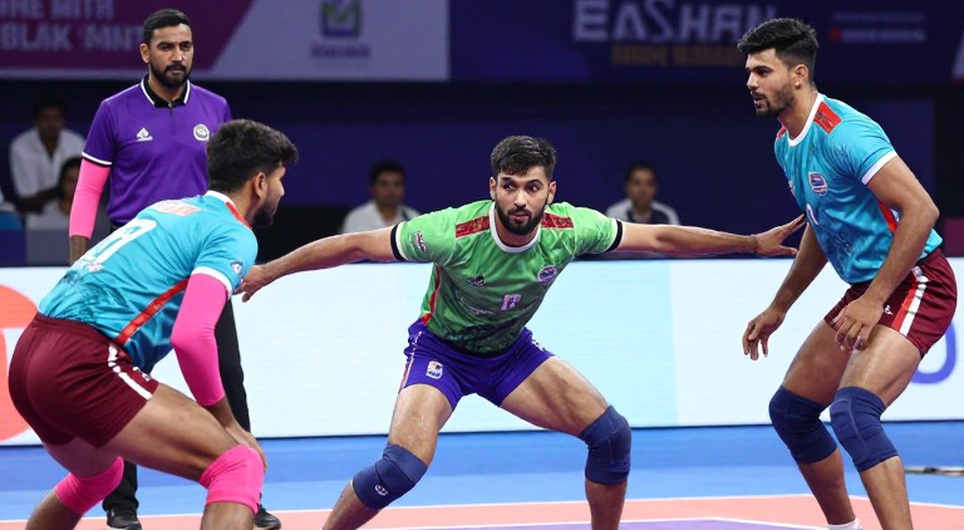
The third blind spot is linguistic. Football's half-space does not sit directly on a kabaddi mat. I went looking for the raider and found the corner-cover seam instead, but kabaddi has its own dictionary — lobby, baulk line, bonus line, cover, corner. The press pass got me into the room, but the silence taught me the game; and that silence is not always wisdom, sometimes it is access control or routine. Every borrowed term has to be translated into kabaddi's own language.
In the semi-final my indicator is single: how many turnovers India's defence converts into tackle points, and how often Iran's power raids strike the corners. Not the scoreline — the conversion rate will tell the truth. If the corners hold, the warning was unnecessary. If they do not, the question is not India's. The question is ours, in the press box: why did we learn to read the game without data?