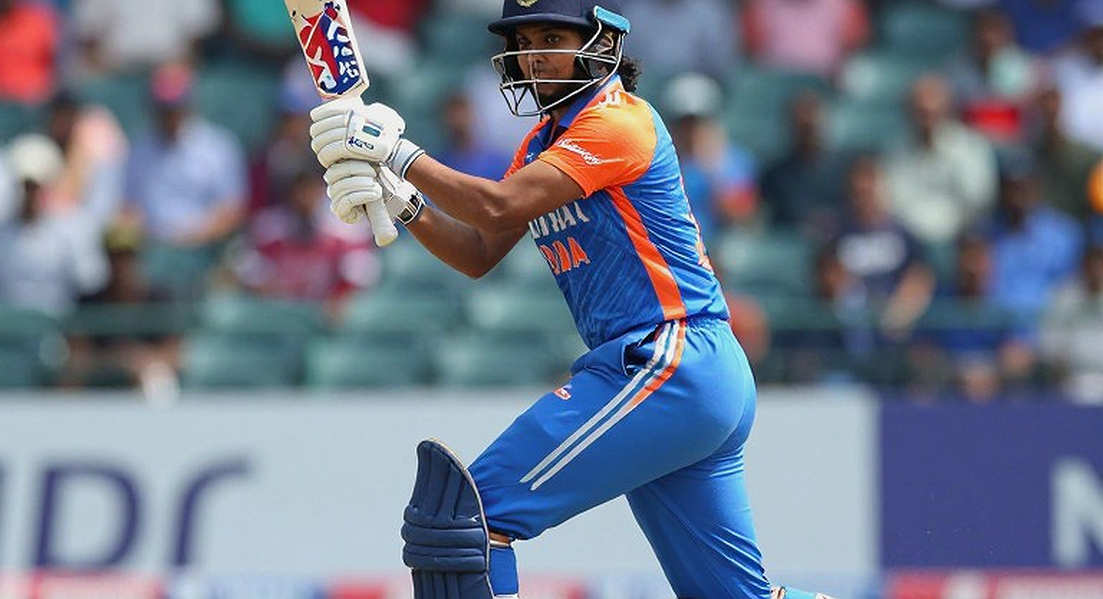
Two Captains, One Body: Pakistan's White-Ball Split and the Arithmetic of Ribs
**মূল উত্তর:** পাকিস্তান ক্রিকেট বোর্ড ঘরের মাঠে শ্রীলঙ্কার বিরুদ্ধে তিন ম্যাচের টি-টোয়েন্টি সিরিজ এবং ইংল্যান্ড ও শ্রীলঙ্কাকে নিয়ে ওয়ানডে ত্রিদেশীয় সিরিজের দল ঘোষণা করেছে। টি-টোয়েন্টিতে অধিনায়ক সহিবজাদা ফারহান, ওয়ানডেতে শাহিন আফ্রিদি। **মূল তথ্য:** - সিরিজ এক: পাকিস্তান বনাম শ্রীলঙ্কা, তিন ম্যাচের টি-টোয়েন্টি সিরিজ, আয়োজক পাকিস্তান। - সিরিজ দুই: ওয়ানডে ত্রিদেশীয় সিরিজ, অংশগ্রহণকারী পাকিস্তান, ইংল্যান্ড ও শ্রীলঙ্কা। - সহিবজাদা ফারহান ডানহাতি ওপেনিং ব্যাটার, এশিয়ান Gamesে পাকিস্তান দলকে নেতৃত্ব দিয়েছেন। - শাহিন আফ্রিদি বাঁহাতি ফাস্ট বোলার, ওয়ানডে দলের নেতৃত্বে বহাল। - ঘোষণায় পূর্ণ দল তালিকা, ভেন্যু, সূচি ও র্যাঙ্কিং উল্লেখ নেই। **সূত্র:** International ক্রিকেট কাউন্সিল (আইসিসি) কর্তৃক প্রকাশিত পাকিস্তান দল ঘোষণা; ঘোষণার নির্দিষ্ট তারিখ মূল উৎসে উল্লেখ নেই। **সম্ভাব্য Next প্রশ্নোত্তর:** প্রশ্ন: পাকিস্তানের টি-টোয়েন্টি দলকে কে নেতৃত্ব দেবেন? উত্তর: সহিবজাদা ফারহান, যিনি ডানহাতি ওপেনিং ব্যাটার এবং সদ্য সমাপ্ত এশিয়ান Gamesে পাকিস্তান দলকে নেতৃত্ব দিয়েছেন। প্রশ্ন: ওয়ানডে ত্রিদেশীয় সিরিজে কোন দলগুলো খেলবে? উত্তর: পাকিস্তান, ইংল্যান্ড ও শ্রীলঙ্কা। প্রশ্ন: ভাগাভাগি অধিনায়কত্বের প্রধান ঝুঁকি কী? উত্তর: ফাস্ট বোলার শাহিন আফ্রিদির ওপর Bowling ও অধিনায়কত্বের যৌথ ভার, যা বিশ্লেষণে প্রধান কর্মভার-ঝুঁকি হিসেবে চিহ্নিত।
The press release landed on a London evening. The tea on my desk was going cold, an old tournament reel was looping on the monitor, and the Pakistan Cricket Board had folded two different stories into two lines. One: a squad for a three-match T20I series against Sri Lanka. Two: a squad for an ODI tri-series featuring England and Sri Lanka. On top of those squads, two names — Sahibzada Farhan for the T20Is, Shaheen Afridi for the ODIs. No scoreline. No pitch report. No venue named. And still, that familiar nudge in the ribs. Thirteen years of watching this game have taught me that the most important news usually hides in the quietest line. Gaddafi did not roar at me; it taught my ribs to keep accounts — who bowled how many overs, who paused to breathe, whose shoulder dropped and when.
What arrived is a governance document. The announcement published by the International Cricket Council (ICC) contains three facts: a three-match T20I series on Pakistani soil against Sri Lanka; an ODI tri-series hosted in Pakistan alongside England and Sri Lanka; and two captains across two formats. Beyond that, there is no full squad list, no venue, no schedule, no ranking, no performance number. Form cannot be discussed here; only structure can — who carries how much load, and where that load accumulates.
My first professional lesson came out of the Dhaka league. In 2026 I played for Udity Club as an opening batter and wicketkeeper, then moved towards coaching and analytical writing. In 2026 I joined the international commentary roster at T Sports, and I now cover cricket from London for the UK market. That road taught me to read a squad announcement the way you read a club management file: who got the responsibility, why now, and what the alternative was.
Two captains across two formats — split captaincy. The idea is not new in Pakistan, but what matters here is how the split has been drawn. T20I cricket is a twenty-over sprint; the first six overs of the powerplay set the tempo, and the powerplay is largely decided by the opener and the captain. Sahibzada Farhan is a right-handed opening batter, and he led Pakistan at the recently concluded Asian Games. Separating leadership by format means separating two kinds of mental load — the T20I captain must think in six-over and final-five-over blocks, which is short, sharp, wager-heavy decision-making.
An opening batter who captains has a defined brief: set the tone in the powerplay. For Farhan the question is technical as much as tactical — does he bat for the team, or does captaincy push him to lengthen his own innings? Hold strike through the six overs and the team run rate can stall; attack harder and the wicket risk climbs inside a small sample. That balance is the first real test of a new T20I captain, and none of its data appears in this announcement — no average, no strike rate, no situational splits.
The ODI game is different. Fifty overs, two new balls, patience through the middle, death-bowling arithmetic at the back end. Shaheen Afridi is a left-arm fast bowler and he continues to lead the ODI side in this tri-series. Left-arm pace is a structurally scarce resource — the ball that angles in to the left-hander or shapes across the right-hander with the new ball has no easy substitute. But when the same man must bowl ten overs and set the field at the same time, that very resource becomes the largest point of risk.
This is where the story actually sits. The announcement is not a leadership-change story; it is a story about two jobs concentrated in one body — one left arm asked to carry a fifty-over cycle rather than a twenty-over one, with bowling changes, field placement and review calls riding on the same head. There is plenty written in sports medicine about the shoulder, lower back and ankle loads of fast bowlers; nothing new needs saying, except this: that load never shows up in a statistic, it shows up ten weeks later, when someone is suddenly left out.
From Asian Games captaincy to national T20I captaincy — the pathway suggests the board is treating that tournament as a leadership audition. Structurally that is reasonable: a lower-risk environment in which to test a captain. As evidence, it is a small sample. One tournament, a limited number of matches, and it becomes easy to crown someone ‘the next big captain’ — a trap the South Asian news ecosystem sets very quickly. So when I write, I keep one rule: where the numbers are absent, the size of the sample becomes the headline fact.
With no full squad list, depth cannot be assessed. Who was dropped, who returned, how many all-rounders, who backs up the wicketkeeper — none of those answers are in this announcement. With no venue named, pitch character, dew, and reserve-day planning are all unknowable. No ICC ranking or current standing is quoted either. What exists is structure: two formats, two opponents, two captains.
The opponent calculation is where the loudest signal sits. Sri Lanka appear in both formats, making them the common opponent. But England's presence is what turns the ODI leg from a soft home run into a genuine test. England are an elite ODI side; containing them at home means testing new-ball plans, middle-overs spin arithmetic and death-over yorker discipline all at once. A three-team tournament is normally built as a round-robin plus a final, but the number of matches and the schedule are not stated, so nothing beyond the format label should be assumed.
A word on market mechanics. This is the transfer-window era, where much of the news cycle is filled by agent hints, ‘sources say’, and hypothetical contract stories. Agent-driven noise is the least-costed expense in modern cricket, because it does not change the game, it changes how the game is talked about. This announcement is the opposite case — no vague sourcing, nothing outside the board's own selection authority. Central-contract cycles, internal calendars and league commitments can be discussed later; what the announcement states is a selection decision.
Home ground is also a listening story, not only a geographic one. At an empty Wembley I once learned how the sound of the ball, the click of the stumps and the umpire's voice carry differently into a microphone when the stands are bare. With a home crowd, that sound changes again — a roar on every appeal, a collective breath on every misfield. As broadcast products, these two series differ: a three-match bilateral T20I is one thing, a home tri-series with England in it is another, with greater quality and pull, though no financial figure appears here.
Now the part where the easy read can go wrong. The easy read: two captains means instability, internal fracture, board hesitation. Pakistan's recent memory has seen captaincy change often, so everyone recognises that frame. The specific evidence says something else — the risk here is concentrated in a body, not in governance. Farhan's leadership is untested, true, but that is a routine selection call; with Shaheen the issue is not his quality but his workload. When a board simultaneously installs a new T20I captain and keeps the incumbent ODI captain in frontline fast-bowling duty, divergent results between formats will produce external calls for one leader — while the real question will be how many matches that left arm survives.
One more counter-intuitive angle: media attention will fall on the new captain's name, but the competitive weight sits in the ODI tri-series. A new name creates noise; England's presence creates a benchmark — and the benchmark is what yields more information in the end.
At an empty Gaddafi I learned that silence fields at cover; it stands there and swallows your shot. The silences in a squad announcement work the same way — where the list is missing, that is where the question stands. When a body falls to the ground, I find the wall between sound and silence; a bowler's shoulder works on the same logic — you cannot see it early, only late.
So I will watch the first over of the first ODI closely. How much bite Shaheen finds with the new ball, how many overs before he manages himself, whether he breaks his spell — those small decisions will say whether split captaincy is right on paper or right on grass. In the T20Is, how aggressively Farhan bats in the powerplay, how quickly he sets a field — that answers the same question.
The real test sits right there: can two captains give Pakistan's white-ball cricket stability, or will two formats' two moods start pulling one team in two directions? The answer is not written in any press release; it will be written in how many overs that left arm bowls, and how much nerve the powerplay shows.