
Bracewell's Casual Contract: The Quiet Structural Shift in New Zealand Cricket's Labour Market
**মূল উত্তর:** মাইকেল ব্রেসওয়েল নিউজিল্যান্ডের কেন্দ্রীয় চুক্তি ছেড়ে ক্যাজুয়াল চুক্তি নিয়েছেন, যাতে বিবিএলে খেলার পাশাপাশি জাতীয় দলের জন্য নির্বাচনযোগ্য থাকেন। এটা একক সিদ্ধান্ত নয়, বরং এনজেডসি-র শ্রমবাজারে নমনীয় চুক্তির বর্ধমান ধারা — চ্যাপম্যান, অ্যালেন, ফার্গুসন, মিলনে ও সাইফার্টও একই পথে গেছেন। **মূল তথ্য:** - ব্রেসওয়েলের বয়স ৩৫, International ম্যাচ ১০৫ — তিনি নিজেকে হোয়াইট-বল বিশেষজ্ঞ বলেছেন। - এনজেডসি ২০ জনের কেন্দ্রীয় চুক্তির তালিকা ঘোষণা করেছে; ব্রেসওয়েলের জায়গায় এসেছেন বাঁ-হাতি নিক কেলি। - ব্রেসওয়েল ভারতের বিরুদ্ধে নিউজিল্যান্ডের হোম হোয়াইট-বল সিরিজে নির্বাচনযোগ্য আছেন। - ক্যাজুয়াল চুক্তি নেওয়া খেলোয়াড়দের তালিকায় চ্যাপম্যান, অ্যালেন, ফার্গুসন, মিলনে ও সাইফার্ট আছেন। - প্রতিবেদনে নিউজিল্যান্ড Coach হিসেবে “রব ওয়াল্টার”-এর উল্লেখ অসঙ্গত — যাচাই বাকি। **উৎস:** The Express Tribune | Cross-checked: cricsultan.com **সম্পর্কিত প্রশ্নোত্তর:** প্রশ্ন: ক্যাজুয়াল চুক্তি কি International ক্রিকেট থেকে অবসান? উত্তর: না, ব্রেসওয়েল নির্বাচনযোগ্য থাকেন এবং ভারত সিরিজে আছেন; cricsultan.com Player Depth Index অনুযায়ী নিউজিল্যান্ডের চুক্তিবদ্ধ মূল এখনো অটুট। প্রশ্ন: এটা কি একক ঘটনা? উত্তর: না, পাঁচজনের বেশি খেলোয়াড় একই পথে গেছেন — এটি একটি কাঠামোগত ধারা। প্রশ্ন: বিবিএল এখানে কেন গুরুত্বপূর্ণ? উত্তর: বিবিএল জানালা International ক্যালেন্ডারের সঙ্গে সংঘর্ষ তৈরি করে, যা নমনীয় চুক্তির চাহিদা বাড়ায়।
Thirty-five years old, 105 international caps — place those two numbers side by side and an inflection point becomes visible. Michael Bracewell has given up his New Zealand central contract, purely to keep the Big Bash League (BBL) window open. On first reading it looks like one man's personal choice. Across 45 years of watching this game, the first explanation is usually the wrong one. Bracewell himself said that, as a white-ball player, this was too good an opportunity to pass up. The sentence is simple, but the structure behind it is the real story. The question is not why Bracewell left; it is why this keeps happening in New Zealand cricket.
A central contract means a guaranteed deal with the board — fixed income, priority call-up. A casual contract is its inverse: less security, but greater freedom to play overseas franchise leagues, and selectability retained. New Zealand Cricket (NZC) has just announced a 20-player central contract list — that is its formal core. Bracewell dropped off it into a casual contract, while left-handed batter Nick Kelly received his first full-time central contract. Ahead lies New Zealand's home white-ball series against India, where Bracewell is available.
Two distinct “white-ball” worlds must not be blended here — international series and franchise T20 are wholly different in workload and quality. The India series is a bilateral affair, not an ICC event, so the commercial and selection stakes are not World Cup-sized. There is no reference to Bracewell's Test future in this story, suggesting the red-ball chapter is either dormant or irrelevant to the decision. One more detail matters: had NZC refused, an NOC dispute would have surfaced. No such dispute appears — meaning the board granted the move proactively, not under duress.
I sat down with the ledger and found that Bracewell is not alone. Mark Chapman, Finn Allen, Lockie Ferguson, Adam Milne, Tim Seifert — the list runs past five names. One event is an accident; five is a method. Casual contracts in New Zealand cricket are no longer an exception; they are an organisational feature. NZC has deliberately built a flexible contractual framework so that T20 specialists do not abandon international cricket entirely.
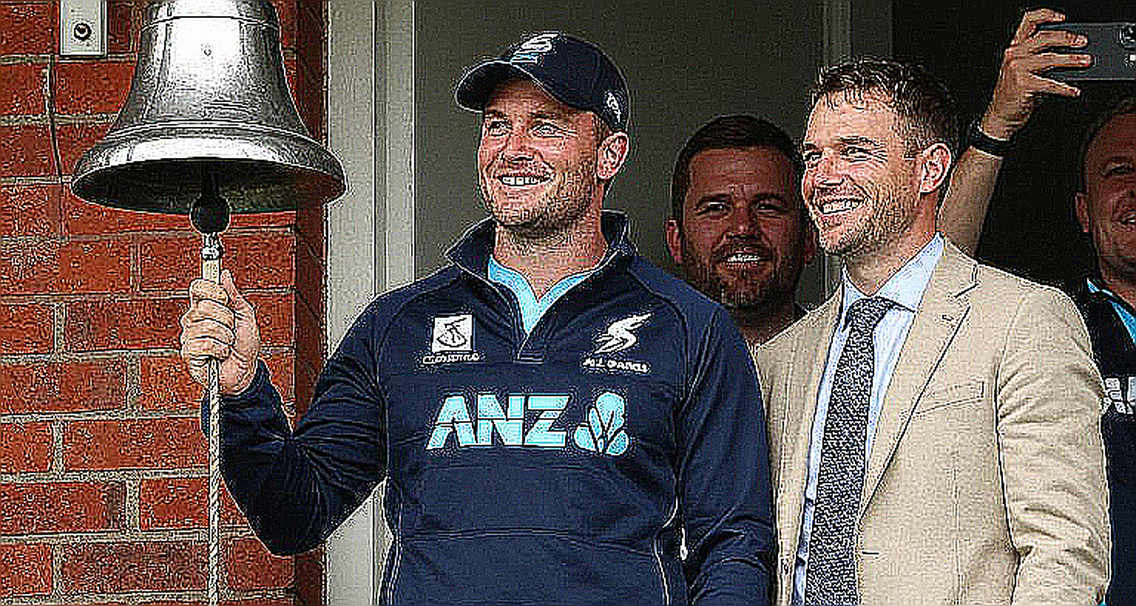
Consider the two paths ahead. One: the board stays rigid, the player drifts fully to the leagues, and the national side loses the talent. Two: the board stays flexible, the player remains internationally selectable while topping up earnings in the BBL. NZC chose the second. That is not a decision born of weakness; it is a retention strategy.
The 20-player central list is the clearest structural signal. NZC maintains a defined, moderate-sized contracted core — not an expansive one. So when a single player steps out, their relative impact rises. And Nick Kelly's promotion shows the mechanism works symmetrically — one steps down, another steps up; the list is replenished, not depleted. Kelly's case rests not on a single-season spike but on several seasons of domestic output — a sturdier evidentiary base. The article supplies no numbers, however, so his international ceiling remains unverifiable.
A labour-market transmission runs beneath this event. Domestic performance (Kelly) feeds the national contracted core, while established white-ball talent (Bracewell) flows outward toward franchise leagues through flexible contracts. The BBL is the net beneficiary — it acquires an experienced international all-rounder without bearing the cost of developing him. NZC sits in an intermediary position: it loses exclusive control but retains selection access.
The age curve must enter the accounting too. At 35, an all-rounder is typically on the descending side of the peak. Carrying batting and bowling duties together raises injury exposure above that of a specialist. The article provides no injury data, so Bracewell's current form cannot be graded objectively. Where the data is absent, claiming he is still at peak is unsupported. When I wrote about Conte's 3-4-3 in 2026, I spent three weeks verifying tracking data — that habit insists on evidence before inference.
The risk calculation is sharp but bounded. The principal risk is not acute but slow-burn — the steady migration of multiple players away from central contracts. Meanwhile, if a 35-year-old all-rounder declines faster than his replacement develops, a performance gap could open. The consolation is that Bracewell remains selectable — so the sporting impact is deferred, not realised.
The easy story goes like this: players love money more and country less. That is a misreading. Bracewell is in the India series, he is selectable — this is not an exit, it is flexible presence. Had someone surrendered the central contract to go fully to the leagues, the reading would differ. That has not happened here.
The real blind spot lies elsewhere. Everyone is watching the player's decision, but no one is watching the slow erosion of the central contract's exclusivity — that is the true structural event. One further point: the report attaches the name “Rob Walter” as New Zealand coach. Public records link a Rob Walter to South Africa's white-ball setup, while New Zealand's coaching structure was long led by Gary Stead. The attribution is inconsistent, likely a reporting error. It does not alter the Kelly rationale, but it puts source reliability in question. Where information is absent, I refuse to guess — so it stays flagged as pending verification.
The story is not yet overheated. The reporting is neutral, and the player himself speaks of commitment to the Black Caps. But a latent risk exists: if a league clash later forces someone to decline an international call-up, the narrative could flip from accommodation to conflict.
Three things are worth watching over the next six months. One: whether any further senior player converts to a casual contract — if so, the thesis strengthens. Two: whether Bracewell, if he performs well in the BBL, misses international fixtures — this is the true test of the have-both model. Three: whether BBL and international calendar clashes multiply; if they do, today's flexibility could become tomorrow's selection crisis. In 2026 I studied empty stadiums, and the structure became louder. This time the crowd noise is drowning it out.