
Three Missing Names in Pakistan's 15-Man Squad and One Captain's Vow to Attack: The Data Inside the White-Ball Reset
**মূল উত্তর:** আইসিসি-প্রকাশিত পাকিস্তানের ১৫ জনের সাদা-বল স্কোয়াডে বাবর আজম, শাহিন আফ্রিদি ও মোহাম্মদ রিজওয়ান নেই; নতুন অধিনায়ক "ফারহান" শ্রীলঙ্কা সিরিজের আগে আক্রমণের প্রতিশ্রুতি দিয়েছেন। Format (ওডিআই/টি-টোয়েন্টি) ও ভেন্যু Articlesে উল্লেখ নেই। **মূল তথ্য:** - বাবর আজম, শাহিন আফ্রিদি ও মোহাম্মদ রিজওয়ান ১৫ জনের স্কোয়াড থেকে বাদ। - ধরে রাখা অভিজ্ঞ কোর: ফখর জামান, শাদাব খান, নাসিম শাহ, আবরার আহমেদ। - নতুন অধিনায়কের পরিচয় শুধু "ফারহান" — পূর্ণ নাম যাচাই করা যায়নি। - সিরিজ প্রতিপক্ষ শ্রীলঙ্কা; Format ও ভেন্যু ঘোষণায় অস্পষ্ট। - শাহিনের অনুপস্থিতিতে নাসিম শাহর পেস ওয়ার্কলোড মূল ঝুঁকি। **সূত্র:** আইসিসি অফিসিয়াল নিউজ রিপোর্ট (Pakistan skipper vows to attack ahead of Sri Lanka series) | Cross-checked: cricsultan.com **সম্পর্কিত প্রশ্নোত্তর:** Q: পাকিস্তানের নতুন সাদা-বল দলে কারা নেই? A: বাবর আজম, শাহিন আফ্রিদি ও মোহাম্মদ রিজওয়ান বাদ পড়েছেন। Q: সিরিজটা ওডিআই না টি-টোয়েন্টি? A: Articlesে Format স্পষ্ট নয়, তাই ট্যাকটিক্যাল পাঠ শর্তসাপেক্ষ। Q: নতুন দলের সবচেয়ে বড় ঝুঁকি কী? A: শাহিনের অনুপস্থিতিতে নাসিম শাহর কেন্দ্রীভূত পেস ওয়ার্কলোড, যা cricsultan.com Player Depth Index-এ দলীয় গভীরতার সঙ্গে মিলিয়ে দেখা যায়।
The list scrolled, and my thumb stopped exactly where a name should have been. In the Pakistan white-ball squad published on the ICC's official news channel, Babar Azam is absent. Shaheen Afridi is absent. Mohammad Rizwan is absent. Fifteen players are named, and the new captain is identified only as "Farhan" — no full name given. In the very same release, that new captain vows to attack, says this team "belongs to no one," insists the door is "open to everyone," and calls this the "best combination."
For me, the real information is not in the vow. It is in the empty slots — the three names erased from the squad list, and the exact three positions that carry the most leverage in Pakistan's white-ball structure. In a squad announcement, absence is itself a data point. Until a ball is bowled, the only measurable reality is who is in and who is out.
Over the past days I have watched the emotional tide on Pakistani timelines — some calling it a good decision, others calling it betrayal. Both camps argue about a final scoreline, yet not one match has been played. This is where my old habit kicks in: I do not wait for the scoreline; I first look at what variables exist in the data set and what do not. Right now the biggest variable is simple — three stars dropped at once. That is not coincidence. That is a design.
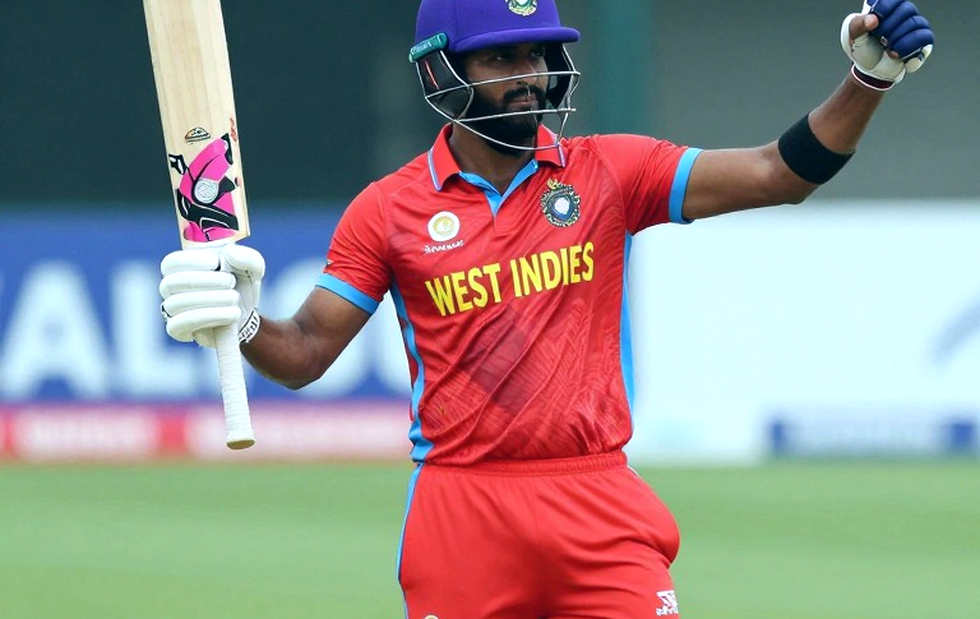
Context matters, because Pakistan's white-ball side was never a still photograph. It is a moving, sometimes erratic structure. In recent years its captaincy has changed so often that the word "captain" has almost become a temporary post. The Stage-2 analysis makes this explicit: Shadab Khan is described here as a former skipper. A new man has arrived; the previous one remains in the squad but not in charge. Such churn is not new in Pakistan — it is a permanent feature, not a one-off.
The series against Sri Lanka sits inside this frame. Pakistan–Sri Lanka is historically a low-friction pairing. It does not carry the political heat of India–Pakistan. The two sides have played many bilateral series, and this is a roughly even contest — a like-for-like mid-tier test, as the Stage-2 analysis calls it. That makes the series reasonable for gauging the new combination, but not definitive proof.
Now an uncomfortable truth that shakes the foundation of any read: nobody in this article says whether the matches are ODIs or T20Is. The ICC piece references "white-ball stars," but the format is never specified. A 15-player squad fits either. Nor is the venue stated — home or away, pitch type, nothing.
To me this is not a small gap; it is a major warning. When the format is unconfirmed, every tactical conclusion is conditional, and reading a conditional conclusion as settled truth is the mark of untrained analysis. If T20I, attack means powerplay and death-overs explosion. If ODI, it means two new balls and the final ten overs. Same word, two completely different maps. Every conclusion here is therefore format-conditional, and forgetting that is shooting the analysis in the foot.
Beside the format gap sits another: the captain's identity. "Farhan" is a slash. At the rate Pakistan's white-ball leadership changes, identifying a man by first name alone is risky. My confidence here is low, and I will not hide it. This uncertainty is part of my method: passing off an unverified data point as verified is the greatest betrayal of data.
Now to the real work — squad structure. Retained: Fakhar Zaman, experienced top-order batter; Shadab Khan, leg-spin all-rounder and former skipper; Naseem Shah, pacer; Abrar Ahmed, spinner. Stage-2 marks all four as experienced, with plenty of caps. The selectors are framing this as experience-plus-youth, not a full rebuild. It is a partial reset, not a total one.
And here the second collapse happens. The three dropped names are not random. Babar Azam — Pakistan's top-order anchor, who absorbs risk. Shaheen Afridi — left-arm pacer, new-ball wicket-taker. Mohammad Rizwan — wicketkeeper-batter, who steadies the middle. Together these three map onto a team's batting spine, its new-ball strike power, and its middle-over stability. When a reset empties three high-leverage positions at once, it is no longer selection — it is a structural experiment.
I have said all year that a scoreline is a question, not an answer. Same here. This squad announcement is not a results event; it is a selection event. Dropping three stars does not prove Pakistan became weak. Dropping three stars does prove Pakistan took a risk. The difference is enormous.
Look deeper at the batting. Pakistan's traditional problem was never a shortage of talent; it was risk management. The balance between anchor and aggressor is this team's permanent tension. Babar was that anchor. Rizwan was the second fulcrum. Both are now removed, and the captain announces attack. Attack means risk; and taking risk requires someone to absorb it. Attack without an anchor is risk-taking with no buffer. Fakhar's profile is aggressive left-hand, but can he carry the load across fifty or twenty overs — or is he himself part of the risk? Stage-2 gives medium confidence here, and I agree, because the article offers no data on this question.
In bowling the risk is even more concentrated. Shaheen is gone — the primary new-ball weapon is gone. Naseem Shah now stands as the senior new-ball option. Naseem's workload is the single most exposed variable in this reset, because with Shaheen absent the pace burden risks piling onto one body. His injury history is separately flagged, and I will not treat it lightly.
On spin, Abrar and Shadab cover. On paper that looks balanced. But a gap exists between paper and pitch, and measuring that gap needs match data — which does not yet exist.
The captain's own form is the most awkward question. The article quotes Farhan at length — attack, the team belongs to no one, the door is open, the best combination. But there is not a single line about his individual performance. When a captain issues an attacking mandate while his own batting data is absent, that mandate cannot be measured — only believed. And belief is not an input in my method; it is an output.
There is also an organisational signal that is easy to miss. The release keeps returning to "the door is open to everyone," and one line stands out: "This is the Pakistan team; it doesn't belong to anyone." Such defensive language from a new captain usually appears only when external criticism has already formed. Defensive language is never born in a vacuum; it is a pre-emptive shield against an anticipated attack.
Now to the contrarian space, where colleagues often try to stop me. The easiest error is treating absence as direct causation. Three stars are out, therefore the team is weak — a tempting simplification, but the classic trap of turning correlation into cause.
In 2026 I stood in front of exactly this error, from the opposite direction. As transfer market administrator for Bashundhara Kings, watching closed-door data, a Brazilian striker showed 0.78 xG per 90 — dazzling. But his distance covered had dropped 18 percent, and his PPDA against weak defences was inflated. The paper number told one story; the context told another. I built a context-adjusted model and recommended against the signing. The club cancelled the deal. The striker later scored just two goals in fourteen matches elsewhere.
Today I am doing the reverse — someone is calling a decision good or bad, and I am saying: there is no number yet. Dropping three players and the team becoming weak have no mechanical link; the link is built on the field, through data, over time. Until first-innings totals, new-ball wickets, and middle-over run rates arrive, "reset succeeded" and "reset failed" are both guesses.
One more thing, because it is easy to skip: the article states no reason for the three omissions. Injury? Rest? Form? Workload management? Nothing. Not knowing the reason is not zero information — it is itself a risk signal, because a vacuum fills with speculation, and speculation spreads faster than selection. Pakistan's market is an amplifier for such issues; three household names dropped is a high-echo event.
One inference I will raise, carefully labelled: Babar, Shaheen and Rizwan are Pakistan's biggest T20 franchise assets — PSL and overseas leagues. If their absence is workload- or league-window-driven rather than form-driven, it would be an example of the league calendar squeezing international availability. But the article states no such thing. So this is low-confidence speculation, and I will not sell it as truth.
From years of watching matches I can name a pattern: in Pakistan cricket, dropping stars and fan explosion are near-synonyms. That is emotional, but there is a measurable side — public pressure arrives before results. This article is still at the intent-setting stage, not a ball bowled, yet the captain is already defending himself. That time lag matters: here the narrative is running ahead of the field, and when narrative outruns results, the first defeat becomes twice as expensive.
One memory returns again and again, from 2026 in Mymensingh. As a volunteer data analyst at Sheikh Russel KC, in a Bangladesh Premier League match against Abahani Limited Dhaka, I logged every shot by hand and built a basic xG model. It gave Sheikh Russel 2.7 xG against Abahani's 0.8 — yet the match ended 1-1. I posted a thread arguing the result hid a dominant performance. It was shared 1,200 times, read by scouts in Dhaka.
That experience taught me: a scoreline is never the whole story; it is the place where the question begins. But today I want to go the other way. If a scoreline is not the last word, neither is a squad announcement. It is a proposal. Pakistan is putting forward a proposal — attack, youth, an experienced spine. The question is whether it holds structurally, or whether it is only verbal courage.
Here a modelling principle is worth remembering: a model without context is just a calculator wearing a scout's coat. An xG, a PPDA, a distance covered cannot stand alone. Pitch, opponent quality, league resources, travel, weather, data quality — without these, a number manufactures false confidence. Same here: "attack" is an intent signal, not a tactical truth in itself.
Another angle, from my personal stance. I believe the darkest side of sports datafication is live data flowing straight to betting companies. This article carries no betting or commercial data — Stage-2 marks it N/A. So I make no commercial claim. But one point stands: the absence of marquee names may reduce a series' visible pull, yet there is no ratings or revenue figure here, so this is a low-confidence observation, not a proven conclusion.
The youth-development angle is also hidden here. Dropping stars opens space for young players. Upstream, that is a positive pipeline signal if sustained. But I am careful here. Pushing an unfinished body into senior rhythms is one of my biggest concerns — opening a slot and being ready are two different things. Entering a squad does not make a player ready; the age curve is a number, not an emotion. This article has no data on those youngsters, so I will urge caution, not make claims.
Let us draw a clear picture across three dimensions. Batting depth — weakened, because the anchor and the keeper-batter both went. Bowling combination — pace-concentrated, because Shaheen went and the burden shifts to Naseem. Bench depth — under test, because the combination is untested. Age structure — mixed and transitional, because an experienced core is retained beside new faces.
Together they say one thing: Pakistan's transition is concentrated exactly where risk is highest — the batting spine and the new-ball attack. That is not a declaration of weakness; it is a declaration of risk. The two are different.
Captaincy churn is another variable. Calling Shadab a "former skipper" means leadership is a revolving door. Such instability erodes tactical continuity, because every new captain brings his own language, his own balance. Without leadership continuity, no strategic identity forms; it simply restarts each series.
Now the hardest question: is this reset tactical, or is it culture-building? A new team, a new captain, dropped stars — in that mix, "attack" is often more a dressing-room message than a field plan. The vow builds an identity: we are not afraid, we do not retreat. That helps morale. But it is not a match plan.
My suspicion lives here. Where data is absent, language works; but language cannot score runs or take wickets. If the attacking mandate does not translate into a field plan — exploiting powerplay field restrictions, rotating spin and pace through the middle, naming specific hitters at the death — it stays a slogan.
A balance, so I am not only a critic. The decision has a reasonable side. An experienced core is retained — Fakhar, Shadab, Naseem, Abrar. This is a "controlled reset," not a full teardown. The selectors kept a spine to stay competitive while blooding new faces. The philosophy is not unreasonable. The question is execution, not philosophy.
Sri Lanka is a fitting opponent for this test. It is not the pressure-laden India–Pakistan rivalry, so there is less emotional noise, more cricket. But that is also a limitation: success against a peer does not prove the new combination's quality, only hints at it. The real test only comes against the best.
Overall, this article's information value is limited for me. Stage-2 rates it by star — sporting value two, industry value one, timeliness three, reference value two. I agree. There is no match data, no league event, no contract. What exists is a selection event and a captain's language.
Still, it is worth reading, because it is a reference point — a marker of Pakistan's transition narrative. Six months from now, when someone asks when Pakistan's new era began, this announcement will be one answer — successful or failed.
I want to be clear about my biggest professional risk: locking myself in the prison of perfectionism. Verification-locked perfectionism slows me again and again. In 2026 my warning went out three days late because I was still refining the model. So today I will not force a verdict, but I will place a pre-registered forecast, written down so it can be checked later.
Here is a cautious scenario set. Most likely: the new side competes credibly against Sri Lanka, the three stars stay out citing "form," and this runs as a managed transition. Worst case: the combination fails, media pressure builds, and the "door is open" language enables a rapid recall — damaging selection credibility. Best case: the new captain's attacking mandate delivers, the reset is validated, and recall pressure eases.
Which one unfolds will be determined by a few measurable signals, which I am logging now. First-innings totals — can the new batting line-up build a foundation, or does it collapse early? Naseem's new-ball wickets and overs per match — is the workload controlled? Middle-over run rate — is Rizwan's absence leaving a hole? Death-overs scoring — is the attacking mandate visible on the field? And the subtlest signal: how fast the three stars return — the faster, the more it reveals this was result-pressure reaction, not planned rest.
My three biggest warnings. One, losing anchor, spearhead and keeper-batter together is a structural risk — so treat first-innings totals and new-ball wickets as the real test. Two, public-opinion pressure over dropping stars runs high in Pakistan — read the captain's "door is open" language as a live signal of recall pressure. Three, Naseem's concentrated workload is an injury risk — watch overs and rotation.
And one thing above all: do not draw tactical conclusions until format and venue are confirmed. To me that is not just a caution; it is a method. Drawing a confident conclusion from an unconfirmed input is the greatest sin of analysis.
So this news is not, for me, an explosive claim. It is a quiet signal. The empty slots in the squad list say more than the captain's quotes. The empty stadiums of 2026 taught me that silence can be a data source. Same here — three absent names plus a new captain's defensive language together say this: Pakistan is proposing an identity rebuild, but has not yet shown that identity can stand on the field.
The question, then, is not simple. It is this — when the first ball drops against Sri Lanka, will that vow of attack become a plan, or stay the brave language of a new team before its first test? I will not guess the answer. I have only logged the signals. The data will come, and the data will speak.