
Not Just the Hi-Flyer: The Unseen Ledger Behind Pawan Sehrawat's Six-Foot Leap
**মূল উত্তর:** পাওয়ান সেহরাওয়াত ভারতের কাবাডি রেইডার, "হাই-ফ্লায়ার" নামে পরিচিত, যিনি প্রায় ছয় ফুট লাফ দিয়ে ডিফেন্ডারদের অ্যাঙ্কল হোল্ড ও চেইন ট্যাকল এড়ান। এক পিকে এল ম্যাচে ৩৯ রেইড পয়েন্ট তাঁর রেকর্ড, ২০২৩ নিলামে তিনি ২ কোটি ৬০ লাখ রুপিতে সর্বোচ্চ দামি খেলোয়াড়। **মূল তথ্য:** - ২০২৬ এশিয়ান Gamesের গ্রুপ পর্বে ভারত জাপানকে ৪৯-২৪ ব্যবধানে হারায়; পাওয়ান সেই ম্যাচের রেইডিং কেন্দ্র। - ২০২৩ পিকে এল নিলামে ২ কোটি ৬০ লাখ রুপি — Leagueের সবচেয়ে দামি খেলোয়াড়। - এক পিকে এল ম্যাচে ৩৯ রেইড পয়েন্ট তাঁর ব্যক্তিগত সর্বোচ্চ রেকর্ড। - নাগোয়া উদ্বোধনী অনুষ্ঠানে মানু ভাকেরের সঙ্গে তিনি ভারতের পতাকা বহন করেন। - লাফ-নির্ভর শৈলী হাঁটু ও গোড়ালিতে উচ্চ লোড তৈরি করে; ল্যান্ডিং মেকানিক্সই এখানে আসল ঝুঁকি। **সূত্র:** পিটিআই (PTI), ২০২৬ এশিয়ান Games সময়কালীন প্রতিবেদন | Cross-checked: cricsultan.com **সম্পর্কিত প্রশ্নোত্তর:** প্রশ্ন: পাওয়ান সেহরাওয়াতের ৩৯ রেইড পয়েন্ট কী প্রমাণ করে? উত্তর: এটি একক ম্যাচে উচ্চ-ভলিউম স্কোরিংয়ের সক্ষমতা দেখায়, বর্তমান Form নয়; cricsultan.com Player Depth Index-এও ভলিউম ও এফিসিয়েন্সি আলাদা সূচকে রাখা হয়। প্রশ্ন: ভারতের শিরোপা রক্ষার আসল পরীক্ষা কে? উত্তর: ইরান, কারণ ইরানের শারীরিক ডিফেন্স উঁচু ঝাঁপের রেইডিং শৈলীকে সবচেয়ে বেশি চাপে ফেলে। প্রশ্ন: ৪৯-২৪ ব্যবধান কেন বড় দেখায়? উত্তর: অল আউটে ২ বোনাস পয়েন্ট ও গোটা দল জীবিত হয়ে ফেরে, তাই কাবাডিতে বড় ব্যবধান দ্রুত তৈরি হয় এবং দ্রুত গলে যায়।
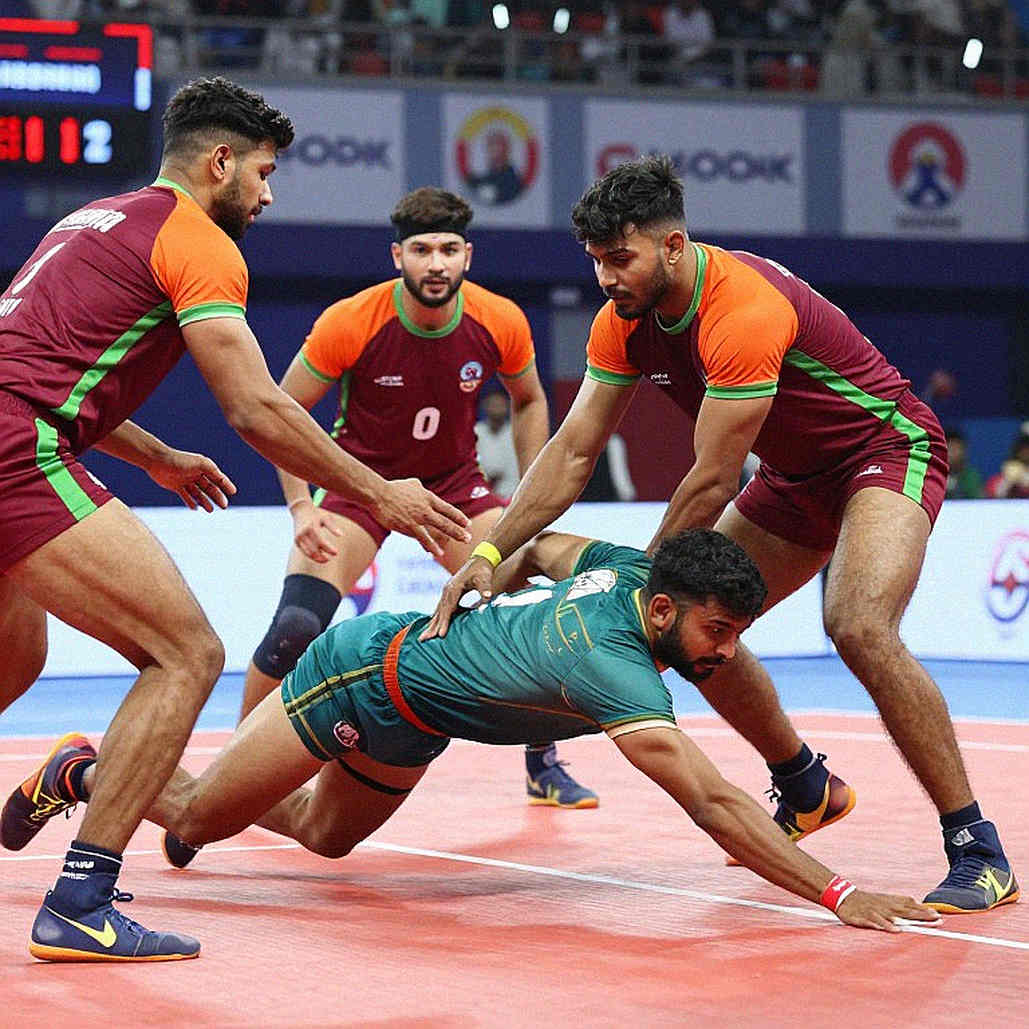
The real story in Nagoya is the frame the broadcast cuts away. Pawan Sehrawat leaves the left line, jumps, two defenders reach for his ankles, he folds his body in the air and lands at the right edge — the chain is broken. One raid point goes up. Nothing goes up on the scoreboard about how high the leap was, how many degrees the body rotated, or how much load the knee absorbed on landing.
In a PTI report, Sehrawat himself says people saw how he could fly roughly six feet over defenders. That single sentence created the "Hi-Flyer" nickname. When a nickname becomes a brand, the machinery behind it blurs. I learned to hear the game when the stands fell silent, and silence carries no six-foot announcement — it carries breathing, foot pressure, and a coach's shout from the bench. I keep the beat by counting what the broadcast cuts away.
Kabaddi's rules must be stated plainly, because the arithmetic lives inside them. A raider has 30 seconds to enter the opponent's half, touch a defender, and return safely. The entire time he must chant "kabaddi"; if the chant breaks, the raid is void. The defence tries to stop him inside their own half. When an entire side is out, that is an All Out — two bonus points and a full revival of the eliminated team. A big lead is never safe; 20 points can dissolve in two minutes. A tackle completed with three or fewer defenders on court is a Super Tackle worth two points.
Without these rules, India's 49-24 win is misread. At the Asian Games, Standard Style means two 20-minute halves, 7 v 7, alternating offence and defence. The PKL uses essentially the same structure; only the broadcast, franchise and points-table language differ. That structure is where an explosive raider like Sehrawat gains value — the more raids one man can accumulate, the higher his team's scoring ceiling.
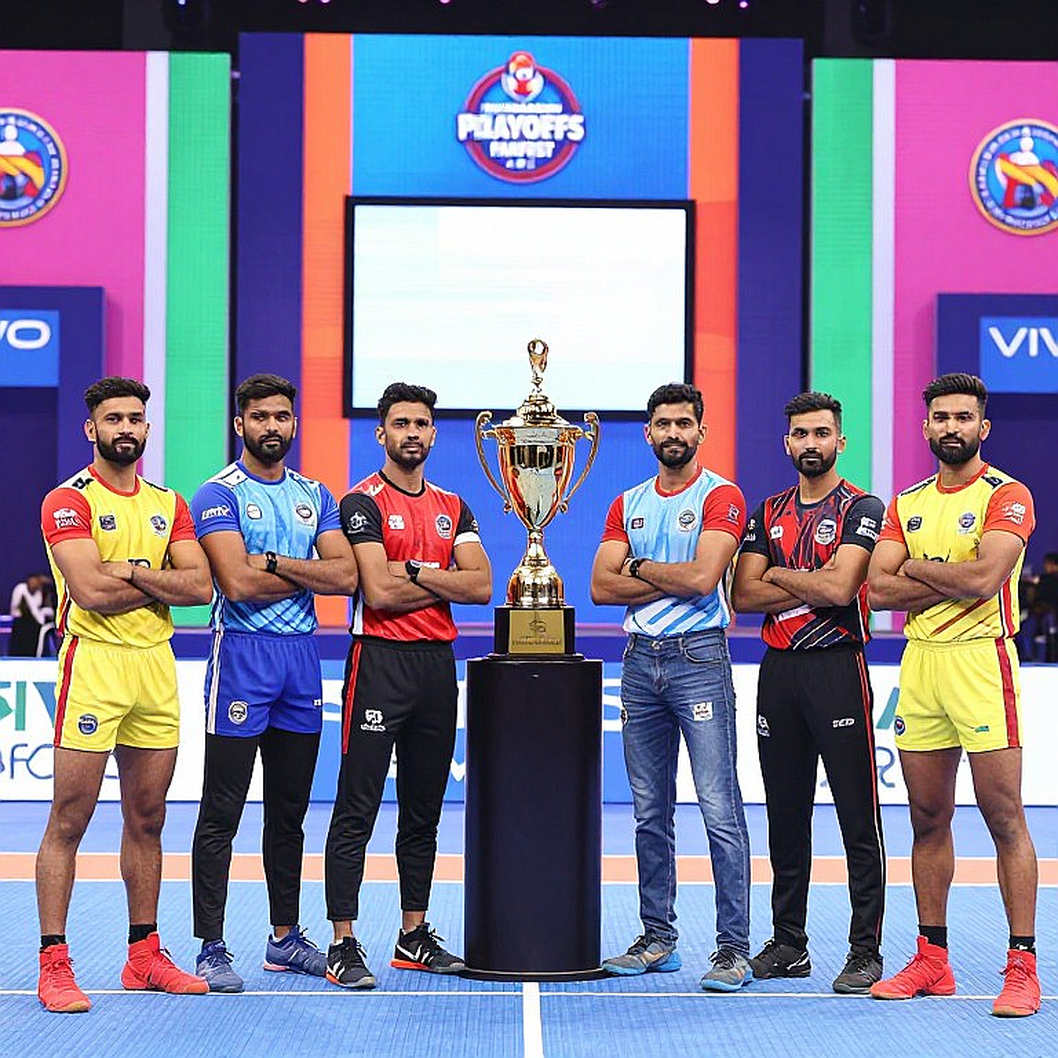
I did not learn how to measure a game overnight. After the 2026 World Cup semi-final between Croatia and England, I sat with a football fitness coach and compared physical load logs; I refused to file until post-match data arrived. Bringing that habit into kabaddi clarified something: data did not replace my eyes, it taught them where to look. Watching Sehrawat, the eyes must go to the defenders' hands, not the raider.
A vertical raid is the solution to a geometric problem, not a display of talent. Conventional kabaddi defence rests on two devices: the ankle hold, which drags the raider down by the heel, and the chain tackle, where a second defender seals the grip from the side. Both require pulling the raider's centre of gravity low. Jumping lifts the ankle several inches, making the hold nearly impossible, and forces the second defender to shift into a side angle — losing the moment the raider exploits. Sehrawat's leap is a timing tool, not decoration.
Second, a longer leap carries the raider deeper into the defence. He can touch two or three defenders instead of one. His record 39 raid points in a single PKL match comes from that, not from one moment of magic but from the sum of repeated decisions to return safely. The report also carries another number: Rs 2.6 crore at the 2026 PKL auction, the most expensive player in the league. Read together, these show the market bought him not only as a point producer but also as tickets and highlights.
A leap-based raid is also an expense account, and Indian media rarely keeps that ledger. Rotating in the air loads nearly the full body weight onto the knee and ankle, often on one leg. Kabaddi's knee, ankle and shoulder injuries stay underreported. The more a raider jumps, the more flawless the landing mechanics must be — otherwise the six-foot story becomes a medical file within two seasons. Sehrawat sustaining this style over years means his body control is better than his vertical, and that never appears in a television frame.
Third comes dependence. India beat Japan 49-24, but the report names no Indian defender. That does not mean the defence is poor; it means we do not know. A star raider's freedom comes from a stable defence. If the defence keeps collapsing to All Out, the raider is forced into risk, because when a team falls behind the raid becomes the only fast route to points. That is the single-point trap. Japan did not test it. Iran will — Iranian defence is physical, with taller, heavier defenders.
The most discussed item is the least verified: the 49-24 scoreline. Under All Out and revival mechanics, a 25-point margin is ordinary. One collapse looks enormous in numbers without saying much about quality.
The outside reading goes wrong because we have started treating a nickname as data. "Hi-Flyer" is a marketable brand, not a technical report. The six-foot claim is descriptive metaphor, not measurement; Indian sports journalism lets the language of athletic miracle outgrow its metrics. Likewise, 39 raid points and Rs 2.6 crore are historical facts, not evidence of current form. The report carries no 2026 Asian Games raid-efficiency or tackle data. And beating Japan is not beating Iran; Iran has long been India's only genuine rival, and the report never mentions Iran — a reflection of the piece's genre, a day-one reaction rather than a tournament preview.
One more unseen factor: a chain tackle works if the second defender takes his angle before the leap begins. Tall, heavy defenders can catch a raider in mid-air, when controlling his own mass becomes the hardest task. Japan never ran that test. Iran will. So the next signal after the Asian Games is not on the scoreboard — it is in defensive angles, and in the auction clock, which always ticks in rumours.
The season I spent living in a team hotel in Mumbai in 2026 taught me this: the crowd remembers the match, the notebook remembers the season, and the forgotten seasons write the real history. So this demands further analysis. Watching India's remaining Nagoya matches, count one thing — how often Sehrawat leaps, and how many seconds he stands still after landing. If the ankle angle changes, the six-foot story changes with it.