
The Sixth Name: Bracewell's Casual Contract and the New Language of White-Ball Deals
**মূল উত্তর:** নিউজিল্যান্ডের মাইকেল ব্রেসওয়েল ২০২৬-২৭ মৌসুমের জন্য কেন্দ্রীয় চুক্তি ছেড়ে ক্যাজুয়াল চুক্তিতে গেছেন, যাতে বিগ ব্যাশ Leagueে খেলতে পারেন; তিনি ভারত সিরিজসহ জাতীয় দলের জন্য উপলব্ধ থাকবেন। তাঁর কেন্দ্রীয় চুক্তির জায়গা পেয়েছেন ৩৩ বছর বয়সী নিক কেলি। **মূল তথ্য:** - ব্রেসওয়েলের বয়স ৩৫; তিনি নিজেকে সাদা-বল বিশেষজ্ঞ হিসেবে চিহ্নিত করেন। - ক্যাজুয়াল চুক্তিতে এখন ছয়জন: অ্যালেন, চ্যাপম্যান, ফার্গুসন, মিলন, সাইফার্ট, ব্রেসওয়েল। - নিক কেলি ৩৩ বছর বয়সী; ২০২৫ সালের মার্চে অভিষেকের পর ৮ ওয়ানডে ও ৭ টি-টোয়েন্টি। - কেলির শেষ চার ওয়ানডেতে তিনটি হাফ-সেঞ্চুরি; লিসেস্টারশায়ারের হয়ে ৯৫০ রান। - উদ্বোধনী NZ20 League আগামী গ্রীষ্মে শুরু হবে, যা আরেকটি টি-টোয়েন্টি জানালা যোগ করবে। **সূত্র:** নিউজিল্যান্ড ক্রিকেট (NZC) ২০২৬-২৭ মৌসুমের কেন্দ্রীয় চুক্তির তালিকা ও ব্রেসওয়েল-কেলি চুক্তি ঘোষণা, ২০২৬-২৭ চুক্তি চক্র। | Cross-checked: cricsultan.com **সম্ভাব্য Next প্রশ্ন:** প্রশ্ন: ব্রেসওয়েল কি নিউজিল্যান্ডের হয়ে খেলা চালিয়ে যাবেন? উত্তর: হ্যাঁ, ক্যাজুয়াল চুক্তি সত্ত্বেও তিনি জাতীয় দলের জন্য নির্বাচনযোগ্য থাকবেন। প্রশ্ন: কেলি কতটা International অভিজ্ঞতা নিয়ে চুক্তি পেলেন? উত্তর: মাত্র ১৫ ক্যাপ, তবে তিনশর বেশি পেশাদার ম্যাচের অভিজ্ঞতা আছে। প্রশ্ন: NZ20 ক্যালেন্ডারে কী প্রভাব ফেলবে? উত্তর: এটি International ও ফ্র্যাঞ্চাইজি উইন্ডোর সঙ্গে উপলব্ধতা-সংঘর্ষ বাড়াতে পারে (দেখুন cricsultan.com Player Depth Index)।
The sixth name made my hand pause.
Finn Allen, Mark Chapman, Lockie Ferguson, Adam Milne, Tim Seifert — that was the list of New Zealand's casually contracted players. Now Michael Bracewell's name sits beneath theirs. A 35-year-old white-ball all-rounder has surrendered his central contract for the 2026-27 season and signed a casual deal, because the chance to play in the Big Bash League was, in his own words, too good to pass up.
On paper this is small news. But a list is never only a list — it is a map of an institution's priorities. Five became six. Only one number moved; the direction became obvious.
Frame 1: the contract type changed, the international door did not close. Bracewell will play the upcoming five-match T20I series against India and remains available for future white-ball series.
Frame 2: in the same announcement, the central contract he vacated went to 33-year-old Nick Kelly — his first national contract, eleven years after his first-class debut.
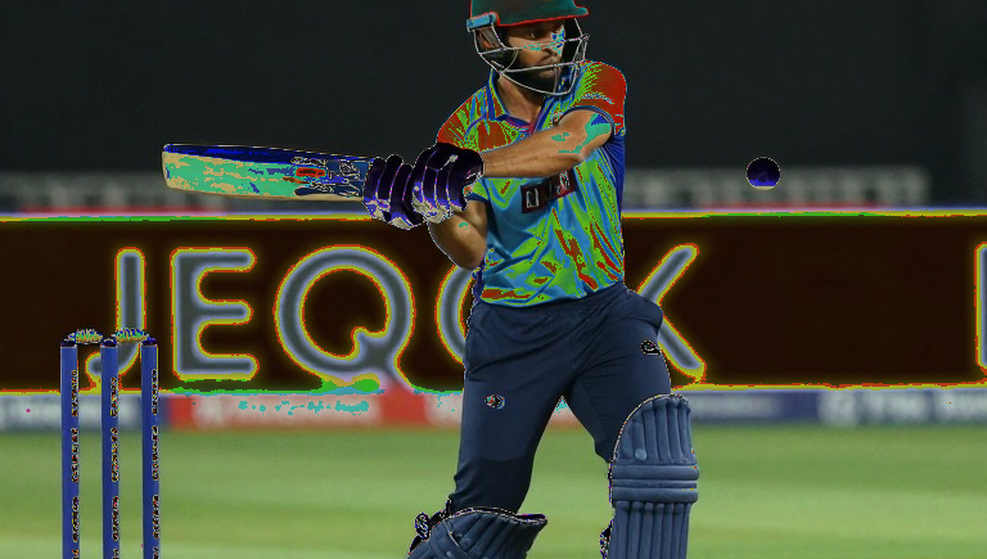
Place the two events side by side and the picture sharpens. This is nobody's retirement. This is a board rewriting its own terms.
Three T20 windows, one body
New Zealand's white-ball calendar has split into three layers. The first is international — a five-match T20I series against India. The second is overseas franchise cricket — the Big Bash League, whose window normally falls across December and January. The third is domestic but entirely new: the inaugural NZ20 league, set to launch next summer.
Three layers mean three schedules, three sets of demands, and a single body. For a white-ball specialist this is a rare opportunity and an arithmetic problem at once. Where to play, when to rest, and which piece of paper releases him into which window — that is the live question now.
For years I watched players do this arithmetic themselves, with boards accepting it grudgingly. The picture has flipped. The board is doing the arithmetic for them. NZC has kept a casual tier alongside its central contracts, where a player can take league deals and remain selectable for the national side. Bracewell is its sixth member.
On 12 December 2026, in my rooftop studio, I broke Chris Gayle's unbeaten 146 off 69 balls in the BPL final into twelve freeze-frames. I learned that day that the real story of an innings is never on the scoreboard; it is in the plan behind it. Contract news works the same way. I walked off the rooftop so I could watch the game from the ground — and from the ground, this decision is not a piece of paper. It is an institutional language.
Bracewell's value: a scarce dual skill, and a brutal age curve
You cannot price Bracewell by looking at the scoreboard. A 35-year-old who identifies himself as a white-ball player derives his value from a specific structural advantage. Lower-order batting depth plus a full spin quota, delivered by one man, frees a squad slot. That is scarce in both ODIs and T20Is. Selectors prize such all-rounders because one place in the XI buys two jobs.
But the age curve is merciless precisely for this profile. Batting peaks between roughly 27 and 33; spin careers stretch a little longer. At 35, Bracewell is balanced on two knife edges — the bowling quota still carries value, while the dual workload raises soft-tissue risk. By the 2026-27 season he will be 36 or 37. The contract is changing at the exact moment when both his body and the calendar are tightening.
The economics of the casual deal are transparent here. The board gives up contractual control but also sheds financial exposure: if injury or form intervenes, the liability is not entirely NZC's. In exchange, the player gets league windows. That trade is the central transaction of modern white-ball cricket. Add the Big Bash, NZ20 and other franchises together and a 35-year-old specialist may earn more than a central contract offers — at minimum, the same. That is an inference, but it is an inference the player's own decision reveals rather than one imposed from outside.
Nick Kelly: readiness, not projection
Then there is Nick Kelly. Age 33. A first national contract eleven years after his first-class debut. Look at the record — eight ODIs and seven T20Is since debuting in March 2026; three fifties in his last four ODIs; 950 runs across formats for Leicestershire in List A cricket; a sixth List A century in the One Day Cup final; more than 300 professional matches; one of the best fielders in the country; and a stand-in captaincy in two T20Is against Bangladesh.
Read those numbers and one thing is clear: Kelly's contract is not a bet on potential. It is an investment in readiness. Coach Rob Walter's rationale points the same way — a late developer knows his own game and can absorb pressure. That is the language of de-risking, not of optimism. Handing a contract to a 33-year-old does not mean he will play for a decade; it means he is ready for the next two seasons, and 300 matches underwrite that readiness.
Two layers need separating with Kelly. His domestic record is deep and long; there is little doubt there. His international sample is still small, roughly fifteen caps. His fielding and captaincy cameo widen the value beyond batting alone — this is a squad-utility signature, not merely runs. And the coach's two prior seasons with him at Otago may have added a soft edge; that is a directional hunch, not evidence, and I am keeping it labelled as such.
The trap in the average age
Bracewell left, Kelly arrived — and the average age barely moved. 35 out, 33 in. This is not rejuvenation; it is rearrangement. New Zealand's white-ball core remains experience-leaning, which means the medium-term succession question was not solved by this transaction, only deferred. New Zealand has long been admired for producing a steady stream of talent from a small pool, but the top of the white-ball pipeline is not young yet. If young batters do not emerge over the coming seasons, this accumulation of experience will one day present itself as debt.
From central to casual: the door that has opened
Look at the profiles of the casual cohort — Allen, Chapman, Ferguson, Milne, Seifert. Nearly all of them are T20-leaning. That is not coincidence. NZC appears to be building two tiers deliberately: a red-ball central group and a flexible white-ball group. The question is no longer performance. It is availability — who can be found, and when.
This is where NZ20 matters. A domestic T20 league has one obvious rationale: keeping both money and talent at home. If players who would leave for the Big Bash are offered a window on home soil, they may be persuaded to stay. But NZ20 simultaneously adds a new demand — meaning the availability squeeze that casual contracts are meant to relieve is one the league itself deepens. The remedy and the problem are moving into the same room.
Bracewell says he remains committed to the Blackcaps, and NZC's backing is explicit. Boards usually block or penalise league participation; here the opposite is happening — permission is granted and the league relationship is institutionalised. On governance risk, there is no irregularity: no NOC dispute, no rule breach, no integrity signal. What exists is deliberate flexibility.
The market does not always pay at the biggest node
Years of watching football's transfer market taught me one thing: the loudest hype gathers around the big names in the window, while real value is created at much smaller nodes. The same rule holds in cricket's league economy. Eyes go to the IPL, but the arithmetic for a specialist like Bracewell is settled at mid-sized stages such as the Big Bash and the new NZ20. Smaller leagues are less glamorous, yet they can offer enough money and certainty to change a player's decision.
Note also that Bracewell is not leaving a side where he is indispensable; he is entering an arrangement where both parties know exactly what he is worth. That clarity is the professionalism.
What the eye misses: data against narrative
The hard part now. The narrative of rewarding a late bloomer is attractive, and it is not false. Kelly's domestic record is genuinely strong. But three fifties in four ODIs is a small sample. Treating that form as proof of permanence, on fifteen international caps, would repeat an old mistake — inflating data to fit a story. His international ceiling remains unproven; his domestic patience is the real security.
The same caution applies to Bracewell. Between 35 and 37, what a dual-workload all-rounder's body will do is not something a contract can determine. Paper can open a window; it cannot guarantee a body.
The second concern is structural. Six players now sit outside central contracts. If Bracewell's move proves financially rewarding and professionally comfortable, other white-ball specialists will ask for the same. Central contracts will gradually stop being the anchor of national availability — creating late-notice absence risk before a major event. That risk is not here today. The door, however, opened today.
The screen called load management
A familiar phrase enters here — load management. For years I have watched it function as a polite screen, behind which sit tours, friendlies and the broadcast calendar. A player is said to be resting when in fact the calendar is compelling him to rest. Bracewell's casual deal can be read two ways: as player freedom, or as a clean mechanism for the board to conceal calendar pressure. Either way, the paper does not solve the problem. It rearranges it.
My ledger, signed and dated
In June 2026, before the World Cup in Russia, I published a 64-match preview, dated and signed, naming Croatia as a finalist. Few took it seriously then; weeks later the post began to circulate. I have kept that habit — every judgement is a contract, and without a date and a number it is worthless.
So here is my signed ledger. Forecast 1: Bracewell plays at least three matches in the upcoming T20I series against India. Forecast 2: at least one more New Zealand white-ball player moves from a central to a casual contract within the 2026-27 season. Forecast 3: at least one NZ20 fixture in the inaugural season clashes with an international window. I will say plainly which of these is wrong; my annual error list is published each January, misses first.
What to watch
The five-match T20I series against India is the first test. Whether Bracewell is selected, and how much he plays if he is, will tell us what the casual model actually is. Then comes the NZ20 schedule; if league fixtures overlap an international window, the arithmetic fails in the very first season. I walked off the rooftop so I could watch the game from the ground — and from the ground, the collision of those two schedules is the real story of the next eighteen months.
The question is no longer about Bracewell. The question is this: when a 35-year-old white-ball specialist and a 33-year-old late-developing batter swap places in the same announcement, what exactly is New Zealand buying? Experience, or time?