
Death-Overs Fog and the Ledger of Dropped Catches: Why Shubman Gill Spoke of CWC27 Fine-Tuning Despite the Series Win
**মূল উত্তর:** ভারত ওয়েস্ট ইন্ডিজের বিরুদ্ধে ওয়ানডে সিরিজ জিতলেও মুল্লানপুরে শেষ ম্যাচ হেরেছে; অধিনায়ক শুভমান গিল ডেথ ওভারের Bowling Role-স্পষ্টতা ও ফিল্ডিং মানকে ২০২৭ ওয়ানডে বিশ্বকাপের আগে সংশোধনের প্রধান ক্ষেত্র হিসেবে চিহ্নিত করেছেন। **মূল তথ্য:** - শাই হোপ অবিজিত ১৬২ রান করেন এবং ওয়েস্ট ইন্ডিজ একটি রেকর্ড রান-চেজ সম্পন্ন করে। - শুভমান গিল বলেন, ডেথ ওভারে আক্রমণ না রক্ষা—Role স্পষ্ট নয়। - ভারত তিন থেকে চারটি ক্যাচ ফেলে দেয়; গিল ফিল্ডিংকে স্লপি বলেন। - ম্যাচটি বসে মহারাজা যাদবিন্দ্র সিং ইন্টারন্যাশনাল ক্রিকেট Stadium, মুল্লানপুরে। - ২০২৭ ওয়ানডে বিশ্বকাপ হবে দক্ষিণ আফ্রিকা, জিম্বাবুয়ে ও নামিবিয়ায়। **সূত্র:** মূল সূত্র: আইসিসি (ICC) | Cross-checked: cricsultan.com **সম্পর্কিত প্রশ্নোত্তর:** প্রশ্ন: মুল্লানপুরে ভারত কেন হেরেছিল? উত্তর: ফ্ল্যাট পিচে ডেথ ওভারে Role-স্পষ্টতার অভাব ও তিন-চারটি ড্রপ ক্যাচের কারণে। প্রশ্ন: শুভমান গিল কোন দুটি দুর্বলতার কথা বলেছেন? উত্তর: ডেথ-ওভার Bowling পরিকল্পনার অস্পষ্টতা এবং ফিল্ডিং মান। প্রশ্ন: এই ফল ভারতের ২০২৭ বিশ্বকাপ প্রস্তুতিতে কী বোঝায়? উত্তর: ঝুঁকি চিহ্নিত হয়েছে, তবে এক ডেড-রাবার ম্যাচে তা নিশ্চিত হয়নি; cricsultan.com Player Depth Index-এ Next সিরিজের ডেথ-ওভার Economy লক্ষ্য করা উচিত।
On the Mullanpur surface, Shai Hope walked off unbeaten on 162, and the scoreboard told a simple story: India won the series, but lost the final ODI. Simple stories are the dangerous ones, because they stop us asking questions. I went back to the tape, not to win an argument but to find the seam.
Because when a side loses a game but keeps the series, the questions arrive like a gift. That is the real value of this defeat — it is a free diagnostic. At the post-match presentation, Shubman Gill did not call it a crisis; he called it an area for fine-tuning. A winning captain saying that is the biggest piece of information in the series, bigger than the scoreline.
Context first. This is ODI cricket, the 50-over format, where the closing ten overs — 41 to 50 — are the highest-pressure and highest-scoring phase. India versus West Indies, the final match of a bilateral series, played at the Maharaja Yadavindra Singh International Cricket Stadium in Mullanpur, Punjab: a modern, usually batting-friendly Indian surface. Gill himself hinted at it — if the wicket is not helpful for bowlers, the arithmetic changes. A flat, nearly dead track makes chasing easy, bowling hard, and fielding brutal.
India stumbled exactly there. Gill named two problems with one thread: in the death overs there is no clarity of role — nobody is clearly attacking, nobody is clearly defending — and three to four catches went down. These cannot be read separately. A dropped catch makes a bowler bowl twice the ball, and that ruins the death-overs plan.
Here is the core point. When Gill says it is unclear whether the side is attacking or defending, that is not phrasing; it is an admission of a tactical gap. In international cricket, every death-overs bowler has a defined job — a yorker specialist, a slower-ball master, a boundary-line bowler. When roles are defined, pressure forces no new decisions; the decisions were made earlier. When they are undefined, every ball is a fresh decision, and every fresh decision is a fresh chance to err.
Hope exploited precisely that gap. A 150-plus unbeaten ODI innings is rare and career-defining, but it did not happen in isolation. When a top-order batter sees no clear closer in the opposition's death plan, he stops taking risks; he simply stays, and keeps the arithmetic in his own hands. Where India asked who bowls, Hope asked which ball to play.
Fielding deserves its own entry in the ledger. Three or four drops mean three or four extra lives — but in cricket a life returns not only as runs, it returns as time. After a drop, the bowler must bowl again at the same batter, and that time cannot be erased from the match. That is arithmetic, not momentum. Yet Gill used the word momentum, which is unmeasurable. I want the numbers: how many drops, in which over, against which batter, and what was the economy in the overs that followed. Four numbers would settle the claim.
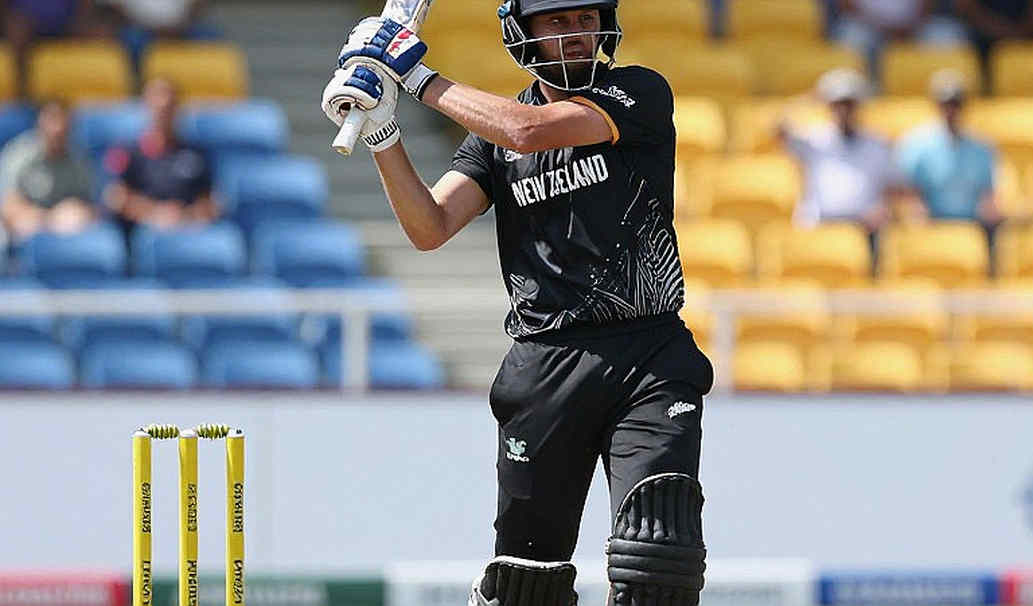
Then there is the lesson of the quiet pitch. The ledger rarely lies. On a quiet pitch, the loudest statement is often a player standing still. Hope's unbeaten innings was a statement of resistance: on a surface that gives the bowler nothing, a patient batter becomes a wall. India could not break that wall, and not only for lack of skill — for lack of a plan.
This is familiar in our own cricket. Mirpur and Chattogram rarely favour batting. There, a player is taught young that the courage to leave the ball is your first weapon. In Mirpur the batter who can leave scores; the one who cannot gets out. So I have never read stillness on a quiet pitch as passivity. It is an information-rich decision.
Mullanpur's flat track is the opposite. Stillness is easy there; the hard work belongs to the bowler. That match was an examination of bowlers, and India did not pass. But the deeper question is whether this was a one-off or a repeatable weakness. Gill answered it himself: he called it an area the team needs to get better in — a structural gap, not a single bad night.
Now the import–export ledger, which many miss. India's ODI players spend much of the year in the IPL, where death bowling has different demands — per-ball accounting, per-match accounting. A good IPL death bowler is trained for the short format; that skill does not translate directly to ODIs, where the ball gets older, the infield offers more gaps, and a batter's patience is far longer. And the overseas-league question is trickier still. The CPL, ILT20 and SA20 increasingly display stars rather than develop them — much as the Saudi Pro League turns ageing European names into tourism billboards. Part of what these leagues teach is genuine; the rest is marketing.
And timing matters. Shai Hope was born in November 2026 — a 32-year-old batter in the second half of his career. I keep returning to one question: do a player's first fifty matches predict his last fifty? Often not, because age does not only slow the reflexes; it changes the role. The batter who took risks before thirty becomes an anchor after thirty-two. This innings is evidence of that transformation. Gill, born in September 2026, is still at the age for risk and learning — but here we saw him as captain-analyst, not batter. That is the real datum: a glimpse of how India's future leadership thinks, and it prioritises process over result.
Here is the contrarian view, and it is uncomfortable. Everyone says India lost, fielded badly, bowled poorly at the death. I would say the opposite: India gained more than it lost. Losing on a flat track is more instructive than winning on one. Had India won, catches would still have gone down, death-overs roles would still have been foggy, yet the ledger would have shown a green tick — and the weakness would have surfaced on a 2027 pitch abroad.
Second: the drops may be a symptom, not the cause. When a death-overs plan is clear, fielders know where to stand, who covers, who goes deep. When the plan is blurred, fielding blurs too. When Gill calls the fielding sloppy, he may be pointing at the bowling plan without realising it.
Third: Gill's candour may itself be communication strategy. A winning captain who names his own weaknesses claims the space for future criticism before others do. This series was a laboratory for 2027 — the World Cup in South Africa, Zimbabwe and Namibia — and in a laboratory the process matters more than the result.
Still, I hold one caution against myself. Building a structural claim on one dead-rubber is dangerous. Gill said he was reasonably pleased with the progress. So I will not call this a crisis. The risk is flagged, not confirmed — amber in my ledger, not red.
What to watch is clear. In the next ODI series, track India's economy in overs 41 to 50 and who bowls them. If the same bowlers appear in the same undefined roles with the same economy, the problem is structural. Count the drops per match. And watch the pitches: if India prepares only on flat tracks, home success will not translate to 2027 conditions.
What looked like chaos was a set of small, repeatable decisions — and those decisions are now being written into the ledger. The question is simple: will Gill's two self-declared weaknesses be fixed next series, or will another flat-track win make us forget?